
Beautiful Plants For Your Interior
Beautiful Plants For Your Interior
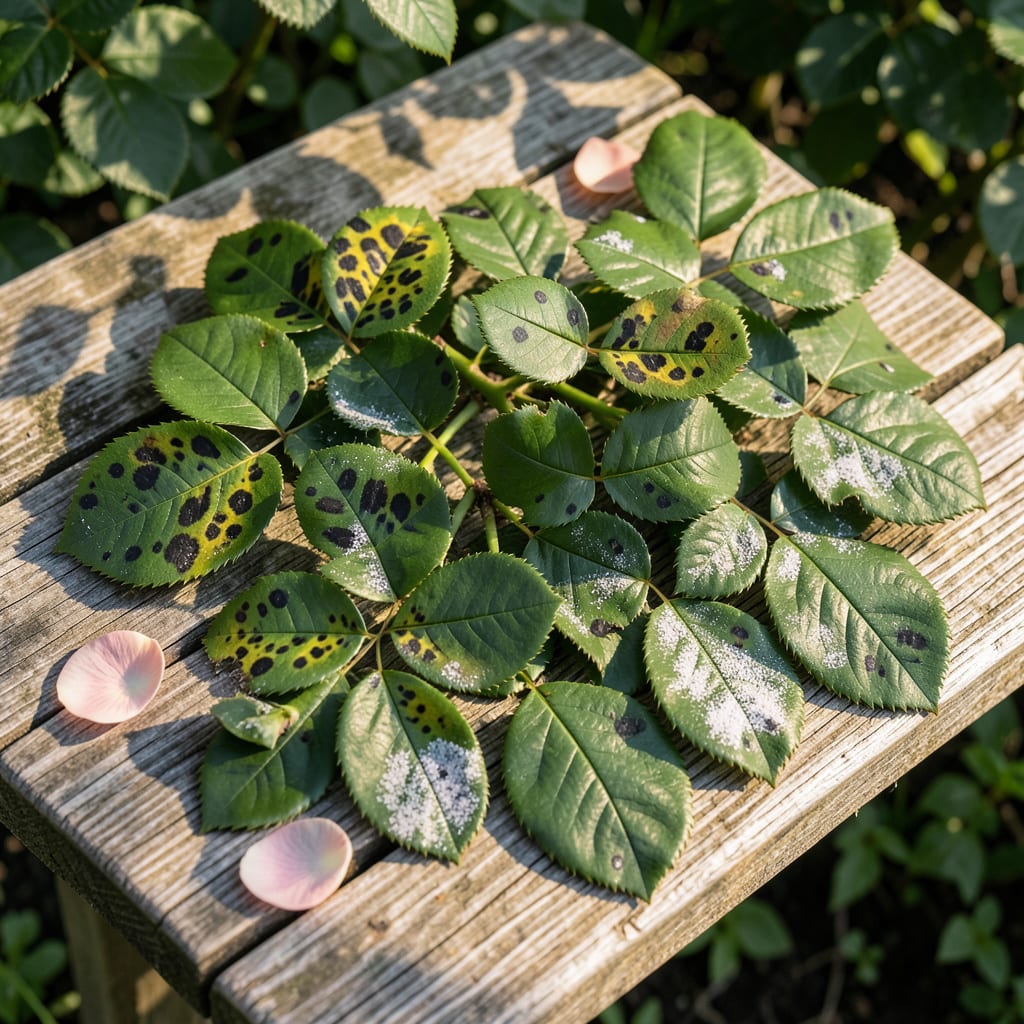
Yellow spots, black splotches, or curled edges on your rose leaves aren’t just ugly—they’re your plant’s way of waving a white flag. I’ve seen healthy bushes turn into sad sticks overnight when these issues go unchecked.
Most problems boil down to 3 culprits: fungi, pests, or environmental stress. The good news? With the right diagnosis and a few simple fixes, your roses can bounce back faster than you’d expect. Here’s how to read the signs.
📚 In This Guide
Here’s the straightforward approach I use to identify and treat leaf issues before they spread.
Start by looking closely at the affected leaves. Black spots with yellow halos typically indicate black spot fungus, while white powdery coating signals powdery mildew. I check both the top and undersides of leaves—some problems only show on one side.
Brown crispy edges often mean underwatering or salt burn from fertilizer, whereas yellowing between veins suggests iron deficiency. Note the pattern and location of damage to narrow down the cause.
Roses need 6+ hours of direct sun daily. If leaves develop powdery mildew, it’s often because the plant isn’t getting enough airflow or sunlight. I thin out crowded canes to improve circulation around the center of the bush.
Watering habits matter too. Always water at the base in the morning so leaves dry quickly. Overhead watering, especially in evening, creates perfect conditions for fungal diseases to take hold.
For black spot or powdery mildew, remove and destroy affected leaves first to prevent spread. Then apply a fungicide—either chemical or organic like neem oil. I mix 1 tablespoon of baking soda with 1 gallon of water and a drop of dish soap as a preventive spray every 7-14 days.
Consistency is key. Even after symptoms disappear, continue treatments for 2-3 weeks to ensure the fungus is completely gone. Always apply in the evening to avoid sunburn on treated leaves.
Yellow leaves with green veins often indicate iron deficiency. I use chelated iron according to package directions, usually every 2-4 weeks until color returns. For general nutrient issues, a balanced rose fertilizer applied every 4-6 weeks during growing season works well.
Over-fertilizing can be just as harmful as under-fertilizing. If you see brown leaf tips or sudden leaf drop, flush the soil with water to remove excess salts. Then hold off on fertilizer for 3-4 weeks.
Keep the area around your roses clean. I remove fallen leaves and debris weekly—this eliminates hiding places for pests and diseases. A 2-3 inch layer of mulch helps retain moisture and prevents soil-borne fungi from splashing onto leaves.
Regular inspection catches problems early. I check my roses every time I water, looking for the first signs of trouble. Catching issues when they affect just a few leaves makes treatment much more effective than waiting until the whole plant is struggling.
Here are the key insights I’ve learned from years of troubleshooting rose leaf problems.
Symptom Spotlight: In Step 1, pay close attention to the undersides of leaves—some issues like spider mites or early fungal growth only appear there. I’ve missed early signs of trouble by only checking the top surfaces, and it cost me healthy plants. Trust me, a thorough inspection saves time later.
Environmental Fix: Step 2 mentions roses need 6+ hours of direct sun, but airflow is just as critical. If your plant is in a sunny spot but still struggles with powdery mildew, try pruning nearby branches or relocating potted roses to improve circulation. This small adjustment can make a world of difference.
Treatment Timing: For Step 3, consistency with the 2-3 week follow-up treatment is non-negotiable. I once stopped spraying after symptoms faded, only to see the fungus return worse. Even if leaves look healthy, stick to the schedule to fully eradicate the issue.
Prevention Hack: In Step 5, the 2-3 inch mulch layer isn’t just for moisture—it also blocks soil-borne spores from splashing onto leaves during rain or watering. Use organic mulch like bark or straw, and refresh it every few months as it breaks down.
Yellowing leaves often signal overwatering, nutrient deficiencies (like nitrogen or iron), or poor drainage. Check soil moisture and adjust watering habits. A balanced fertilizer can help restore vibrant green leaves.
Black spots are typically caused by Diplocarpon rosae, a fungal disease known as black spot. Remove infected leaves, avoid overhead watering, and apply a fungicide to prevent spread.
Powdery mildew appears as a white, powdery coating. Improve air circulation, avoid wet foliage, and use a fungicide or a baking soda solution (1 tsp baking soda + 1 quart water + a few drops of dish soap).
Holes are usually from pests like Japanese beetles or sawfly larvae. Remove pests by hand or use neem oil. Prune heavily damaged leaves to encourage new, healthy growth.
Early morning is ideal for treatments, as it allows foliage to dry quickly, reducing fungal risks. Treat at the first sign of issues for the best results.
