
Beautiful Plants For Your Interior
Beautiful Plants For Your Interior
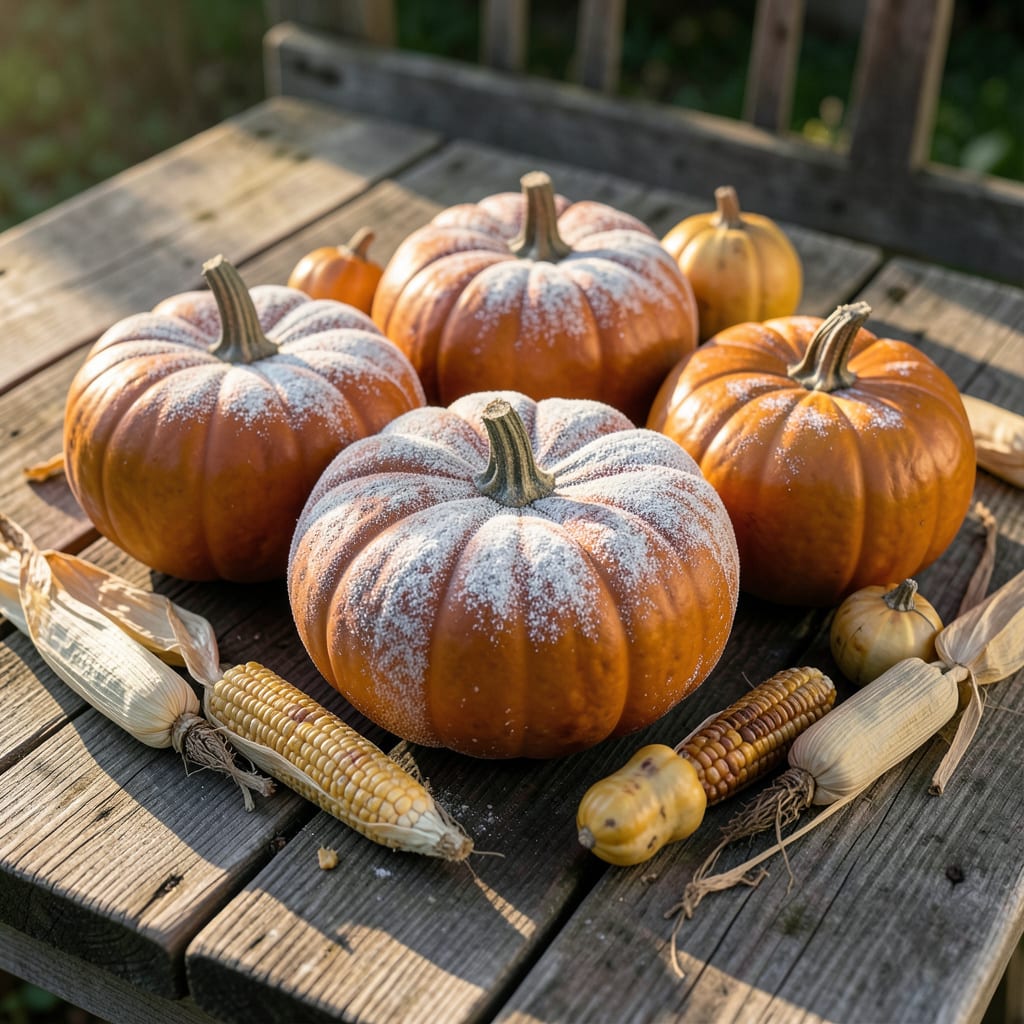
White dust on your pumpkin leaves means trouble. I spotted it on my vines last July and knew I had to act fast to save my fall harvest.
This fungal disease spreads quickly in dry conditions, but it’s 100% treatable with early intervention. The key is catching it before it coats entire leaves and stunts growth.
Organic fixes like neem oil, baking soda sprays, or even milk solutions can stop it in its tracks. Cultural practices help prevent it from coming back next season.
You’ll see new growth return within 7-10 days of treatment, and your pumpkins will keep sizing up for harvest.
Powdery mildew on pumpkin plants thrives under specific environmental and biological conditions. Understanding these triggers helps you prevent and manage outbreaks effectively.
The fungus Podosphaera xanthii (the primary culprit) spores germinate when relative humidity is 60–90%, yet the leaf surface remains dry. Unlike other fungal diseases, powdery mildew doesn’t need free water—just moist air. Crowded plantings or poor airflow trap humidity, creating ideal conditions for spores to spread.
Temperature swings between 60–80°F (15–27°C) accelerate fungal growth. Warm afternoons promote spore production, while cooler nights (below 60°F/15°C) slow leaf drying, extending the window for infection. This cycle is common in late summer and early fall, when pumpkins are most vulnerable.
Wetting foliage during irrigation doesn’t directly cause powdery mildew, but it prolongs leaf wetness, which can indirectly support secondary infections. More critically, overhead watering can splash spores from infected leaves to healthy ones, speeding up the spread across your patch.
Some pumpkin cultivars lack genetic resistance to P. xanthii. Heirloom or older varieties, like ‘Howden’ or ‘Jack-O’-Lantern’, are often more prone to infection. If you’ve struggled with mildew yearly, switching to resistant hybrids (e.g., ‘Gladiator’ or ‘Magic Lantern’) can break the cycle.
Dense foliage or planting too closely restricts airflow, allowing humidity to linger. Spores thrive in stagnant, humid microclimates. Pruning excess vines or spacing plants 3–5 feet apart improves ventilation, reducing the risk of spore germination.
Powdery mildew may be a common issue for pumpkin plants, but it’s far from unstoppable. Here’s how to tackle it head-on and keep your patch thriving. 🌱
Crowded plants trap moisture, creating a playground for mildew. Thin out dense foliage to allow airflow, and space pumpkin plants at least 2–3 feet apart. Prune affected leaves immediately—do not compost them—to prevent spores from spreading. A small fan on low can also help circulate air in greenhouses or enclosed spaces.
Wet leaves are a mildew magnet. Water at the base of the plant using a soaker hose or drip system to keep foliage dry. If you must use a sprinkler, do it early in the morning so leaves dry quickly in the sun. Avoid evening watering, as cool, damp nights encourage fungal growth.
For mild cases, mix 1 tablespoon baking soda + 1 teaspoon dish soap + 1 gallon of water and spray affected leaves weekly. Neem oil (mixed per label instructions) is another powerful organic option—apply in the evening to avoid harming pollinators. For severe infections, use sulfur-based sprays, but avoid applying in extreme heat (above 90°F) to prevent plant burn.
Yes, the fruit remains safe to eat if washed thoroughly. The mildew only affects leaves and stems, not the pumpkin itself. Just avoid consuming any infected foliage.
It thrives in high humidity (60-90%) with dry leaves. Warm days and cool nights create perfect conditions, even without rain. Proper spacing improves airflow to prevent it.
Spray every 7-10 days or after rain. Apply in the evening to protect pollinators. For severe cases, alternate with baking soda solution for better results.
Yes, spores can overwinter in plant debris. Remove all infected material in fall and rotate crops. Resistant varieties like ‘Gladiator’ help prevent recurrence.
