
Beautiful Plants For Your Interior
Beautiful Plants For Your Interior
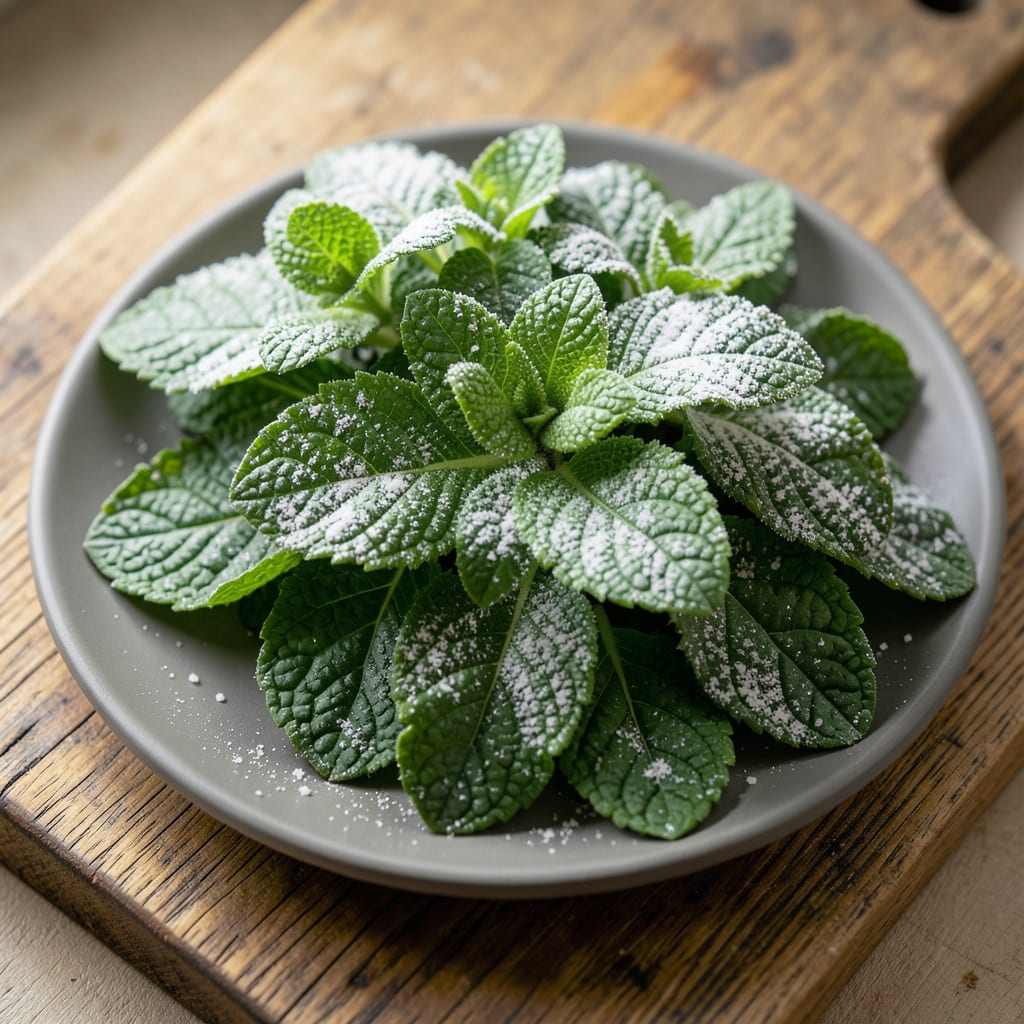
That white powder on your mint leaves isn’t dust—it’s a fungal party crashing your garden. 🌱 I’ve battled this more times than I’d like to admit, and the good news is it’s fixable without harsh chemicals.
Start with simple cultural fixes: improve airflow, water at the base, and remove infected leaves immediately. A baking soda spray works wonders as a natural treatment, and consistent care keeps it from coming back.
📚 In This Guide
Here’s my go-to method for tackling this common issue without harsh chemicals.
As soon as you spot the white, powdery spots on leaves, move the infected mint to a separate area. This prevents spores from spreading to healthy plants through air currents or water splashing. I use a dedicated tray or isolated corner of my growing space.
Check nearby plants carefully—early signs can be subtle. Look for slight leaf curling or a faint white dusting on the undersides. Catching it early makes treatment much easier and faster.
Using clean, sharp scissors, remove all leaves showing signs of powdery mildew. Don’t compost these—bag and dispose of them to prevent reinfection. I always sterilize my tools with rubbing alcohol between cuts to avoid spreading the fungus.
Prune in the morning when leaves are dry. Wet foliage can spread spores to healthy parts of the plant during handling. Remove at least 1-2 inches below visible damage to ensure you’ve gotten all affected tissue.
Mix 1 tablespoon baking soda and 1 teaspoon mild liquid soap in 1 gallon of water. Spray this solution thoroughly on all leaf surfaces, especially the undersides where fungal spores often hide. I use a fine mist setting for even coverage.
Apply in the early morning or late afternoon to prevent leaf burn from sun exposure. Reapply every 7-10 days or after rain. You’ll see improvement within 2-3 applications if caught early.
Powdery mildew thrives in humid, crowded conditions. Space your mint plants at least 12-18 inches apart to improve airflow. I sometimes run a small fan on low for 1-2 hours daily to keep air moving around my plants.
Ensure your mint gets 4-6 hours of morning sun daily. This helps dry dew from leaves quickly, creating an environment less favorable for fungal growth. If growing indoors, position near a bright window with good ventilation.
Real talk: prevention is easier than treatment. Once you’ve cleared the infection, maintain these conditions to keep it from returning.
Check your mint plants every 2-3 days for new signs of powdery mildew. Early detection means quicker treatment. I keep a small notebook to track treatment dates and any new spots I find.
Water at the base of plants rather than overhead to keep foliage dry. If your mint is in a particularly humid area, consider moving it to a spot with better air circulation. Consistent care prevents most fungal issues from taking hold.
Small adjustments make a big difference when treating your mint effectively.
The Isolation Technique: In Step 1, move infected plants immediately—even a few hours of delay can let spores spread. I use a separate shelf or even a cardboard box as a temporary isolation zone. Check all nearby plants thoroughly, as spores can travel up to 6 feet in still air.
Pruning Precision: For Step 2, always prune in the morning when leaves are dry, and sterilize your scissors with rubbing alcohol between each cut. Removing at least 1-2 inches below visible damage is non-negotiable; I learned this the hard way after reinfection ruined my first batch.
Application Timing: In Step 3, the baking soda solution works best when applied in early morning or late afternoon. Reapplying every 7-10 days is crucial—I set calendar reminders so I never miss a treatment. Also, spray the undersides of leaves where spores hide.
Prevention Strategy: Step 4’s spacing of 12-18 inches between plants isn’t just a suggestion. Crowded mint is an open invitation for powdery mildew. I run a fan for 1-2 hours daily to keep air moving, which has cut my infection rate dramatically.
While powdery mildew can weaken mint by reducing photosynthesis and stunting growth, it rarely kills the plant outright. Prompt treatment and improving air circulation can help your mint recover.
Space plants properly for airflow, water at the base (not leaves), and apply neem oil or baking soda spray weekly. Avoid overhead watering and remove infected leaves immediately to stop spread.
Treat early morning or late evening to avoid leaf burn from sun-heated solutions. Consistency is key—reapply natural remedies every 7-10 days or after rain for best results.
Avoid consuming heavily infected leaves, as the fungus can affect flavor and safety. Lightly affected leaves can be used if thoroughly washed, but it’s best to remove and discard severely mildewed foliage.
Some mint types, like peppermint or spearmint, show better resistance than others. However, no variety is fully immune—good cultural practices remain the best defense.
