
Beautiful Plants For Your Interior
Beautiful Plants For Your Interior
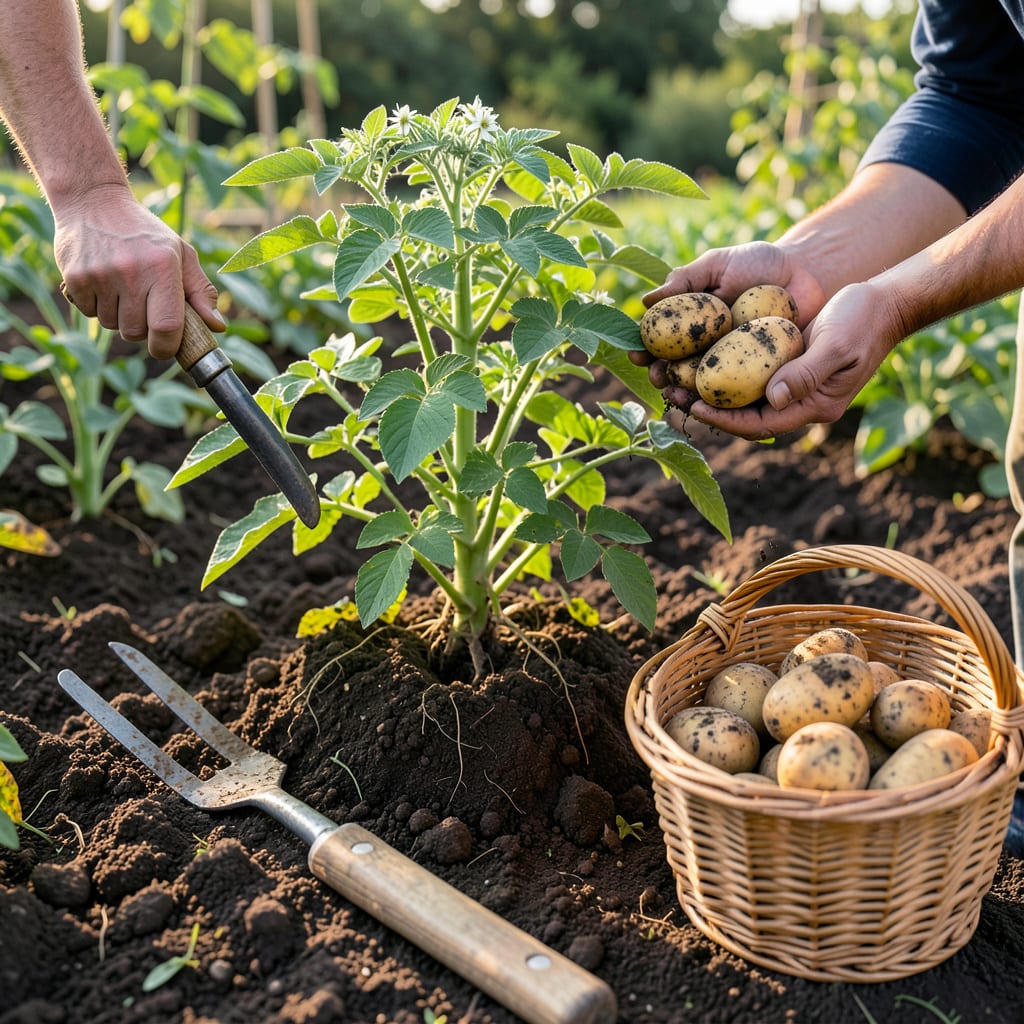
There’s nothing more rewarding than digging up your first homegrown 🥔 Potato. But knowing the perfect moment to harvest can be tricky for even seasoned gardeners.
Your plants will send clear signals when they’re ready, and I’ll help you spot them. From yellowing foliage to firm skins, discover the exact cues that guarantee a bountiful crop.


I always watch for the first clear signal from my potato plants: yellowing foliage. This color change means the plant is redirecting energy to its tubers, a sure sign they’re maturing underground.
Another unmistakable sign is when the leaves begin dying back. As they wither and turn brown, it indicates the plant has finished its growth cycle and the potatoes are nearly ready for harvest.
| Sign | What It Means |
| Yellowing leaves | Early maturity stage beginning |
| Brown, wilting foliage | Full maturity reached |
| Flowers appearing | New potatoes ready below |
| Soil cracks | Tubers expanding underground |
Don’t overlook the flower formation stage. When your potato plants bloom, it often means new potatoes have formed and are ready for an early harvest if you prefer smaller, tender tubers.
I’ve found that cracks in the soil near the plant base can indicate growing tubers pushing against the earth. This is especially common with larger varieties like Russet potatoes.
For the most accurate check, I gently brush away soil at the plant base to inspect tuber size. Golf ball-sized potatoes are typically ready for early harvest, while waiting for baseball-sized means full maturity.
The skin test is crucial. When the potato skin doesn’t scrape off easily with your fingernail, it’s developed a protective layer, signaling it’s ready for long-term storage.
Remember that early varieties like Red Pontiac may show these signs in as little as 60 days, while late varieties such as Kennebec can take up to 120 days to mature fully.
Weather conditions affect timing too. In my experience, cooler climates may extend the growing season, while hot weather can accelerate maturity. Always adjust based on your local conditions.
Finally, I recommend harvesting on a dry, sunny day when the soil is workable. This makes digging easier and helps the potatoes cure properly before storage. 🌱
I’ve learned that harvesting early potatoes gives you smaller, tender tubers with a sweeter, more delicate flavor. These are perfect for immediate use and don’t store as long as mature potatoes.
If you wait for full maturity, you’ll get larger potatoes with a thicker skin that stores well for months. The trade-off is a slightly firmer texture and more earthy taste.
| Harvest Stage | Size | Flavor | Storage |
| Early (New) | 1-2 inches | Sweet, tender | Short-term |
| Mature | 2-4 inches | Earthy, firm | Long-term |
For early harvest, I gently dig around the plant base when I see flowers forming. This lets me pull out a few new potatoes while leaving the rest to grow.
Late varieties like Russets need the full 120 days to reach their potential. I wait until the foliage dies back completely before harvesting these for storage.
Weather plays a role too. In my garden, hot spells can speed up maturity, so I check tubers earlier than expected. Cool, wet conditions might delay readiness by a week or two.
I always use a garden fork to carefully lift potatoes, starting 6-8 inches from the plant to avoid damaging the tubers. This method works for both early and late harvests. 🌱
I’ve seen many gardeners rush their harvest when they spot the first yellow leaves. This often results in underdeveloped tubers that won’t store well or satisfy at the table.
Another common error is harvesting in wet soil conditions. Digging in muddy earth can lead to rotten potatoes and makes cleaning more difficult.
⚠️ Warning: Never use a shovel close to plants—always use a garden fork to prevent tuber damage that invites disease.
I always check that my potatoes have reached mature size before harvesting. New potatoes can be harvested early, but main crop varieties need their full growing period.
Many gardeners also overlook the curing process. After digging, potatoes need 1-2 weeks in a dark, dry place to develop their protective skin for storage.
Finally, I avoid harvesting during extreme heat. The stress can cause potatoes to develop diseases more easily. I wait for a cool, dry day for best results. 🌱
New potatoes are ready when plants bloom. Gently dig near the base to check for golf ball-sized tubers with thin skins. Harvest a few at a time to enjoy fresh.
Early harvesting often yields underdeveloped tubers with fragile skins that won’t store well. These small potatoes are best used immediately rather than saved.
Avoid harvesting in muddy conditions. Wet soil can cause rot and make cleaning difficult. Always wait for dry weather for best results.
After harvesting, let potatoes cure in a dark, dry place for 1-2 weeks. This helps develop a protective skin for long-term storage.
