
Beautiful Plants For Your Interior
Beautiful Plants For Your Interior
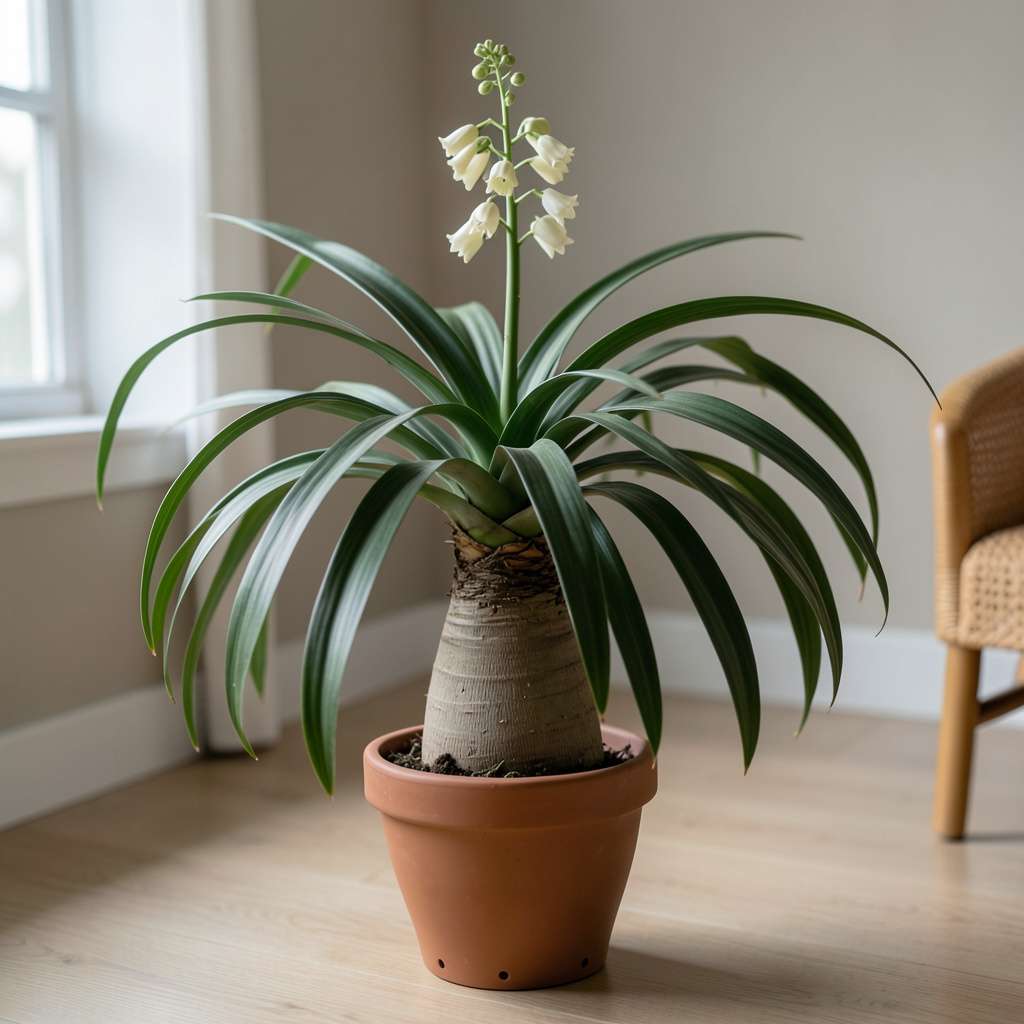
Ponytail palm flowers are rare but striking, appearing as creamy-white, branched clusters on tall stalks rising from the plant’s center. They typically bloom in late spring to early summer on mature, well-established plants—often after 10+ years of growth.
I’ve always found these blooms fascinating because they transform the plant’s entire appearance. 🌟 The flower stalks can reach up to 3 feet tall, creating a dramatic focal point that contrasts beautifully with the palm’s shaggy, grass-like foliage. What many don’t realize is that these flowers are actually inflorescences—complex structures made up of hundreds of tiny individual blossoms. The creamy-white color often develops subtle pink or green tints as the blooms age, adding to their visual appeal. This slow-growing plant teaches patience, as it may take a decade or more of proper care before you’re rewarded with your first floral display.
💡 In This Article
These plants follow a biological timeline that tests even the most patient gardeners. In their native Mexican habitats, ponytail palms grow in arid conditions where water is scarce and sunlight is intense. This environment triggers a slow metabolic process that can take 10-15 years just to reach flowering maturity.
The plant’s energy focuses first on developing its signature bulbous trunk—an adaptation for water storage—before diverting resources to reproduction. 🌵
The flowering process is energy-intensive, requiring perfect conditions. Outdoor specimens in USDA zones 9-11 have the best chance, needing 6+ hours of direct sunlight daily and well-draining soil that mimics their rocky native terrain. Indoor plants rarely bloom because they lack this intense light exposure and temperature fluctuation.
Even with ideal care, the plant’s genetic programming prioritizes survival over reproduction in less-than-perfect conditions.
What’s fascinating is how the plant’s water storage system affects blooming. The swollen trunk acts like a reservoir, and flowering only occurs when this storage reaches capacity—typically after years of drought-like conditions. Overwatering (a common mistake) keeps the plant in survival mode, delaying or preventing flower development entirely.
The blooms themselves emerge from the plant’s central growing point, which won’t form until the trunk reaches at least 12-18 inches in diameter.
Seasonal cues play a crucial role too. In their native range, ponytail palms experience distinct wet and dry seasons that trigger hormonal changes. The late spring to early summer bloom time aligns with the beginning of the rainy season in Mexico, when the plant has maximum energy reserves.
Without these natural cycles, cultivated specimens often remain in a vegetative state indefinitely. Even greenhouse-grown specimens may never flower if temperature and humidity aren’t precisely controlled.
The rarity becomes even more pronounced when you consider that each flower stalk produces hundreds of tiny blossoms, but the entire structure is short-lived. The inflorescence typically lasts only 2-3 weeks before wilting, and the plant may then take several years to recover enough energy to bloom again.
This ephemeral nature, combined with the decade-long wait, makes each flowering event particularly special for growers who achieve it. ✨
For those attempting to grow these plants from seed, the timeline extends even further. Seed-grown specimens may take 15-20 years to reach flowering size, as they grow more slowly than propagated cuttings.
The plant’s natural growth rate is about 1 inch per year in trunk diameter under ideal conditions—making each additional inch a significant milestone in the journey toward those coveted creamy-white blooms.
Most ponytail palms need 10-15 years of growth before producing their first flowers. Seed-grown plants may take even longer—up to 20 years—while cuttings from mature specimens might bloom sooner. The trunk must reach at least 12-18 inches in diameter before flowering becomes possible.
Indoor blooming is extremely rare due to insufficient light and lack of seasonal changes. These plants require 6+ hours of direct sunlight daily and temperature fluctuations that most homes can’t provide. Moving container plants outdoors during summer months may improve chances, but don’t expect indoor blooms.
Use a low-nitrogen, high-phosphorus fertilizer (like 5-10-5) applied only twice yearly. Apply once in early spring and again in mid-summer at half-strength for container plants. Too much nitrogen promotes leaf growth at the expense of flowers. Avoid fertilizing in fall or winter when the plant is dormant.
Look for a trunk diameter of at least 12 inches and a distinct central growing point. Mature plants grow about 1 inch per year in trunk thickness. Check the base where the trunk meets the soil—a wide, stable base indicates steady growth. Keep a journal to track annual progress.
Celebrate this rare event! The flower stalk can reach 3 feet tall but only lasts 2-3 weeks. Protect it from strong winds that could snap the stalk. After blooming, reduce water slightly to help the plant recover. Don’t expect annual blooms—it may take several years to build energy reserves again.
