
Beautiful Plants For Your Interior
Beautiful Plants For Your Interior
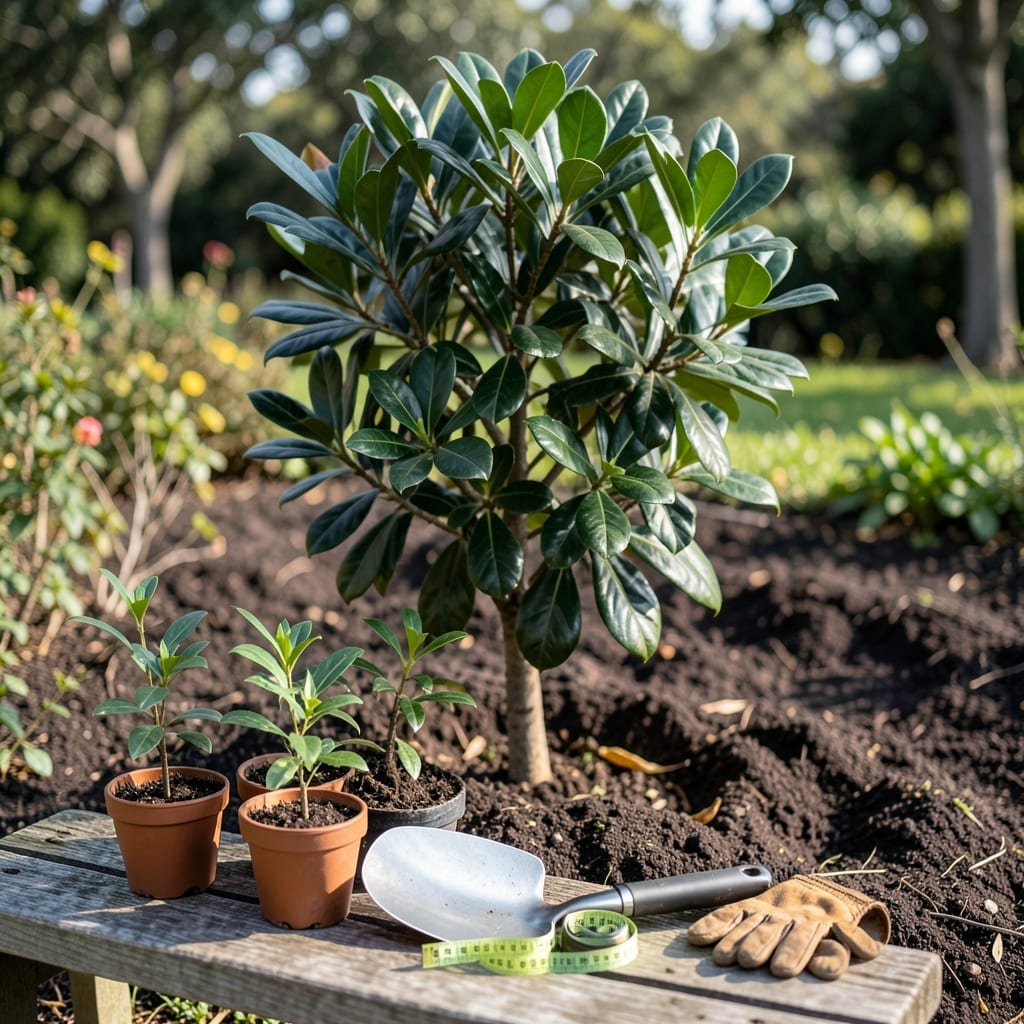
Getting the spacing right with podocarpus means the difference between a crowded mess and a healthy landscape. I learned this the hard way after planting a row too close together.
These evergreens need room to breathe—typically 3-6 feet apart for hedges, more for standalone specimens. Proper distance prevents disease, ensures full growth, and keeps maintenance manageable.
📚 In This Guide
Follow this method for establishing vigorous, disease-resistant specimens with proper air circulation.
Podocarpus varieties vary significantly, so first confirm your cultivar’s mature width. Dwarf types like ‘Maki’ reach 3-4 feet wide, while standard Podocarpus macrophyllus spreads 8-10 feet or more. Measure your planting area carefully—this determines everything.
Observe sun patterns too. These evergreens tolerate full sun to partial shade, but spacing adjustments become crucial in hotter zones. In USDA zones 8-10, where they’re most commonly grown, afternoon shade reduces water stress and allows tighter spacing.
For hedge planting, space dwarf cultivars 2-3 feet apart measured from center to center. This creates a dense screen within 3-4 years while preventing overcrowding. Standard varieties need 4-6 feet between plants to accommodate their natural spread.
If planting as individual specimens rather than a hedge, give each plant a 5-8 foot diameter of open space. This ensures adequate root development and reduces competition. Mark positions with stakes before digging—it’s surprising how quickly visual estimates fall apart.
Dig holes exactly as deep as the root ball and twice as wide. This loose soil area encourages rapid root expansion. I’ve found that amending the backfill with 20% compost gives new plantings a significant boost, though Podocarpus tolerates a range of soil types.
Check drainage by filling the hole with water. If it doesn’t drain within 30 minutes, you’ll need to improve drainage or choose a different location. Podocarpus hate waterlogged roots, and poor drainage will manifest as yellowing foliage within weeks.
Place the plant so the root flare is 1-2 inches above soil level—this prevents settling that can bury the trunk. Backfill in layers, watering between each to eliminate air pockets. The soil should settle naturally around the roots without compacting.
Water deeply immediately after planting, then maintain consistent moisture for the first 6-8 weeks. You’ll know it’s establishing when you see new growth emerging from the tips. After that, Podocarpus become remarkably drought-tolerant, but the first season’s watering is critical.
Watch for signs of stress in the first year: wilting despite moist soil suggests root shock, while yellowing lower leaves often indicates overwatering. I check soil moisture by inserting my finger 2-3 inches deep—if it feels dry at that depth, it’s time to water.
As plants grow, thin out any weak or crowded stems to maintain air circulation. This is especially important with hedge plantings. You’ll develop a sense for when to intervene—usually when branches begin touching between plants. Proper initial spacing reduces this maintenance significantly.
These practical insights will help you avoid common pitfalls when spacing your plants.
Spacing Strategy: In Step 2, remember that dwarf cultivars like ‘Maki’ need 2-3 feet apart for dense hedges, while standard Podocarpus macrophyllus require 4-6 feet between plants. I learned the hard way that crowding leads to disease and poor air circulation. Mark positions with stakes—visual estimates always fail.
Drainage Check: Step 3’s 30-minute drainage test is non-negotiable. If water doesn’t drain within this time, you’ll see yellowing foliage within weeks. I once skipped this and lost three plants to root rot. Amend with compost or choose a better spot if drainage is slow.
Planting Depth: For Step 4, placing the root flare 1-2 inches above soil level prevents settling that can bury the trunk. Backfill in layers, watering between each to eliminate air pockets. This technique ensures the soil settles naturally without compacting around the roots.
Watering Wisdom: The 6-8 weeks of consistent moisture in Step 4 are critical. After that, Podocarpus become drought-tolerant, but the first season’s watering establishes the root system. Check soil moisture by inserting your finger 2-3 inches deep—if dry, it’s time to water.
For hedges, space Podocarpus plants 2–3 feet apart. For larger varieties or standalone specimens, allow 5–8 feet between plants to ensure adequate airflow and growth.
Yes, but spacing closer than 2 feet may cause overcrowding, leading to poor airflow and disease. Prune regularly to maintain health if planting densely.
Plant in early spring or fall to avoid extreme heat or cold. This gives roots time to establish before seasonal stress.
Yes! Dwarf varieties thrive in pots. Use well-draining soil and place containers 3–4 feet apart for balance.
Common issues include poor drainage, overwatering, or insufficient spacing. Ensure proper distance (2–8 feet) and amend soil for better growth.