
Beautiful Plants For Your Interior
Beautiful Plants For Your Interior
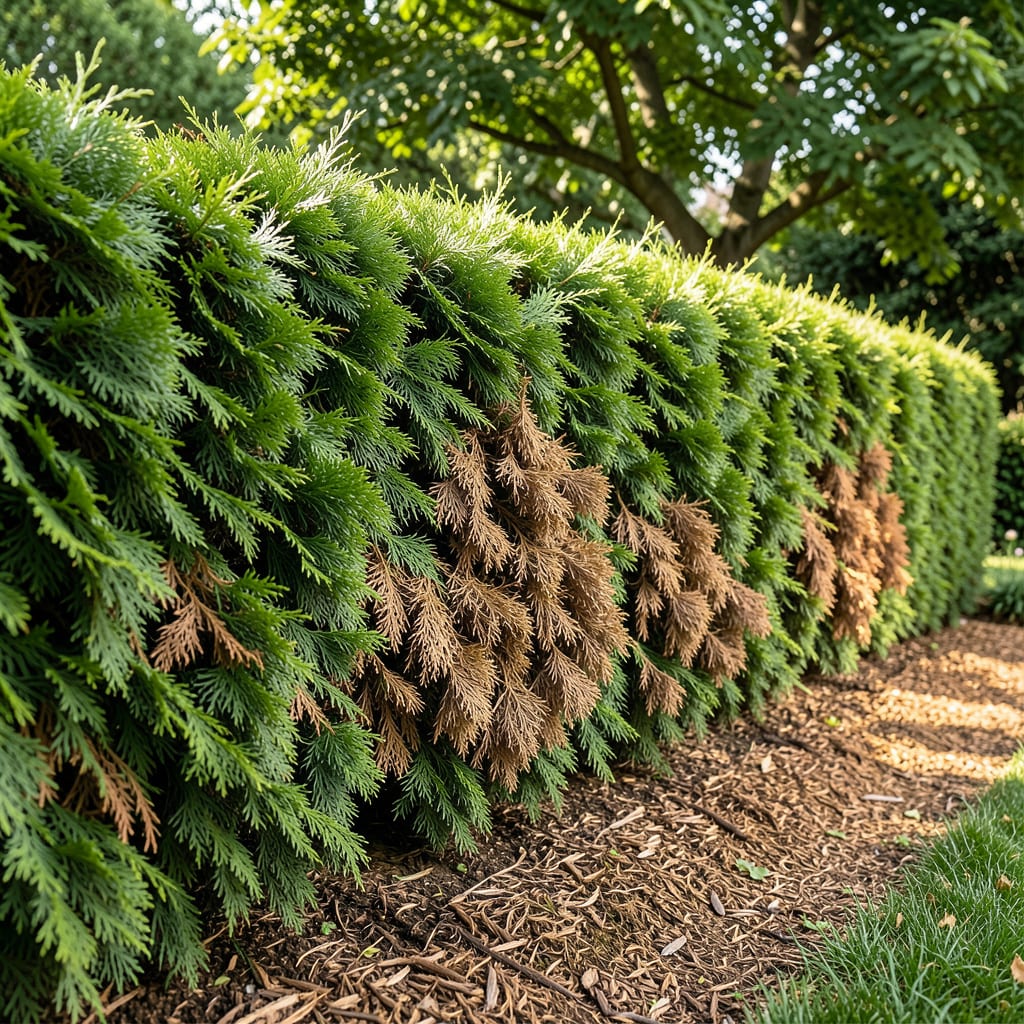
Your podocarpus hedge was lush green last month. Now it’s sporting crispy brown edges like bad highlights. I’ve been there—watching a perfectly healthy hedge decline overnight because of something invisible.
The usual suspects are water stress and soil pH problems. Too much or too little water, or soil that’s too acidic or alkaline, and your hedge starts protesting. It’s not always pests or disease—sometimes it’s just the basics being off.
Fix the watering schedule first, then test your soil. Most cases clear up with consistent moisture and a pH adjustment. The recovery isn’t instant, but it’s reliable.
Catching it early makes all the difference. Once you see brown, act fast before the damage spreads deeper.
A Podocarpus hedge turning brown is often a sign of stress, and the culprits usually fall into a few key categories. Below, we break down the most common causes with clear, science-backed explanations.
Both overwatering and underwatering can lead to browning. Podocarpus thrives in consistently moist but well-drained soil. Too much water suffocates roots, reducing oxygen uptake and promoting root rot (Phytophthora or Pythium fungi). Too little water, especially in extreme heat, causes xylem cavitation—where air bubbles block water transport in the plant, leading to leaf desiccation and browning.
Podocarpus prefers slightly acidic to neutral soil (pH 6.0–7.0). If the pH is too high (alkaline), essential nutrients like iron, manganese, and zinc become unavailable, leading to chlorosis (yellowing) that progresses to browning. Conversely, overly acidic soil can cause aluminum toxicity, damaging root systems and impairing water uptake.
Sap-sucking pests like scale insects, mealybugs, or spider mites weaken the hedge by extracting vital nutrients. Their feeding damage disrupts photosynthesis, while honeydew secretion promotes sooty mold, further stressing the plant. Severe infestations can cause necrotic (brown) patches as tissues die from starvation.
Pathogens such as Botryosphaeria or Seiridium cause canker diseases, leading to dieback and browning. These fungi enter through wounds or stressed tissue, often thriving in high humidity or poor air circulation. Infected areas may show sunken, discolored lesions before turning brown and brittle.
Extreme temperatures—frost, heatwaves, or sudden temperature drops—can shock Podocarpus, causing cellular damage. Frost injury ruptures plant cells, while heat stress accelerates transpiration beyond the roots’ ability to supply water, resulting in scorched, brown foliage. Additionally, salt spray (in coastal areas) or herbicide drift can induce chemical burns, manifesting as browning.
If your podocarpus hedge is turning brown, don’t panic—here’s how to diagnose and fix the issue based on the most common causes.
Fix: Check soil moisture 2 inches down. If soggy, stop watering and improve drainage by amending with compost or sand. For dry soil, water deeply once or twice a week (adjust for rain). Use a soaker hose for even distribution.
Prevention: Water in the early morning to reduce evaporation. Mulch with 2–3 inches of organic material to retain moisture. 💡 Pro tip: Stick to a consistent schedule—podocarpus hates extremes!
Fix: Test soil pH (ideal: 6.0–6.5). If too alkaline (above 7.0), add sulfur or peat moss. For acidic soil (below 5.5), mix in lime. Retest after 2–3 months.
Prevention: Use a balanced, slow-release fertilizer (10-10-10) to maintain stable pH. Avoid over-fertilizing, which can spike acidity. ✨
Fix: Inspect leaves for scale, mites, or aphids. Spray with neem oil or insecticidal soap (follow label instructions). For severe cases, use horticultural oil at dusk.
Prevention: Encourage beneficial insects (like ladybugs) with companion plants. Prune regularly to improve airflow and reduce pest hiding spots. 🎯
Fix: Remove brown or spotted foliage immediately to prevent spread. Apply a copper fungicide or bakery-grade baking soda spray (1 tbsp baking soda + 1 tsp dish soap + 1 gallon water).
Prevention: Space plants for airflow. Avoid overhead watering—keep leaves dry. Clean up fallen debris to eliminate fungal spores. 🌡️
Fix: Yellowing leaves? Test soil for nitrogen or iron shortages. Apply a chelated iron supplement or a nitrogen-rich fertilizer. Follow package rates to avoid burn.
Prevention: Fertilize twice yearly (spring and fall) with a micronutrient-rich formula. Monitor leaf color for early signs of deficiency.
Water deeply 1-2 times per week, checking soil moisture 2 inches down. Adjust for rainfall and temperature. Consistency prevents both drought and overwatering stress.
Use a home pH test kit from garden centers. Collect soil from 4-6 inches deep, mix with distilled water, and compare the color to the chart. Results appear in minutes.
No, once leaves turn brown, they won’t recover. Focus on improving conditions to prevent further damage. New healthy growth will replace the brown foliage over time.
Inspect leaves for tiny bugs, sticky residue, or webbing (pests). Look for spots, lesions, or powdery coatings (disease). A magnifying glass helps spot early signs.
