
Beautiful Plants For Your Interior
Beautiful Plants For Your Interior
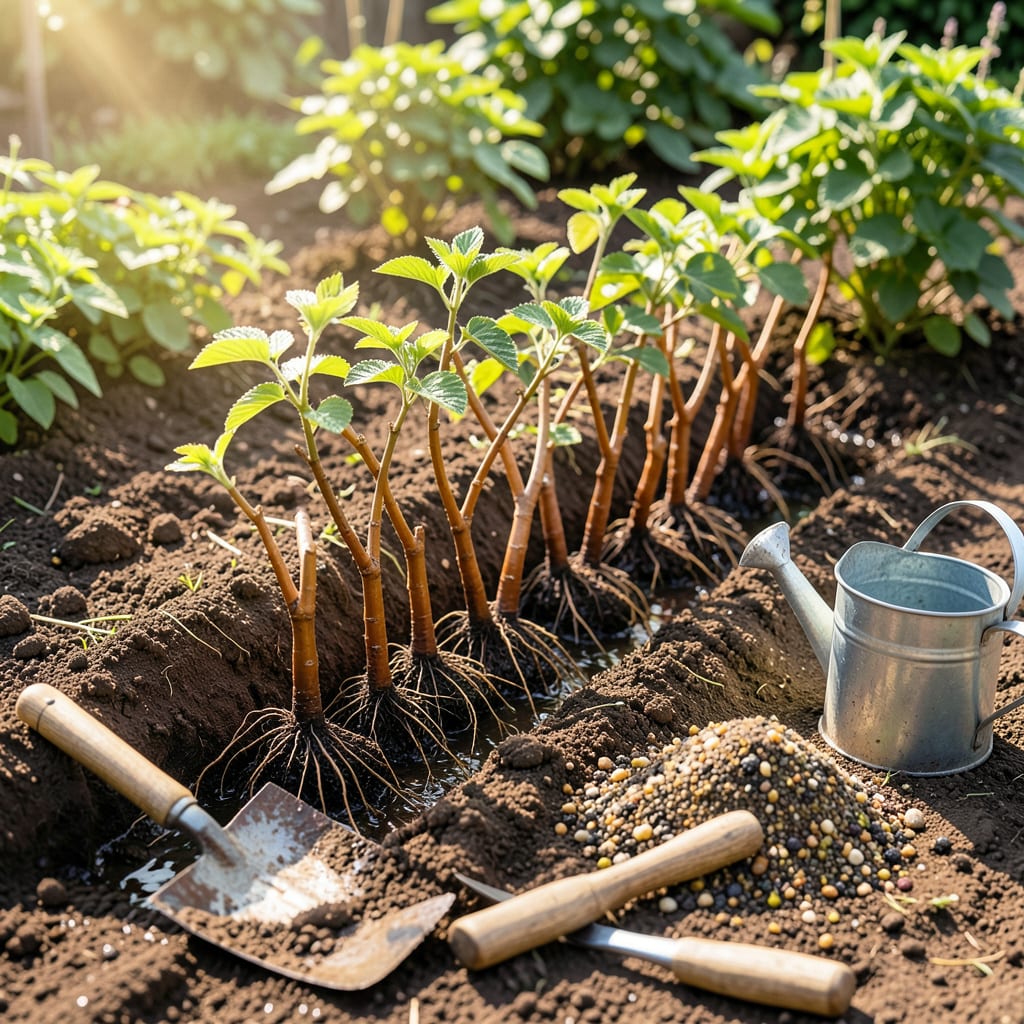
Early spring planting sets the stage for years of blackberry abundance. I learned the hard way that bare root plants need a good start—soil prep is everything, and timing can’t be rushed.
You’ll see canes establish within 4-6 weeks if planted right, with the first real harvest coming next season. The key is matching variety to your space and giving roots room to spread without competition.
📚 In This Guide
Here’s the method I use every spring to get blackberry canes off to a strong start and set up for heavy fruiting.
Begin by soaking the bare root canes in lukewarm water for 3-4 hours to rehydrate the roots. You’ll see the bark plump up slightly—that’s your cue they’ve absorbed enough moisture. While they soak, choose a site with full sun and well-draining soil; blackberries tolerate partial shade but fruit best with at least 6-8 hours of direct light daily.
Test drainage by digging a 12-inch deep hole and filling it with water. If it empties within 1 hour, you’re good. If not, consider amending with compost or sand to improve flow. Remove any weeds or grass in a 3-foot radius—blackberries hate competition early on.
Dig holes 18-24 inches wide and 12-15 inches deep, spacing them 4-6 feet apart for erect varieties or 6-8 feet apart for trailing types. The wider hole encourages roots to spread outward quickly, which is critical for establishment.
Loosen the soil at the sides of the hole with a fork to help roots penetrate the surrounding earth. If your soil is heavy clay, mix in 2-3 inches of compost to the removed soil—this improves structure without creating a “pot effect” that traps water around the roots.
Place the cane in the hole so the crown (where roots meet stem) sits 1-2 inches above soil level. This prevents settling, which can bury the crown and suffocate the plant. Spread the roots outward in a natural position—don’t force them into a tight bundle.
Backfill with the amended soil, gently firming it around the roots to eliminate air pockets. Water thoroughly with 1-2 gallons per plant to settle the soil. You’ll know it’s enough when the water pools briefly before draining away.
After planting, prune the canes back to 6-12 inches above the ground. This encourages vigorous new growth from the base. Use clean, sharp pruners to make 45-degree cuts just above a bud—this prevents dieback and directs energy to healthy shoots.
Apply a 3-4 inch layer of organic mulch (straw or wood chips work well) around the base, keeping it 2 inches away from the stem to prevent rot. Mulch retains moisture and suppresses weeds, which is especially important during the first growing season.
Small details make the difference between struggling canes and a thriving blackberry patch.
Soaking Success: Don’t rush the 3-4 hour soak in Step 1. Lukewarm water rehydrates the roots more effectively than cold, and you’ll literally see the bark plump up when they’re ready. This step prevents transplant shock and gives your canes a head start.
Sunlight Strategy: While blackberries tolerate partial shade, the 6-8 hours of direct light daily mentioned in Step 1 is non-negotiable for maximum fruit production. Morning sun is ideal as it dries dew quickly, reducing disease risk. I’ve found east-facing spots work particularly well.
Drainage Test: That 1 hour drainage test in Step 1 isn’t just a suggestion. If water lingers longer, your roots will suffocate. For clay soil, consider planting on a slight mound to improve drainage rather than just amending the hole.
Planting Depth: The 1-2 inches above soil level crown placement in Step 3 is critical. I learned this the hard way after burying canes too deep—settling will naturally lower them, and a buried crown means certain death for your plant.
Early spring, while the plants are still dormant, is ideal. Aim for 2-4 weeks before your last frost date to give roots time to establish before growth begins.
Yes! Soak the roots in water for 1-2 hours before planting. This rehydrates the plant and boosts its chances of quick, healthy establishment.
Space plants 3-4 feet apart in rows 6-8 feet apart. This allows for good air circulation and room for growth, reducing disease risk.
Check for proper planting depth (crown just above soil), consistent moisture, and freedom from pests. Patience is key—some take 3-4 weeks to show new growth.
Yes, but choose a large container (at least 15-20 gallons) with good drainage. Use quality potting mix and ensure the container gets full sun for best results.
