
Beautiful Plants For Your Interior
Beautiful Plants For Your Interior
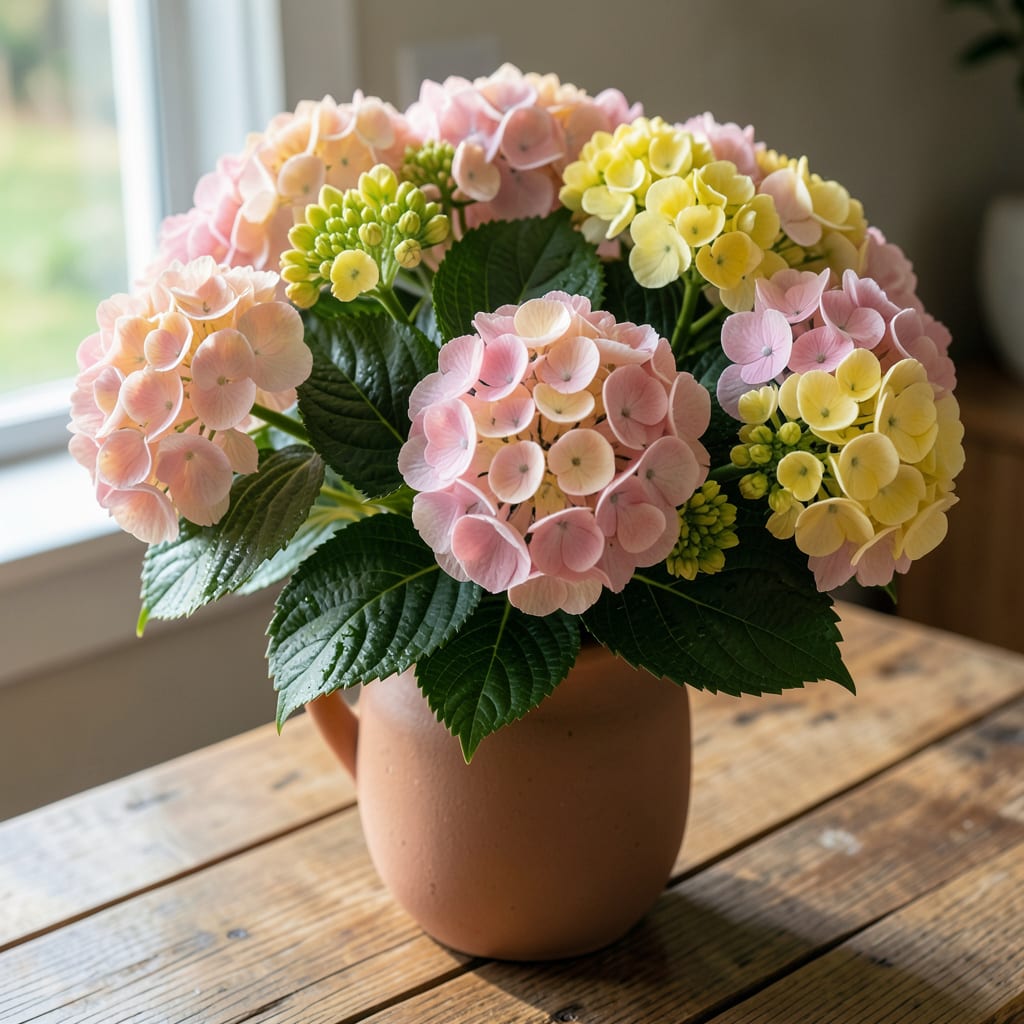
These bicolor blooms stopped me in my tracks last spring. Pink petals edged with sunny yellow create a show that brightens shady corners better than any other shrub.
I planted mine in rich, well-draining soil and they rewarded me with 8-inch flower heads all summer. The color shifts with soil pH, so you can tweak the palette year to year.
📚 In This Guide
These vibrant shrubs thrive in partial shade and reward you with months of colorful displays.
Select a spot with morning sun and afternoon shade to protect the delicate blooms from scorching. I’ve found that dappled light under tall trees works perfectly, as it mimics their natural forest floor habitat. The soil should drain well but retain some moisture—hydrangeas dislike both soggy roots and bone-dry conditions.
Avoid low-lying areas where cold air settles, as late frosts can damage new growth. If your garden lacks natural shade, a north or east-facing wall can provide the protection these plants need. Watch for wilting leaves in the afternoon—that’s your sign the location may be too hot.
Test your soil’s pH, as it directly influences flower color. For pink and yellow varieties, aim for a pH between 6.0 and 6.5. If your soil is too acidic, add lime to raise the pH; if it’s too alkaline, incorporate sulfur. I mix in plenty of organic matter like compost to improve fertility and drainage.
Dig a hole twice as wide as the root ball but no deeper. Loosen the roots gently if they’re pot-bound, then position the plant so the top of the root ball sits slightly above ground level. This prevents settling, which can suffocate the roots. Water thoroughly after planting to eliminate air pockets.
Keep the soil consistently moist, especially during the first growing season. I water deeply 2-3 times per week, allowing the top inch of soil to dry between waterings. A layer of 2-3 inches of mulch around the base helps retain moisture and regulates soil temperature.
Use organic mulch like shredded bark or pine straw, which breaks down over time and adds nutrients to the soil. Avoid piling mulch against the stems, as this can encourage rot. Yellowing leaves often signal underwatering, while drooping blooms may indicate overwatering.
Apply a balanced, slow-release fertilizer in early spring, just as new growth begins. I use a 10-10-10 formula and follow the package instructions for application rates. Avoid high-nitrogen fertilizers, as they promote leafy growth at the expense of flowers. A second light feeding in early summer can extend the blooming season.
If your plant isn’t flowering well, it might need more phosphorus. Switch to a fertilizer with a higher middle number, like 7-9-5, to encourage bloom production. Always water after fertilizing to prevent root burn and help nutrients reach the roots.
Most pink and yellow hydrangeas bloom on old wood, so prune them immediately after flowering—never in late winter or early spring. I remove dead or weak stems first, then shape the plant by cutting back about one-third of the oldest stems to the ground. This encourages new growth and more blooms next season.
Avoid heavy pruning, as this can reduce flowering. If your plant is overgrown, renovate it over 2-3 years by removing a portion of the oldest stems each year. Sterilize your pruners with rubbing alcohol between cuts to prevent disease spread.
These practical pointers will help you avoid common pitfalls when growing these beautiful shrubs.
Location Wisdom: Morning sun and afternoon shade are non-negotiable for protecting those delicate blooms. I learned the hard way that even dappled light under trees can sometimes be too intense during peak summer—watch for wilting leaves as your warning sign.
Soil pH Secret: That pH range of 6.0 to 6.5 isn’t just a suggestion. I’ve seen pink blooms turn blue in acidic soil and yellow flowers look washed out in alkaline conditions. Test your soil before planting, and don’t skip the lime or sulfur if needed.
Watering Technique: The 2-3 times per week watering schedule works best when you water deeply each time. Let that top inch of soil dry out between waterings, but don’t wait until the plant starts to droop—that’s already too late.
Pruning Timing: Pruning immediately after flowering is crucial since these bloom on old wood. I made the mistake of waiting until spring once, and that year’s bloom was nearly nonexistent. Mark your calendar when those flowers fade.
Adjust soil pH—pink blooms thrive in alkaline soil (pH 7+), while yellow often appears in neutral to slightly acidic conditions. Test your soil and amend with lime for pink or sulfur for acidity. Some varieties naturally produce bicolor blooms!
Plant in early spring or fall to avoid extreme heat. This gives roots time to establish before summer stress or winter dormancy. Choose a shaded spot with well-draining soil for best results.
Green blooms often signal neutral pH or aging flowers. If you prefer vibrant colors, retest soil pH and adjust as needed. Older blooms may naturally fade to green—prune spent flowers to encourage fresh, colorful growth.
Absolutely! Use a large pot with drainage holes and acidic to neutral potting mix. Container-grown hydrangeas need consistent watering and occasional pH adjustments to maintain vibrant bicolor blooms.
