
Beautiful Plants For Your Interior
Beautiful Plants For Your Interior
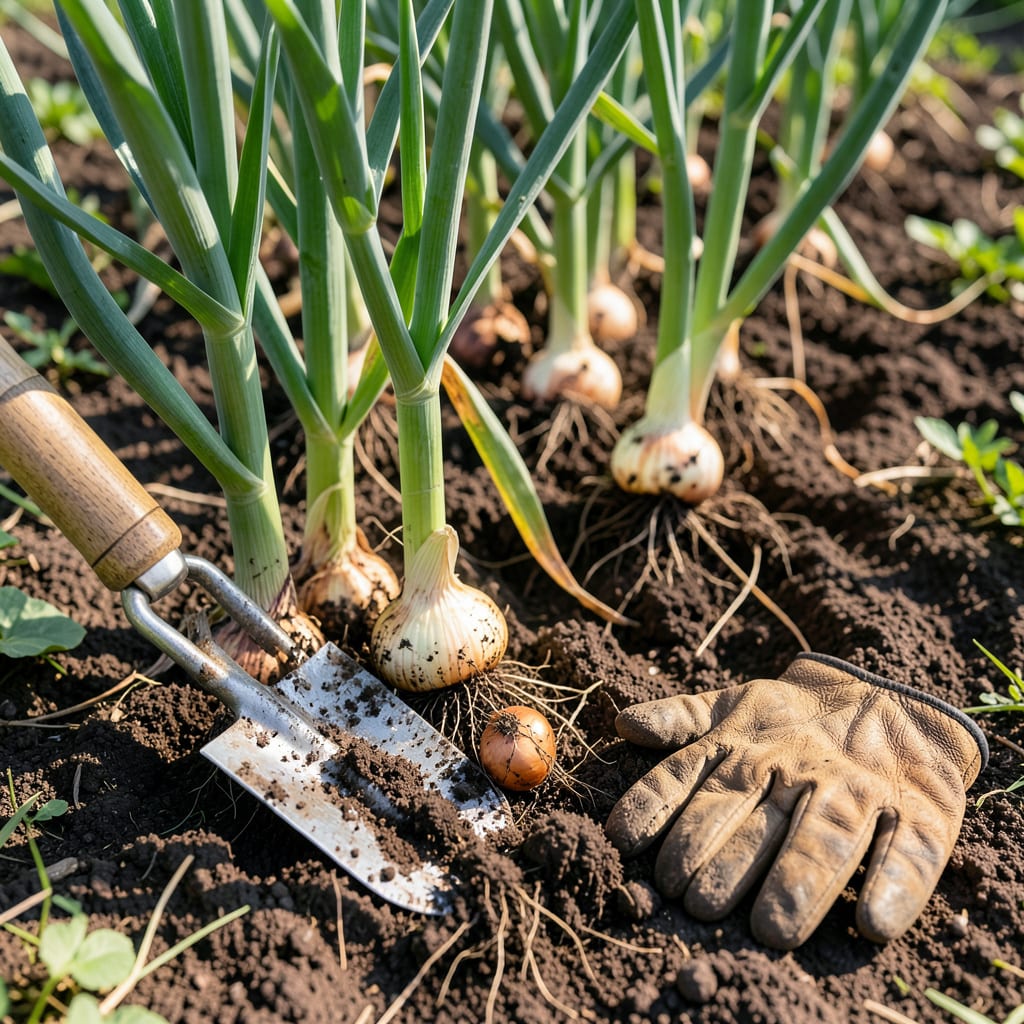
Nothing beats the satisfaction of pulling perfectly mature 🧅 onions from your garden. But how do you know they’re truly ready?
I’ll show you the clear visual signs to look for and explain why timing is everything for the best flavor and storage.


I always watch for 4 clear visual signals that tell me my onions are ready. The first is when the tops begin to yellow and flop over naturally. This is nature’s way of saying the bulb has finished growing.
Another sure sign is when the necks become soft and papery. I check this by gently squeezing the stem about 6 inches above the bulb. If it feels spongy rather than firm, it’s a good indicator.
| Harvest Sign | What to Look For |
|---|---|
| Tops Yellowing | Leaves turn brown-yellow and fall over |
| Neck Softening | Stem becomes spongy 6″ above bulb |
| Skin Appearance | Dry and papery outer layers |
| Bulb Size | Fully formed and firm to touch |
The outer skin of the onion is another giveaway. When it’s dry and papery, like the texture of old parchment, your onion is likely ready. I make it a habit to brush away some soil to check this.
Size matters too. Most onion varieties reach mature size between 2-4 inches in diameter. I measure by gently feeling the bulb through the soil – if it feels plump and firm, it’s probably ready.
I’ve learned that timing varies by variety. Short-day onions typically mature in 70-80 days, while long-day types can take 100-120 days. Always check your seed packet for specifics.
One trick I use is the “half-fall test”. When about 50-70% of the tops have fallen over, I know it’s time to start harvesting. This staggered approach ensures I don’t pull them all too early or too late.
Remember that weather conditions can affect these signs. In hot climates, onions might mature faster, while cooler areas could extend the growing period by a week or two.
For the best storage onions, I wait until all tops have fallen and the necks are completely dry. This usually takes about 1-2 weeks after the initial yellowing begins.
If you’re unsure, try harvesting one test onion. Cut it open to check the inner rings – they should be thick and well-formed, not thin and watery. This gives me confidence about the rest of the crop.
I always harvest on a dry sunny day when the soil isn’t too wet. This makes the curing process easier and helps prevent rot during storage.
I’ve found that understanding the onion growth timeline helps me predict harvest time accurately. From planting to picking, each stage has distinct visual markers that guide my decisions.
Early on, I watch for green shoots emerging from the soil, which confirms successful germination. This stage typically lasts 2-3 weeks depending on soil temperature and moisture.
During bulb formation, I notice the tops thicken and the base begins to swell. This is when I reduce watering slightly to encourage bulb development rather than leaf growth.
The maturation phase is the most exciting. I see the tops start to yellow and weaken as the plant redirects energy to the bulb. This usually happens about 8-10 weeks after planting.
For long-day varieties, I expect a longer timeline of 100-120 days. Short-day types often mature faster at 70-80 days. I always note the planting date to track progress accurately.
I’ve learned that weather impacts the timeline significantly. In warmer climates, the process accelerates, while cooler temperatures may extend it by a couple of weeks. I adjust my expectations accordingly.
When about 50% of tops have fallen, I begin harvesting. I use a garden fork to gently lift the bulbs, being careful not to bruise them. Then I let them cure for 1-2 weeks in a dry, well-ventilated area.
I’ve made my share of harvesting mistakes with onions over the years. The most common is pulling them too early when tops are still green. This results in small underdeveloped bulbs that don’t store well.
Another frequent error is waiting too long after tops fall. When left in damp soil, mature onions can start rotting or even resprout, ruining your hard work.
⚠️ Avoid These Harvesting Pitfalls
Harvesting wet onions leads to rot during curing. Always wait for dry conditions and let bulbs dry in the sun for a few hours after pulling.
I learned the hard way that improper curing causes storage problems. Onions need 1-2 weeks in a warm dry place with good airflow to form their protective outer skins.
Another mistake is bruising bulbs during harvest. I now use a garden fork to gently lift them rather than pulling by the tops, which can damage the necks and invite disease.
I also see gardeners mixing varieties during harvest. Since short-day and long-day onions mature at different rates, I keep them separate and check each variety’s specific days to maturity.
Finally, don’t overlook soil moisture at harvest time. I stop watering 1-2 days before harvest to let the soil dry slightly, making it easier to pull bulbs without damage.
Look for tops that have turned yellow-brown and fallen over naturally. Gently squeeze the neck 6 inches above the bulb—if it feels soft and papery, they’re likely ready.
Most varieties reach 2-4 inches in diameter when mature. Check by feeling the bulb through the soil—it should be firm and fully formed. Size varies by type, so consult your seed packet.
No, green tops mean the bulb is still growing. Harvesting too early results in small, underdeveloped onions that won’t store well. Wait until at least 50% of tops have yellowed and fallen.
Cure them for 1-2 weeks in a warm, dry, well-ventilated area. This allows the outer skin to dry and tighten, which is essential for long-term storage.
