
Beautiful Plants For Your Interior
Beautiful Plants For Your Interior
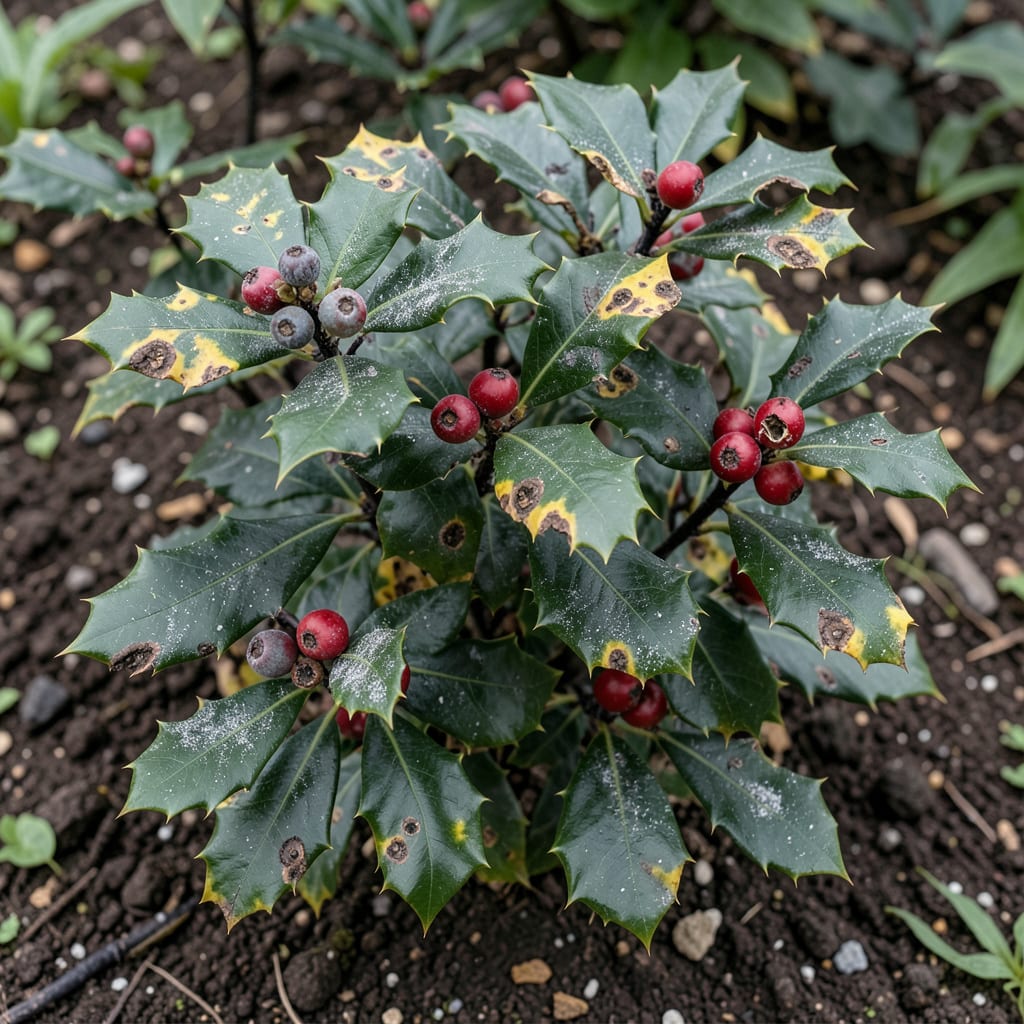
Holly bushes should be the low-maintenance stars of your landscape. I’ve watched mine go from vibrant green to spotted and struggling overnight, and the worst part was not knowing what I was dealing with.
That’s when I started collecting photos of every strange leaf, discolored patch, and unusual growth I could find. Turns out, most holly problems announce themselves visually if you know what to look for.
You’ll spot the early warning signs before they spread—yellowing leaves that indicate nutrient issues, black spots signaling fungal problems, or webbing that screams spider mites.
This guide helps you match symptoms to solutions, with clear images so you can act fast and keep your holly bushes thriving.
Understanding why holly bush diseases occur is the first step toward prevention and treatment. These issues often stem from environmental stressors, pathogens, or cultural practices. Here’s a breakdown of the primary causes:
Fungi like Phytophthora and Tar Spot thrive in wet, poorly drained soil or humid conditions. Overhead watering or crowded plantings create ideal environments for spores to spread. Action: Improve air circulation and avoid watering foliage directly.
Scale insects, spider mites, and holly leaf miners weaken the plant by feeding on sap or leaves. Stressed bushes are more vulnerable to secondary infections. Action: Inspect leaves regularly and use horticultural oil or insecticidal soap for early intervention.
Extreme temperatures, drought, or nutrient deficiencies (e.g., iron or magnesium) can compromise a holly’s defenses. Poor soil pH (outside 5.0–6.5) may also limit nutrient uptake. Action: Test soil, amend as needed, and mulch to retain moisture.
Over-fertilization, improper pruning (with unsterilized tools), or planting in shade can invite disease. Wounds from pruning or mechanical damage serve as entry points for pathogens. Action: Sterilize tools, prune in dry weather, and follow holly-specific care guidelines.
By addressing these root causes, you can reduce the risk of disease and keep your holly bushes thriving. 🌿
Dealing with holly bush diseases can feel overwhelming, but with the right approach, you can restore your plant’s health. Below are targeted solutions for common problems, along with prevention tips to keep your holly thriving. 🌿
Fix: Remove and destroy infected leaves to prevent the fungus from spreading. Apply a copper-based fungicide or neem oil every 7–10 days until the issue clears. Prune the bush to improve airflow, which reduces humidity—a key factor in fungal growth.
Prevent: Water at the base of the plant (avoid overhead watering) and space holly bushes at least 3–4 feet apart. Clean up fallen leaves and debris regularly. 💡
Fix: Blast off pests with a strong stream of water, then apply insecticidal soap or horticultural oil. For severe infestations, use a systemic insecticide. Repeat treatments every 5–7 days until pests are gone.
Prevent: Inspect plants regularly, especially in dry weather. Encourage beneficial insects like ladybugs, and avoid over-fertilizing, which can attract pests. ✨
Fix: If the soil is waterlogged, stop watering immediately and let it dry out. For advanced cases, remove the plant, trim away blackened roots, and replant in well-draining soil. Treat with a fungicide containing mefenoxam or phosphite.
Prevent: Ensure proper drainage by amending soil with compost or sand. Use raised beds if your soil retains too much moisture. 🎯
Fix: Prune damaged branches in early spring to encourage new growth. Apply a balanced fertilizer to help the plant recover. Water deeply before the first frost to hydrate roots.
Prevent: Mulch heavily around the base to insulate roots. Use burlap wraps or anti-desiccant sprays to protect leaves from harsh winds and cold. 🌡️
Look for dark spots, yellowing leaves, or powdery mildew on the surface. Tar spot appears as small, raised black lesions. Fungal issues often spread from the bottom up.
Improve airflow by spacing plants 3-4 feet apart. Water at the base, not the leaves, and remove fallen debris regularly. Healthy soil with proper drainage is key.
Yes, if caught early. Stop watering, let soil dry, and trim affected roots. Replant in well-draining soil and treat with fungicide. Early action is critical.
Act at the first sign of webbing, sticky residue, or visible insects. Use insecticidal soap or horticultural oil every 5-7 days until pests are gone.
