
Beautiful Plants For Your Interior
Beautiful Plants For Your Interior
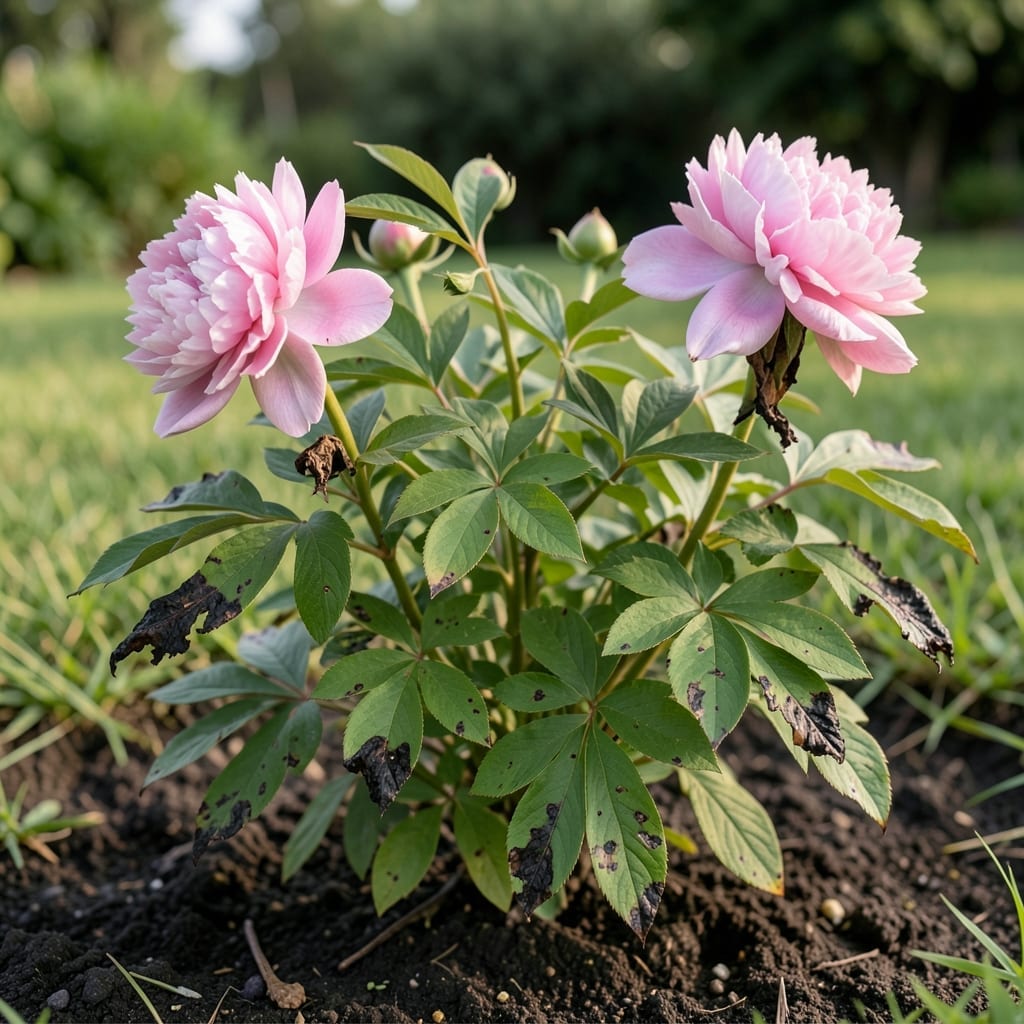
My peony bed went from lush to limp in a weekend. That wilting, blackened foliage wasn’t drought—it was Phytophthora blight, and I’ve since learned to spot it before it spreads.
Early detection saves plants. Look for dark spots on stems, soft rot at the base, and sudden collapse. Proper drainage, clean tools, and resistant varieties stop this soil-borne fungus before it starts.
📚 In This Guide
Use this method to identify the disease early and implement effective control before it spreads.
Begin by examining the base of peony stems and lower foliage for dark brown to black lesions that appear water-soaked. These spots often develop a greasy texture and may exude a dark fluid during wet conditions. I focus on the area where stems meet the soil, as this is where the pathogen typically initiates infection.
Check for wilting or yellowing leaves that progress rapidly, often accompanied by stem collapse. Unlike typical drought stress, affected plants show symptoms even when soil moisture is adequate. Early detection at this stage allows for immediate intervention before the disease spreads to healthy tissue.
Monitor suspected plants daily, as phytophthora blight progresses quickly under humid conditions. You’ll notice lesions expanding upward along stems, often with a distinct margin between healthy and infected tissue. The pathogen thrives in cool, wet weather and poorly drained soil, so these environmental factors often accompany symptom development.
Unlike botrytis blight, which produces fuzzy gray mold, phytophthora lesions remain dark and water-soaked without visible fungal growth. I confirm the diagnosis by checking for root rot—gently dig around the base to inspect for blackened, mushy roots, which indicate systemic infection.
Using clean, sharp pruners, cut infected stems 6-8 inches below visible lesions to ensure complete removal of contaminated tissue. I sanitize my tools between cuts with 70% isopropyl alcohol to prevent spreading the pathogen to healthy plants. Collect all removed material in sealed bags for disposal—never compost it, as the pathogen can survive and reinfect.
For severely affected plants, I remove the entire plant, including roots, to eliminate the infection source. Dig a wide berth around the base to capture all contaminated soil. This step is critical, as phytophthora can persist in soil for years, reinfecting new plantings.
Phytophthora thrives in waterlogged soil, so I prioritize improving drainage in affected areas. Amend heavy clay soils with organic matter to enhance water movement, or create raised beds for peonies in low-lying spots. Ensure planting sites receive full sun to promote rapid drying of foliage and soil surfaces.
Space peony plants 3-4 feet apart to allow for air circulation, which reduces humidity around foliage. I also avoid overhead irrigation, opting for drip lines or soaker hoses to keep foliage dry. These adjustments create an environment less favorable for pathogen development.
For high-value plants or recurrent problems, I apply a phosphonate fungicide as a preventative measure. Treat plants in early spring as new growth emerges, then every 2-3 weeks during wet periods. Follow label rates precisely, as overapplication can damage plants or lead to resistance.
Rotate fungicides with different modes of action to prevent pathogen resistance. I also treat the soil around plants, as phytophthora can survive in the root zone. Always apply in dry conditions with 24-48 hours of clear weather forecasted for maximum effectiveness.
Early detection and proper cultural practices make all the difference in managing this disease.
Diagnostic Precision: In Step 1, focus on the crown area where phytophthora typically begins. The dark brown to black lesions near the stem base are your first warning sign, especially when they appear water-soaked. I’ve found that examining plants in the morning when dew is present makes these symptoms more visible.
Environmental Awareness: The disease thrives in warm temperatures between 60-80°F combined with excessive moisture, as noted in Step 1. Monitor your garden closely during these conditions, particularly after extended rain or overhead irrigation. Low-lying areas with poor drainage are especially vulnerable.
Sanitation Protocol: Step 3 emphasizes immediate removal of infected material, and I can’t stress this enough. Always sterilize your pruners with that 10% bleach solution between cuts—this simple step prevents spreading the pathogen to healthy plants. Destroy, don’t compost, the infected material.
Application Timing: For fungicide treatments in Step 4, stick to the 14-21 day schedule. Applying in the early morning or late evening, as specified, avoids leaf burn and ensures maximum effectiveness. Consistency with this timing is key to keeping the disease in check.
Early symptoms include dark, water-soaked spots on stems and leaves, often near the soil line. Leaves may wilt, turn black, and collapse, while stems can develop sunken, brown lesions. Act quickly if you notice these signs!
Improve drainage, avoid overhead watering, and space plants for airflow. Remove and destroy infected plant debris, and consider fungicide treatments (like copper-based sprays) as a preventive measure in humid conditions.
No cure exists, but you can manage it. Prune and remove infected parts immediately, and apply fungicides to slow its spread. Severely infected plants may need to be dug up and destroyed to protect others.
Avoid replanting peonies (or susceptible plants) in the same area for at least 3–5 years. Phytophthora spores can linger in the soil. Opt for resistant species or treat the soil with fungicides before replanting.