
Beautiful Plants For Your Interior
Beautiful Plants For Your Interior
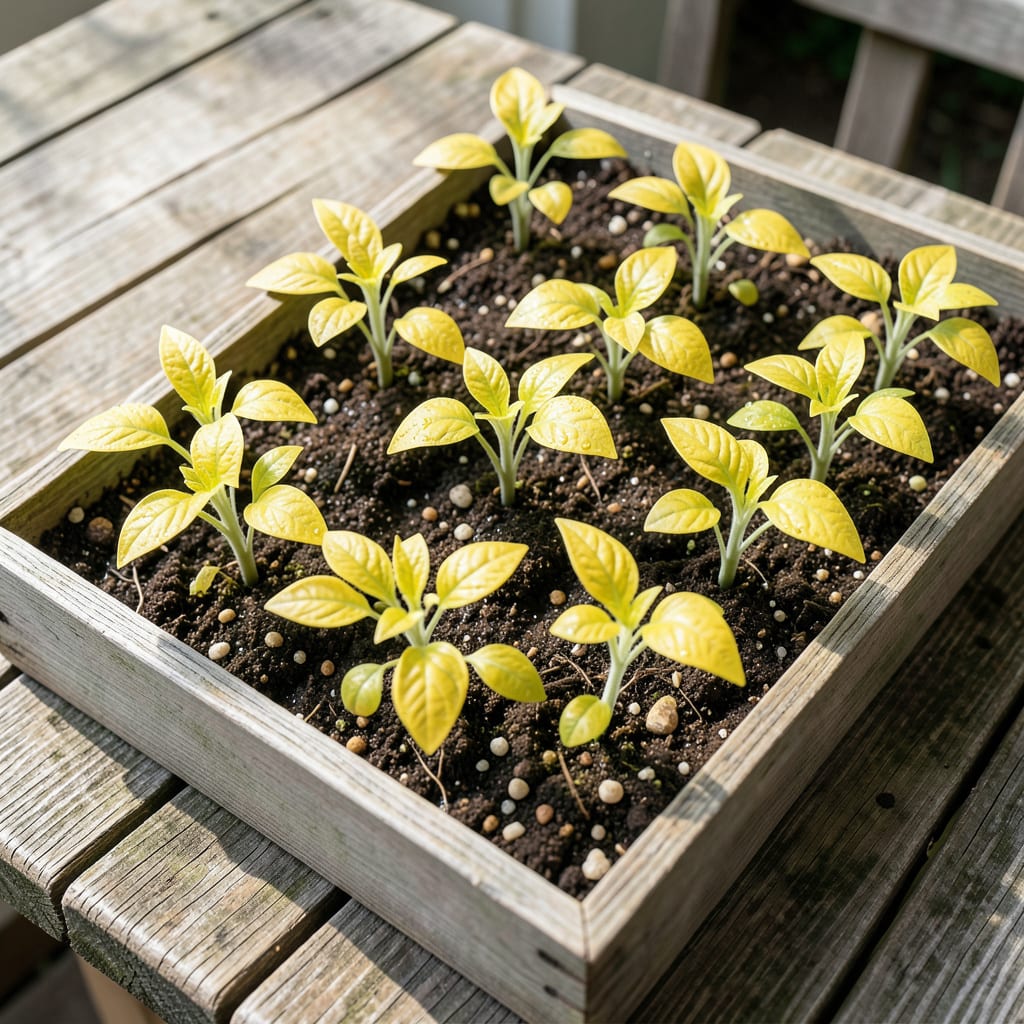
Yellow leaves on pepper seedlings hit different. I’ve watched healthy green sprouts turn pale overnight, and it’s always a gut-punch moment.
Most times, it’s either too much water or not enough food. The roots drown or starve—both lead to the same sad, yellow signals.
Fixing it starts with checking the soil. If it’s soggy, back off the water. If it’s pale, feed them gently with a balanced mix.
Catch it early, and those seedlings bounce back fast. Within a week, you’ll see fresh green growth pushing through.
When your pepper seedlings develop yellow leaves, it’s often a sign of stress or imbalance. Here are the most common causes, explained scientifically:
Root suffocation is the primary issue. Excess water fills soil pores, displacing oxygen that roots need for cellular respiration. Without oxygen, roots can’t absorb nutrients, leading to chlorosis (yellowing) in leaves.
Action: Let the top 1-2 inches of soil dry out between waterings. Use well-draining soil and pots with drainage holes.
Yellowing often signals a lack of nitrogen (uniform yellowing), iron (yellowing between veins), or magnesium (yellow patches with green veins). Nitrogen is mobile, so the plant pulls it from older leaves first when deficient.
Action: Test soil pH (aim for 6.0–6.8) and amend with a balanced fertilizer or specific micronutrients.
Too little light slows photosynthesis, reducing chlorophyll production (which gives leaves their green color). Conversely, excessive light can scorch leaves, causing yellow or brown patches.
Action: Provide 12–16 hours of bright, indirect light daily. Use grow lights if natural light is insufficient.
Peppers thrive at 70–85°F. Cold drafts or heat stress disrupt enzyme activity, impairing nutrient uptake. Yellowing often starts at leaf edges or between veins.
Action: Keep seedlings in a stable environment, away from vents or cold windows.
If your pepper seedlings are sporting yellow leaves, don’t panic—most causes are fixable! Below are targeted solutions for the most common issues, paired with prevention tips to keep your seedlings thriving.
Let the soil dry slightly between waterings. Stick your finger 1 inch deep—if it’s damp, wait. Use pots with drainage holes and a well-draining mix (add perlite or sand). Prevention: Water in the morning and avoid saucers that trap moisture.
For nitrogen deficiency (uniform yellowing), use a balanced liquid fertilizer (10-10-10) at half strength. For iron or magnesium (yellow between veins), apply chelated iron or Epsom salt (1 tbsp/gallon). Prevention: Start seedlings in nutrient-rich soil and test pH (6.0–6.8 ideal).
Move seedlings to bright, indirect light (12–16 hours/day). If using grow lights, keep them 2–4 inches above plants. Prevention: Rotate seedlings daily for even growth and avoid drafty windows.
Spray neem oil or insecticidal soap for aphids/spider mites. For fungal issues (damping-off), remove affected seedlings and improve airflow. Prevention: Sterilize tools, avoid overcrowding, and use a fan for circulation.
💡 Pro Tip: Yellow lower leaves? Often normal as seedlings mature—just trim them to redirect energy. But if yellowing spreads, revisit the fixes above!
Water when the top 1-2 inches of soil feel dry. Overwatering is a common mistake—soggy soil suffocates roots. Use pots with drainage holes to prevent waterlogging.
Severely damaged leaves won’t recover, but new growth will be green once you fix the issue. Trim yellow leaves to redirect energy to healthy growth.
Provide 12-16 hours of bright, indirect light daily. Grow lights should be 2-4 inches above plants. Rotate seedlings for even exposure.
Use a balanced 10-10-10 fertilizer for nitrogen. For iron or magnesium, try chelated iron or 1 tablespoon Epsom salt per gallon. Always test soil pH first.
