
Beautiful Plants For Your Interior
Beautiful Plants For Your Interior
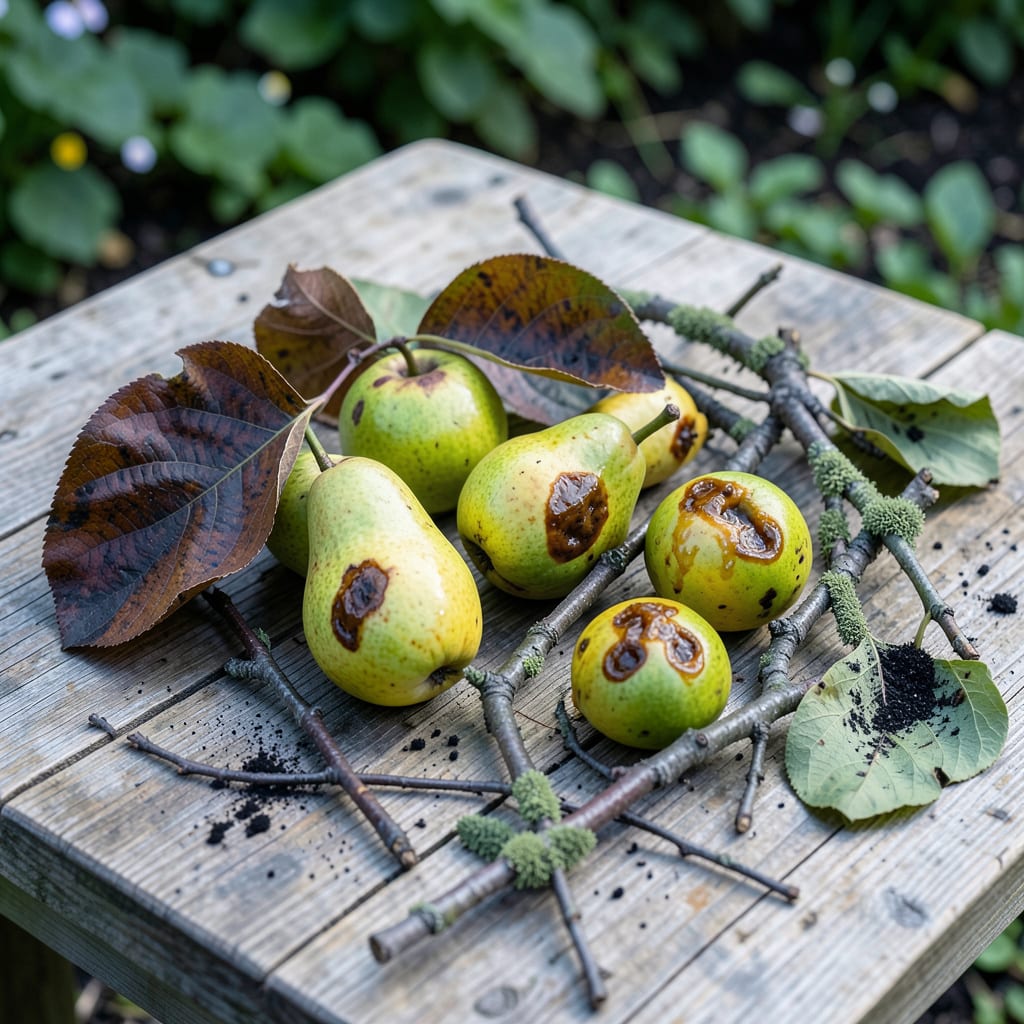
Spotting trouble before it spreads saves pear trees. I’ve seen fire blight wipe out branches in days and scab ruin fruit before harvest.
This visual guide helps you match symptoms to the right disease fast. Brown spots, blackened limbs, or powdery coatings—each tells a different story.
Early action means the difference between a minor fix and losing the tree. Organic sprays, pruning, and sanitation can stop most issues before they spiral.
Works for backyard orchards, old trees, or new plantings. Let’s identify and treat the problem before it’s too late.
Pear trees, like all plants, are vulnerable to diseases triggered by a mix of environmental, biological, and cultural factors. Understanding these causes helps in early diagnosis and prevention. Below are the primary reasons pear trees develop diseases:
Fungi are the most common culprits behind pear tree diseases. Fire blight (Erwinia amylovora), pear scab (Venturia pirina), and powdery mildew (Podosphaera leucotricha) thrive in damp, humid conditions. These pathogens spread through spores, infecting leaves, fruits, and bark. Overhead watering and poor air circulation exacerbate fungal growth.
Bacteria like Pseudomonas syringae cause bacterial canker, leading to sunken, oozing lesions on branches. Bacteria enter through wounds or natural openings, especially during wet, cool weather. Pruning tools contaminated with bacteria can also spread infections between trees.
Insects such as pear psylla and codling moths weaken trees by feeding on sap or fruit, creating entry points for secondary infections. Their honeydew secretions also promote sooty mold, which blocks sunlight and stunts growth. Regular monitoring and integrated pest management (IPM) are key to control.
Drought, waterlogging, or extreme temperatures stress pear trees, making them more susceptible to diseases. Poor soil drainage, for example, encourages root rot (Phytophthora spp.), while frost damage can invite fire blight. Ensuring proper irrigation and mulching helps mitigate these risks.
Improper pruning, over-fertilization, or planting in unsuitable locations can compromise a tree’s defenses. Overcrowded orchards limit airflow, fostering fungal spread, while excessive nitrogen boosts lush, disease-prone foliage. Adopting sanitary pruning and balanced fertilization reduces these risks.
Dealing with pear tree diseases? Here’s how to tackle common issues with practical fixes and prevention tips to keep your trees thriving.
Cut infected branches 6 inches below visible damage with sterilized pruners. Dip tools in rubbing alcohol between cuts to prevent spreading. Destroy (don’t compost) affected plant parts. Prevent it: Avoid overhead watering and apply copper fungicide in early spring.
Remove fallen leaves and fruit to reduce spores. Apply sulfur-based fungicide at bud break and repeat every 10–14 days during wet weather. Prevent it: Thin branches for better airflow and rake debris in fall.
💡 Pro Tip: Plant resistant varieties like ‘Kieffer’ or ‘Moonglow’ for long-term ease.
Blast pests off with a strong water spray or use insecticidal soap on nymphs. Introduce ladybugs or lacewings as natural predators. Prevent it: Apply horticultural oil in dormant season to smother eggs.
Prune infected leaves and branches immediately. Apply bactericide (like copper) at first sign. Prevent it: Water at the base (not leaves) and space trees for airflow.
Look for blackened, wilted shoots that curve like a shepherd’s crook. Blossoms and leaves turn brown but stay attached. Prune 6 inches below damage immediately to stop spread.
This is often pear scab, a fungal disease. Remove fallen leaves to reduce spores and apply sulfur-based fungicide every 10-14 days in wet weather for control.
Yes! Remove infected parts, improve airflow by thinning branches, and use horticultural oil for pests. Resistant varieties like ‘Kieffer’ also reduce future issues.
