
Beautiful Plants For Your Interior
Beautiful Plants For Your Interior
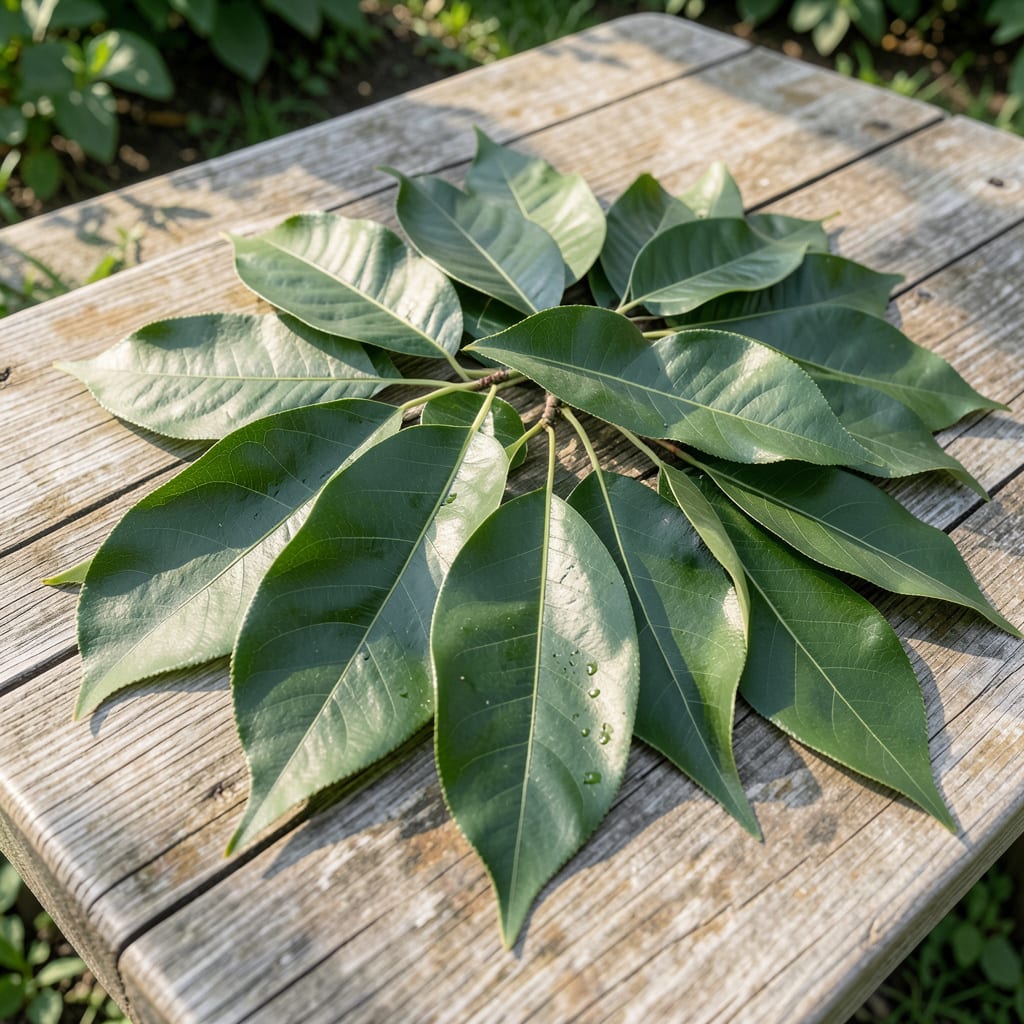
That first glimpse of curled, red-spotted leaves on my peach tree sent me into a panic. Turns out, your tree’s leaves tell a story—whether it’s peach leaf curl, pest damage, or just thirsty roots.
I’ve learned to read these signs before they spread. A quick photo and a few close inspections can save your harvest. Here’s how to spot the differences and fix them fast.
📚 In This Guide
Here’s how I examine and document peach tree foliage to capture its unique botanical characteristics.
Start by selecting mature leaves from different branches of your peach tree. I look for medium to dark green leaves that are fully unfurled, typically 4-6 inches long and 1-2 inches wide. These are the most representative of the tree’s true characteristics.
Avoid leaves that show signs of damage, disease, or pest infestation. The undersides of healthy leaves often have a slightly lighter color and visible veining. I always check both surfaces because the texture and color can differ significantly between the top and bottom.
Real talk: if you’re documenting for identification purposes, include a few leaves from different parts of the tree—sun-exposed and shaded—to show natural variation.
Peach tree leaves are lance-shaped with a pointed tip and finely serrated edges. I run my fingers along the margin to feel the tiny, sharp teeth that are characteristic of Prunus species. The surface should feel smooth but slightly leathery to the touch.
The base of the leaf where it attaches to the stem is typically rounded or slightly asymmetrical. I pay special attention to the central vein, which is prominent and lighter in color than the surrounding leaf tissue. The secondary veins branch off at about 45-degree angles.
For accurate documentation, I photograph leaves in natural light against a neutral background. The upper surface is usually a vibrant green, while the underside appears paler with more visible veining. In some varieties, the midrib and main veins may have a slight reddish tint.
I’ve found that morning light brings out the true color without harsh shadows. If you’re sketching or noting descriptions, mention the color gradient from base to tip and how the veins create a net-like pattern across the leaf surface.
Peach tree leaves change throughout the growing season. New growth in spring emerges as a bright, almost translucent green, gradually darkening as it matures. By late summer, some leaves may develop subtle yellow or red tones, especially along the edges.
I always include notes about the season when documenting. Fall color can be particularly striking, with leaves turning various shades of yellow, orange, or even purple. These seasonal variations are important for complete botanical documentation.
This is the moment that matters: capturing the leaf at its peak health gives the most accurate representation of the tree’s characteristics.
Small details make all the difference when documenting peach tree foliage accurately.
Selection Insight: In Step 1, when choosing leaves, focus on those 4-6 inches long and 1-2 inches wide—these dimensions are typical for mature peach tree leaves. I’ve found that leaves smaller or larger than this often come from new growth or stressed branches, which don’t represent the tree’s true form.
Texture Check: For Step 2, the serrated edges should feel sharp but not brittle. If the teeth seem soft or worn, the leaf may be older or damaged. The leathery texture is a key indicator of health, so if it feels papery or overly stiff, pick another specimen.
Lighting Wisdom: Step 3’s advice about morning light is spot-on. Harsh midday sun can wash out the true color, while evening light may add warm tones that distort the natural hue. A neutral background—like a white poster board—helps isolate the leaf’s color and veining for the clearest documentation.
Seasonal Note: As mentioned in Step 4, spring leaves are the most vibrant for documentation. If you’re photographing in late summer or fall, note the seasonal changes in your records. Those subtle yellow or red tones along the edges can actually help with identification, as they’re characteristic of certain peach tree varieties.
Healthy peach tree leaves are vibrant green, smooth, and lance-shaped with slightly serrated edges. They typically grow 3–6 inches long and have a glossy texture. Look for uniform color and no spots or holes.
Yellowing leaves often signal overwatering, nutrient deficiencies (like nitrogen), or diseases such as peach leaf curl. Check soil moisture, fertilize as needed, and inspect for fungal spots or curling.
Peach tree leaves turn golden-yellow or orange in fall, usually October–November, depending on climate. This natural process signals dormancy. Enjoy the seasonal beauty before they shed!
Yes! Peach leaves decompose well and add nutrients to compost. Avoid diseased leaves, as they can spread pathogens. Shred them first to speed up breakdown.
Brown spots may indicate fungal infections like brown rot or bacterial leaf spot. Remove affected leaves, improve air circulation, and apply a copper-based fungicide if needed.
