
Beautiful Plants For Your Interior
Beautiful Plants For Your Interior
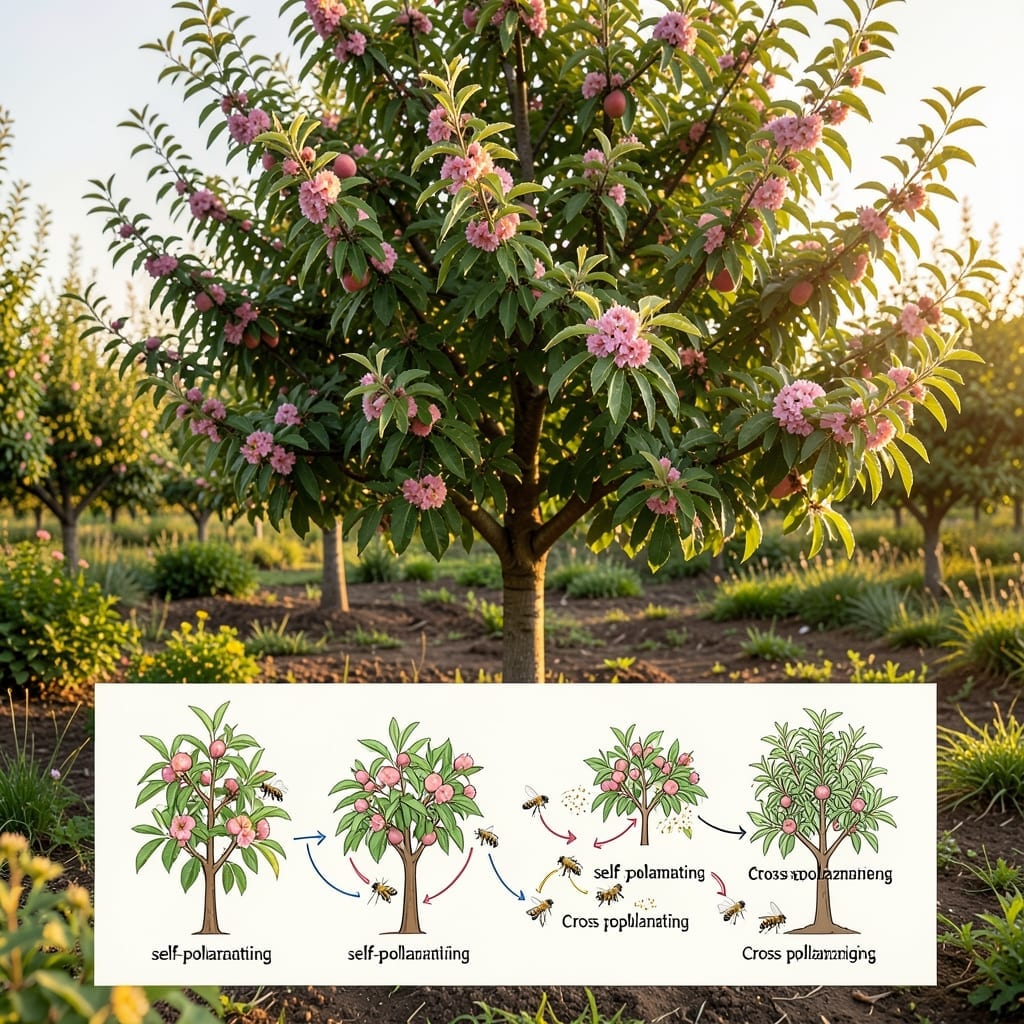
I’ve watched peach trees bloom beautifully only to drop fruit before it ripens. The culprit is often poor pollination.
Some varieties need a different tree nearby to set fruit, while others manage fine on their own. A simple chart shows which types work together and when they’re most fertile.
You’ll get more peaches, bigger harvests, and less frustration once you match compatible trees. The right pairing can double your fruit set.
Works for backyard orchards, small farms, or even container-grown trees. Here’s how to plan for success.
Peach trees rely on precise pollination to produce fruit, and when it doesn’t happen, several biological and environmental factors are usually to blame. Here’s why pollination might be missing the mark in your orchard:
Peach flowers need pollen to be transferred from the male (anther) to the female (stigma) parts. If bees, butterflies, or other pollinators are absent—due to pesticide use, habitat loss, or cold weather—the process stalls. Even self-fertile varieties benefit from cross-pollination to boost yield.
Late spring frosts can kill flower buds or damage their delicate structures. Peach trees bloom early, and a sudden freeze (below 28°F/-2°C) can destroy pollen or prevent flowers from opening. This is a common issue in regions with unpredictable weather.
Not all peach trees can pollinate each other. If you’ve planted non-compatible cultivars, their pollen won’t fertilize the flowers. Check a pollination chart to ensure varieties bloom simultaneously and share compatible genetics.
Rain, high humidity, or extreme heat can interfere with pollen viability. Wet pollen clumps and fails to disperse, while temperatures above 90°F (32°C) can desiccate it. Wind can also blow pollen away before it reaches the stigma.
Trees weak from nitrogen or boron deficiencies may produce fewer or lower-quality flowers. Healthy trees with balanced soil (pH 6.0–6.5) are more likely to support successful pollination.
If your peach trees aren’t producing fruit, pollination issues are often the culprit. Use this guide to diagnose and fix common problems using a peach pollination chart as your roadmap.
If your chart shows low pollinator traffic, create a bee-friendly environment. Plant companion flowers like lavender or clover nearby to attract bees. Avoid pesticides during bloom time, as they can harm pollinators. Prevention tip: 💡 Install a small water source, like a shallow dish with pebbles, to keep bees hydrated and visiting often.
Mismatched bloom times between varieties can lead to failed pollination. Refer to your chart to pair early-, mid-, and late-blooming peach trees. For example, plant ‘Redhaven’ (mid-season) near ‘Elberta’ (late-season) for better overlap. Prevention tip: 🌡️ If frost is a recurring issue, select cold-hardy varieties like ‘Reliance’ to ensure blooms survive unexpected chills.
Rain or wind can wash away pollen or prevent bees from flying. On dry, calm days, use a soft paintbrush to transfer pollen from one blossom to another. Gently dab the brush into the center of a flower, then move to the next. Prevention tip: ✨ Cover trees with frost cloth during unexpected cold snaps to protect blossoms.
Some peach trees need cross-pollination. If your chart indicates self-incompatibility, plant a second compatible variety within 50 feet. For example, ‘J.H. Hale’ pairs well with ‘Elberta’. Prevention tip: 🎯 Always check pollination charts before buying new trees to ensure compatibility.
Most peach trees are self-fertile and can produce fruit on their own. However, planting a second compatible variety nearby can boost yield by 20-30% through cross-pollination.
For effective cross-pollination, plant compatible varieties within 50 feet of each other. Bees typically travel this distance easily during foraging.
Hand-pollinate on dry, calm mornings between 9-11 AM when flowers are fully open and pollen is most viable. Avoid rainy or windy days.
Yes, frost cloth can protect blossoms from light freezes down to 26°F/-3°C. Remove it during the day to allow pollinator access.