
Beautiful Plants For Your Interior
Beautiful Plants For Your Interior
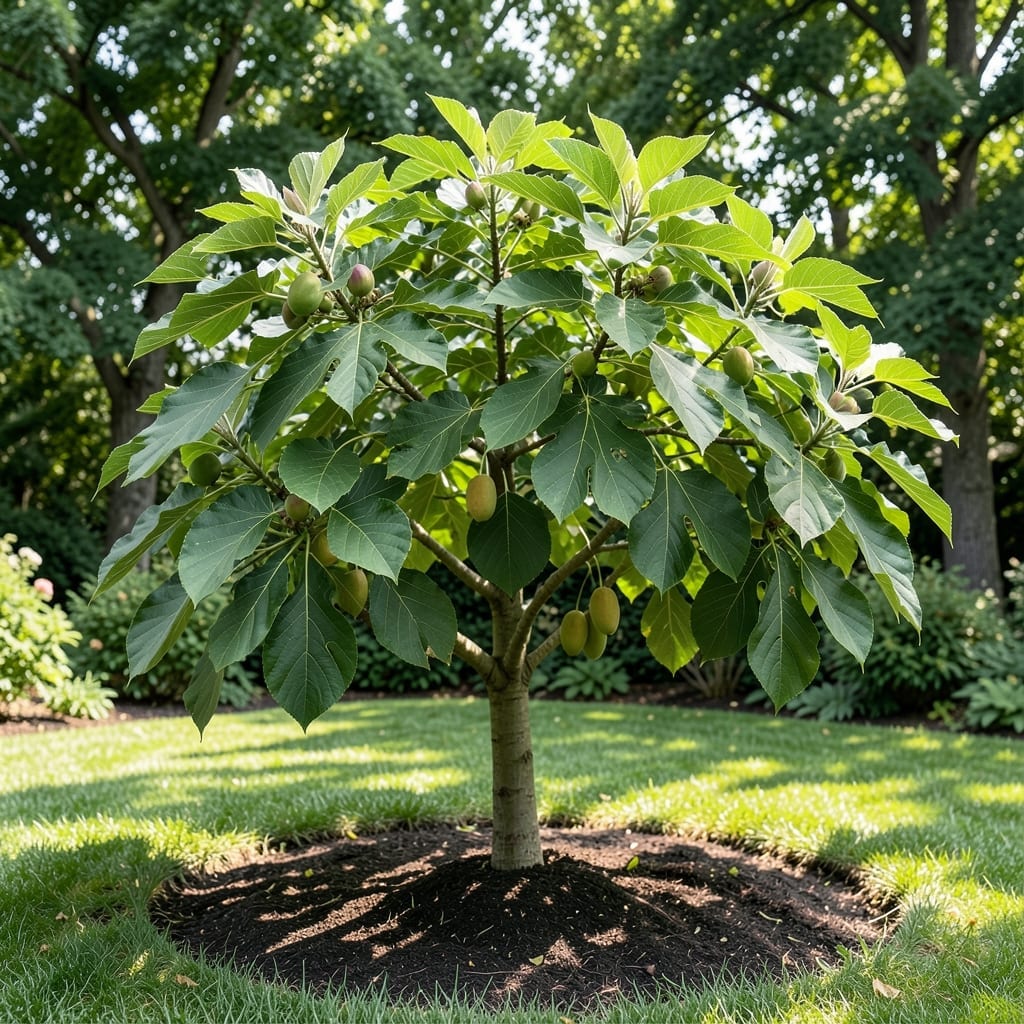
Watching a pawpaw tree reach maturity is a rewarding experience for any gardener. That moment when your 🌳 Pawpaw Tree stands tall and begins bearing fruit feels like a true accomplishment.
But knowing when it has fully grown can be tricky. Understanding the signs of maturity helps you provide the best care and enjoy its delicious, tropical-tasting fruit.
From height to fruiting behavior, there are clear indicators that your tree has reached its prime. I’ll walk you through what to look for and why it matters for proper cultivation.
Discover how to recognize a mature Pawpaw Tree and learn the best practices to keep it thriving for years to come.
Recognizing a mature pawpaw tree starts with its height and structure. Most reach 15-30 feet tall with a pyramidal canopy that spreads 10-15 feet wide at full growth. This size is a clear sign your tree has transitioned from juvenile to adult stage.
The bark texture also changes as the tree matures. Young pawpaws have smooth, gray bark, while mature trees develop rough, dark brown bark with deep grooves. This transformation typically occurs between 5-7 years of age.
| Characteristic | Mature Specification |
|---|---|
| Height | 15-30 feet |
| Canopy Spread | 10-15 feet |
| Bark Texture | Rough, grooved |
| First Fruit | 3-5 years |
| Full Production | 5-7 years |
Another key indicator is fruit production. While young trees may produce a few fruits, mature pawpaws bear abundant crops of 2-5 inch long fruits annually. The fruits change from green to yellow-brown when ripe, signaling peak maturity.
I’ve noticed that leaf size also increases with maturity. Young trees have 6-10 inch leaves, while mature ones develop 12-16 inch leaves that are noticeably broader. This larger foliage helps maximize photosynthesis for fruit production.
The root system of a mature pawpaw is extensive, with a deep taproot and widespread lateral roots. This development allows the tree to withstand drought better than younger specimens. You’ll see this resilience in how the tree handles dry spells.
Look for flowering patterns too. Mature trees produce maroon, bell-shaped flowers in early spring before the leaves emerge. These flowers are essential for pollination and subsequent fruit set.
I recommend checking the branch structure as well. Mature pawpaws have strong, sturdy branches that can support the weight of abundant fruit. Younger trees often have thinner, more flexible branches that bend under fruit load.
The growth rate slows significantly once maturity is reached. While young trees may grow 2-3 feet per year, mature ones typically grow less than 1 foot annually. This slower growth indicates the tree is focusing energy on fruit production rather than vertical expansion.
Finally, seasonal changes become more pronounced in mature trees. The fall foliage turns a vibrant yellow before dropping, and the tree develops a more defined winter silhouette that’s easier to identify in dormant months.
By observing these size and characteristic changes, you can confidently determine when your pawpaw tree has reached full maturity and is ready to provide years of delicious fruit and shade 🌳
Once your pawpaw tree reaches maturity, it needs consistent care to stay productive. I focus on regular watering and balanced fertilization to support its health and fruit yield.
Mature trees thrive with deep watering every 7-10 days, especially during dry spells. I always check the soil moisture to avoid over or under-watering. 🌳
Pruning is another critical task for mature pawpaw trees. I limit pruning to late winter to remove dead or diseased branches, as excessive pruning can reduce fruit production.
For fertilization, I use a balanced 10-10-10 formula every 4-6 weeks during the growing season. This keeps the tree nourished without overfeeding it.
Mulching helps retain soil moisture and suppresses weeds. I apply a 2-3 inch layer of organic mulch around the base annually, keeping it a few inches away from the trunk.
Finally, I watch for common pests like the pawpaw pedunculata. Regular inspections and early intervention keep my tree healthy and productive for years. 🌿