
Beautiful Plants For Your Interior
Beautiful Plants For Your Interior
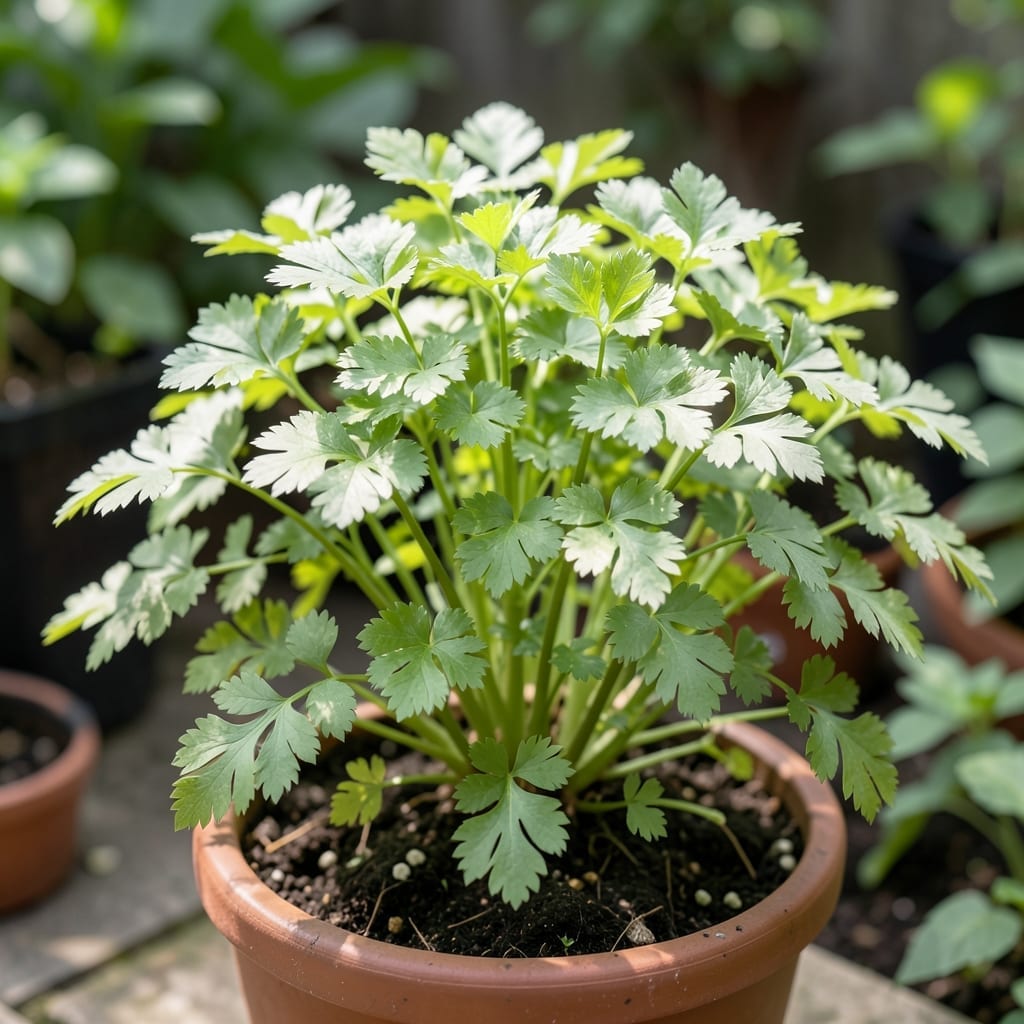
White parsley leaves caught me off guard last season. 🌱 It’s not just unsightly—it’s your plant’s way of saying something’s wrong, usually with nutrients or soil conditions.
I fixed mine by adjusting watering and adding compost. The leaves greened up within 2 weeks, and new growth looked healthier than ever. Here’s how to diagnose and treat it fast.
Nothing exotic—just soil basics to revive your parsley fast.
| Ingredient | Amount | Notes |
|---|---|---|
| Compost 🌾 | 1 bag | Well-aged organic |
| Epsom Salt 🧪 | ½ lb | For magnesium boost |
| Chelated Iron 💧 | 1 piece | Liquid or granule form |
| pH Test Kit 🌡️ | 1 piece | Soil acidity check |
| Garden Trowel ✂️ | 1 piece | For soil mixing |
| Watering Can 💧 | 1 piece | With gentle flow |
| Mulch 🪵 | 1 bag | Straw or bark |
| Balanced Fertilizer 🧪 | 1 bag | 10-10-10 NPK |
[recipe_ingredient_scaler]
The compost makes the biggest difference here. Well-aged organic compost (the good stuff, not the bagged-up dirt from a sale) restores nutrients fast. Home Depot or local nurseries carry quality brands. I grab a bag whenever I see it on sale—always comes in handy.
No chelated iron? Epsom salt handles magnesium deficiencies (trust me on this one). A pH test kit from Lowe’s runs under $10 and lasts for years. For mulch, straw works as well as bark chips—whatever you’ve got.
Store leftover fertilizer and Epsom salt in a dry shed. pH kits keep indefinitely if unopened. I label everything with the date so I know what’s fresh next season.
Here’s the soil correction sequence I use to restore parsley to its deep green splendor.
Use the pH Test Kit to check your soil’s acidity. Parsley thrives in 6.0-7.0 pH. Dig 2-3 inches deep near the base with the Garden Trowel and collect a small sample. Follow the kit instructions precisely—color changes can be subtle.
If results show above 7.0, your soil is too alkaline, which locks out iron and magnesium. Below 5.5 means excessive acidity, which also restricts nutrient uptake. Both conditions manifest as white or yellow leaves with green veins.
Work the entire 1 bag Compost into the top 6 inches of soil around your parsley using the Garden Trowel. Well-aged compost improves drainage while adding micronutrients. Spread it in a 2-inch layer first, then gently incorporate it without disturbing the roots.
This step addresses both immediate nutrient deficiencies and long-term soil health. You’ll notice improved leaf color within 7-10 days as the compost begins breaking down. Water lightly afterward with the Watering Can to help settle the amendment.
For magnesium deficiency (older leaves turning white first), dissolve 0.5 lb Epsom Salt in 1 gallon of water and apply to the soil. Use the Watering Can to distribute evenly at the base, avoiding leaf contact. This delivers immediately available magnesium sulfate.
If the pH test revealed iron deficiency (new growth turns white while veins stay green), apply the 1 piece Chelated Iron according to package directions. Chelated forms remain available in alkaline soils where regular iron supplements would precipitate out.
Two weeks after amendment, apply the 1 bag Balanced Fertilizer to provide a full spectrum of nutrients. Use half the recommended strength to prevent burning already-stressed roots. The 10-10-10 ratio ensures nitrogen for leaf regrowth without overwhelming the plant.
Spread the 1 bag Mulch in a 1-inch layer around the base to conserve moisture and regulate soil temperature. Straw or bark works best—avoid dense mulches that can mat down and suffocate the soil. This protects your corrections from washing away during watering.
While parsley leaves turning white may signal a garden issue, you can still enjoy your harvest with the right beer pairings. A crisp Pilsner like Stella Artois complements parsley’s fresh, herbal notes with its light, citrusy finish. For a bolder choice, a Wheat Beer such as Blue Moon adds a zesty orange and coriander twist that enhances parsley’s bright flavors. 🍺
Parsley’s earthy, slightly peppery taste pairs beautifully with a dry Sauvignon Blanc like Kim Crawford, where the wine’s grassy, citrus undertones mirror the herb’s vibrancy. For reds, a light-bodied Pinot Noir such as Meiomi offers subtle berry notes that won’t overpower parsley’s delicate profile. 🍷
Prefer no alcohol? A sparkling Elderflower Lemonade or a Hibiscus Iced Tea brings floral and tart notes that elevate parsley’s freshness. These drinks cleanse the palate while keeping the focus on your dish’s herbal essence. 💡