
Beautiful Plants For Your Interior
Beautiful Plants For Your Interior
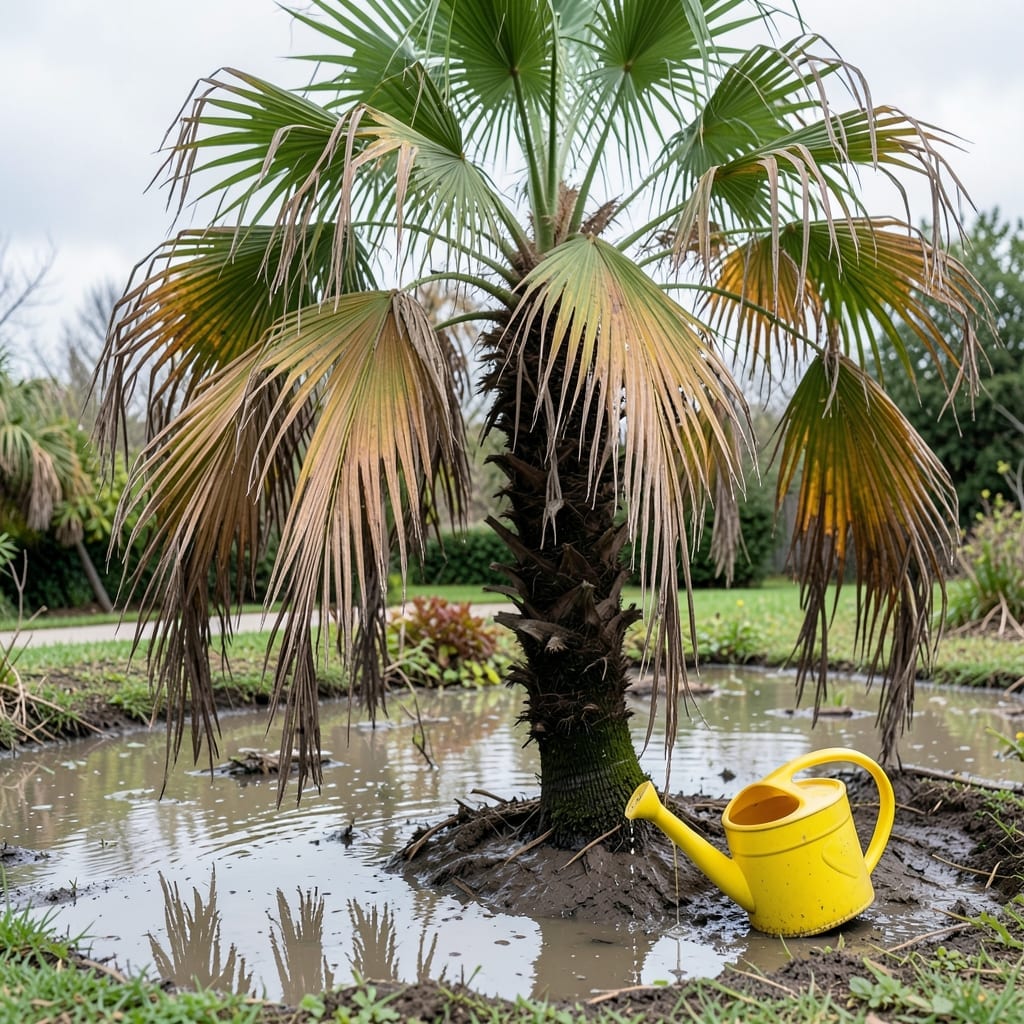
Yellowing fronds and soggy soil spell trouble for palms. I’ve watched too many gardeners kill their trees with kindness, drowning roots that crave air as much as water.
Overwatering shows up as drooping leaves, black stems, and a foul smell from the base. The fix starts with letting the soil dry between waterings—2-3 inches down should feel dry to the touch.
Recovery isn’t instant, but stopping the water and improving drainage can save even the most waterlogged palm. Most bounce back within 4-6 weeks of proper care.
Prevention is simpler: water deeply but infrequently, and always check the soil first. Your palm will thank you with vibrant green growth.
Overwatering palm trees often stems from well-intentioned but misguided care. Here’s why it happens:
Soil that retains too much moisture—often due to compacted or clay-heavy compositions—prevents water from draining properly. Palms thrive in well-aerated, sandy loam, but dense soil suffocates roots and traps water. Even with proper watering frequency, poor drainage can mimic overwatering symptoms.
Many gardeners assume palms need frequent watering, but most established palms only require deep, infrequent hydration. Shallow, daily watering encourages weak root systems and prevents the soil from drying out between sessions, leading to waterlogged conditions.
Humid climates, shaded locations, or cool temperatures slow evaporation, meaning water lingers longer in the soil. Additionally, potted palms in non-draining containers are especially vulnerable, as excess water has no escape. Always adjust watering based on seasonal weather and the tree’s specific environment.
Using generic potting mix (which often contains peat or compost) for container-grown palms can retain excessive moisture. Similarly, decorative pots without drainage holes trap water at the roots. Opt for cactus/succulent mixes or amend soil with perlite/sand to improve airflow.
If your palm is showing signs of overwatering, act quickly to help it recover. Here’s how to address each issue and prevent it from happening again.
If the soil feels soggy and roots appear mushy or dark, stop watering immediately. Let the soil dry out completely before watering again. For severe cases, gently remove the palm from its pot or dig around the base, trim any black or mushy roots with clean shears, and repot in fresh, well-draining soil. Prevention tip: 💡 Use containers with drainage holes and a fast-draining potting mix (e.g., cactus/succulent blend).
Trim yellow or brown fronds with sterilized pruners to redirect energy to healthy growth. Reduce watering frequency—palms generally need water only when the top 1-2 inches of soil are dry. Prevention tip: ✨ Check soil moisture with your finger before watering; avoid sticking to a rigid schedule.
If you spot mold or a foul smell, improve air circulation and reduce humidity around the plant. Apply a copper-based fungicide to affected areas. For potted palms, ensure the container isn’t sitting in a saucer of water. Prevention tip: 🌡️ Avoid overhead watering; water at the base to keep foliage dry.
If water pools on the soil surface or drains too slowly, amend the soil with perlite, sand, or bark to improve drainage. For in-ground palms, consider installing a French drain or redirecting excess water away from the root zone. Prevention tip: 🎯 Plant palms in slightly elevated mounds to prevent waterlogging.
Most established palms need water only when the top 2-3 inches of soil are dry. This often translates to 1-2 times per week in hot climates, but always check the soil first. Overwatering is far more common than underwatering.
Yellowing fronds, drooping leaves, and soggy soil are the earliest red flags. You might also notice a foul odor from the roots or black, mushy stems. Act quickly if you see these symptoms.
Yes! With prompt action, most palms bounce back within 4-6 weeks. Stop watering, improve drainage, and trim damaged fronds. Severely affected palms may need repotting in fresh, well-draining soil.
Decorative pots without drainage holes trap excess water. Always use containers with drainage and a fast-draining mix like cactus/succulent soil. Elevate pots to prevent water from pooling underneath.