
Beautiful Plants For Your Interior
Beautiful Plants For Your Interior
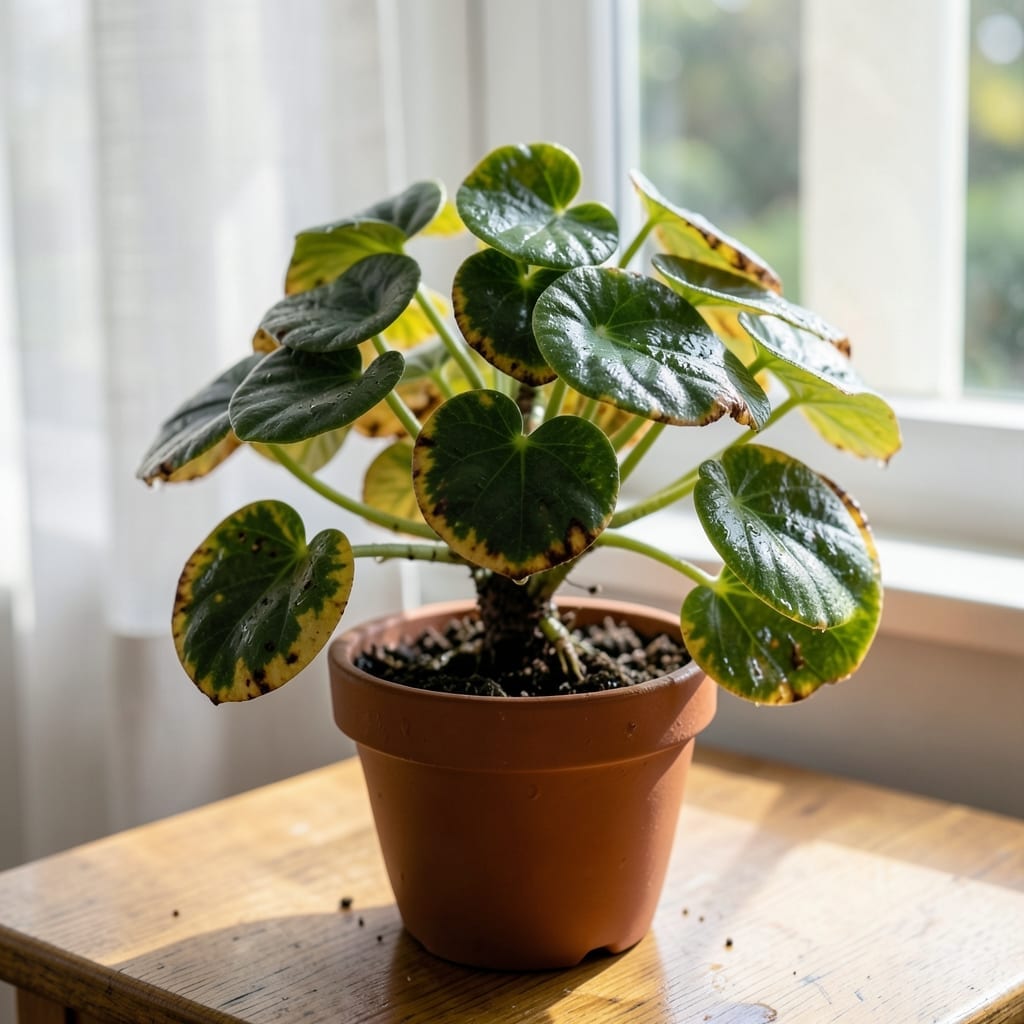
Your Pilea’s drooping leaves aren’t dramatic—they’re a cry for help. I’ve rescued more than a few from the brink after realizing I was loving them to death with water.
The first sign is usually yellowing at the edges, then the whole leaf goes soft. Left too long, the stems turn mushy and black. The fix starts with stopping the water immediately and checking the roots for rot.
Most pileas bounce back fast once they dry out. I’ve seen wilting plants perking up within 24 hours of proper care. The key is patience and resisting the urge to “fix” it with more water.
Prevention is simpler than recovery. A well-draining pot and a strict watering schedule save more plants than any rescue attempt ever will.
Overwatering your Pilea peperomioides isn’t just about giving it too much water—it’s often the result of a few key missteps. Here’s why it happens, broken down by the most common causes:
When your Pilea’s pot lacks drainage holes or the soil retains too much moisture, water pools at the roots. This suffocates the root system, preventing oxygen uptake and leading to root rot. Clay or compacted soils worsen the issue by trapping water.
Many plant parents stick to a rigid watering routine (e.g., “every Monday”) rather than checking soil moisture. Pileas prefer their top 1–2 inches of soil to dry out between waterings. Overwatering disrupts this balance, causing yellowing leaves and mushy stems.
A pot that’s too large holds excess soil, which retains moisture longer than the plant can use. Smaller pots with well-draining soil (like a mix of perlite and peat) help prevent waterlogged conditions.
Pileas in dim, humid environments (e.g., bathrooms) evaporate water more slowly. Combined with frequent watering, this creates a perfect storm for fungal growth and root decay.
Actionable fix: Always check soil moisture with your finger before watering, and ensure pots have drainage!
If your Pilea is showing drooping leaves, yellowing foliage, or mushy stems, overwatering is likely the culprit. Here’s how to nurse it back to health:
Let the soil dry out completely before watering again. Stick your finger 2 inches deep into the soil—if it feels damp, wait. Move the plant to a bright, indirect light spot to help evaporation.
If root rot is present (black, mushy roots), remove the plant from its pot and trim affected roots with clean scissors. Repot in well-draining soil (mix in perlite or sand) and a pot with drainage holes.
Snip off yellow or mushy leaves with sterilized shears to redirect energy to healthy growth. Avoid over-pruning—only remove what’s clearly damaged.
🎯 Pro tip: A terracotta pot helps wick away excess moisture faster than plastic.
Water only when the top 1-2 inches of soil feel dry. In summer, this might mean weekly, but in winter, it could stretch to 2-3 weeks. Always check soil moisture first!
Yes, if caught early! Trim black, mushy roots, repot in fresh, well-draining soil, and stop watering for 1-2 weeks. Most plants bounce back within 2-4 weeks.
Yellowing leaves often signal overwatering. Check the soil—if it’s soggy, let it dry out completely. Also, ensure your pot has drainage holes to prevent waterlogging.