
Beautiful Plants For Your Interior
Beautiful Plants For Your Interior
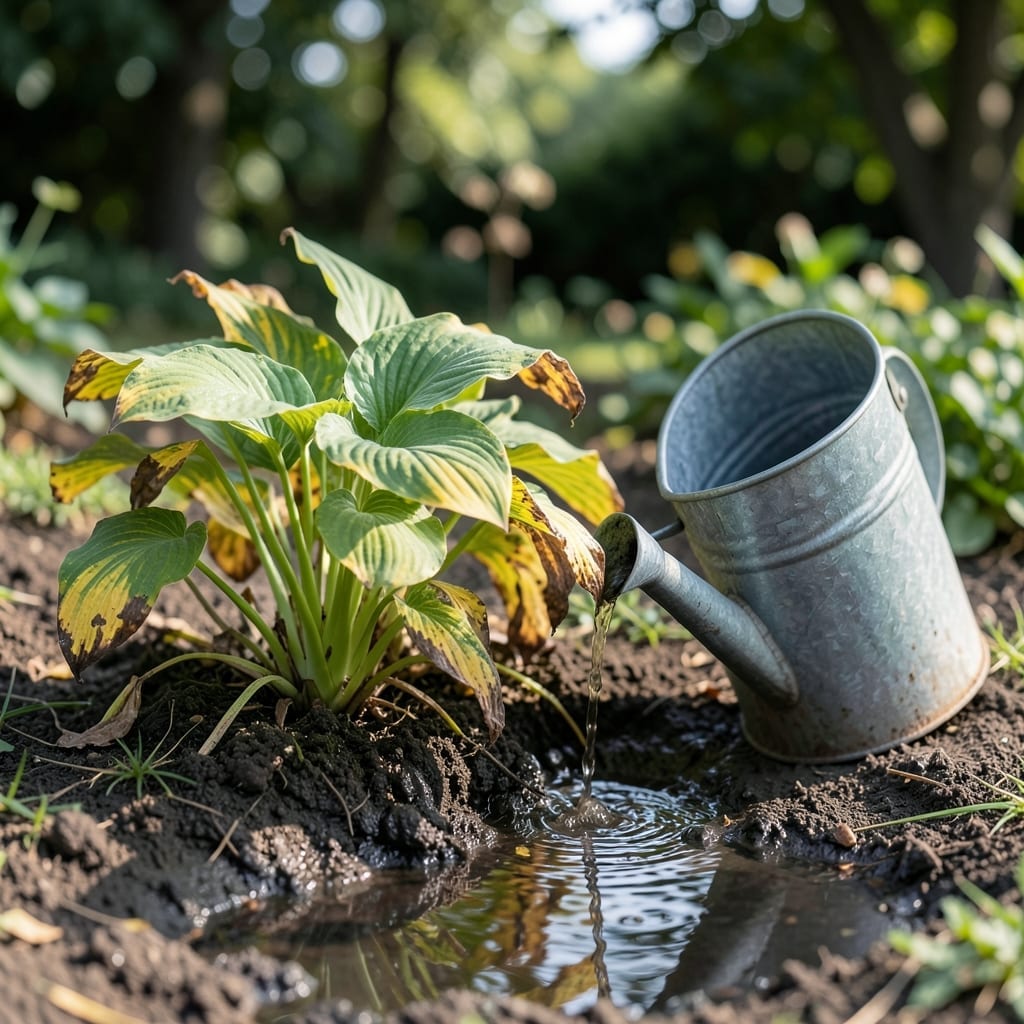
Yellowing leaves and mushy stems are your hosta’s SOS signal. I’ve seen this too many times—what looks like thirst is actually drowning, and the fix starts with recognizing the difference.
Overwatering often shows up as wilting despite wet soil, black spots on leaves, or roots that smell foul when you check them. The problem compounds fast: 24-48 hours of waterlogged soil can start root rot that spreads through the whole plant.
Here’s the thing—hostas are tough, and most bounce back with the right intervention. You’ll need to adjust watering, improve drainage, and sometimes trim damaged foliage to give the plant a fighting chance.
Works for container hostas and in-ground plants alike. The recovery process is simpler than you might expect.
Overwatering hostas isn’t just about giving them too much water—it’s about disrupting the delicate balance between moisture, oxygen, and root health. Here’s why it happens, broken down by the most common culprits:
Hostas thrive in well-draining soil, but heavy clay or compacted earth traps water around the roots. When soil stays soggy, it suffocates the roots by blocking oxygen uptake—a condition called hypoxia. Without oxygen, root cells die, leading to rot. Actionable fix: Amend soil with organic matter like compost or perlite to improve drainage.
Many gardeners assume hostas need constant moisture, but these plants prefer consistent, moderate hydration. Overwatering—especially in cool, shaded areas—prevents the soil from drying out between waterings. This creates a breeding ground for Phytophthora and Pythium, fungal pathogens that cause root rot. Rule of thumb: Water only when the top 1–2 inches of soil feel dry.
Potted hostas are high-risk for overwatering because containers limit root spread and drainage. Without proper drainage holes, water pools at the bottom, drowning the roots. Even with holes, saucers that collect excess water can re-soak the soil. Quick solution: Use pots with drainage holes and empty saucers 30 minutes after watering.
Rainy seasons or humid climates can turn even well-intentioned watering into overwatering. Hostas in shaded areas dry out slower, so additional watering during wet periods tips the scale. Pro tip: Check the forecast and skip watering if rain is expected or if the soil is still damp from previous watering.
Don’t panic—your hosta can bounce back! Here’s how to rescue it from too much water, cause by cause.
If the leaves are yellow and mushy, halt all watering immediately. Let the soil dry out completely before the next drink. Stick your finger 2 inches deep—if it feels damp, wait. Move the plant to a shady, well-ventilated spot to speed up drying.
Prevention tip: 💡 Water only when the top 1–2 inches of soil are dry. Use a moisture meter for precision.
Wilting despite wet soil? Your hosta is drowning. Gently lift it from the pot or soil and check the roots. If they’re brown and mushy, trim the rotten parts with clean shears. Repot in fresh, well-draining soil (mix in perlite or sand). For in-ground plants, amend the soil with compost to break up clay.
Prevention tip: 🎯 Always use pots with drainage holes. For garden beds, plant hostas in raised mounds if your soil retains too much water.
Black, smelly roots mean fungal root rot. After trimming affected roots, soak the remaining roots in a fungicide solution (like copper-based or neem oil) for 10 minutes. Repot in sterile soil. Avoid fertilizing until the plant recovers—it’s too stressed to process nutrients.
Prevention tip: ✨ Space hostas properly for airflow, and avoid overhead watering to keep foliage dry.
Stunted growth with soggy soil? Cut back on water and switch to a deep-but-infrequent schedule. Hostas prefer 1 inch of water per week (including rain). Water in the morning so excess moisture evaporates during the day.
Prevention tip: 🌡️ Use a rain gauge to track natural watering, and adjust your routine accordingly.
Check the roots—they’ll be dark brown or black, mushy, and may smell foul. Healthy roots are firm and white or light tan.
If roots are rotten or soil smells bad, repot in fresh, dry mix right away. For mild cases, let soil dry first before repotting.
Yes, if caught early! Trim rotten roots, improve drainage, and adjust watering. Most bounce back within 2-3 weeks of proper care.
Check soil daily—water when the top 1-2 inches feel dry. Containers dry faster than garden soil, but overdoing it is dangerous.