
Beautiful Plants For Your Interior
Beautiful Plants For Your Interior
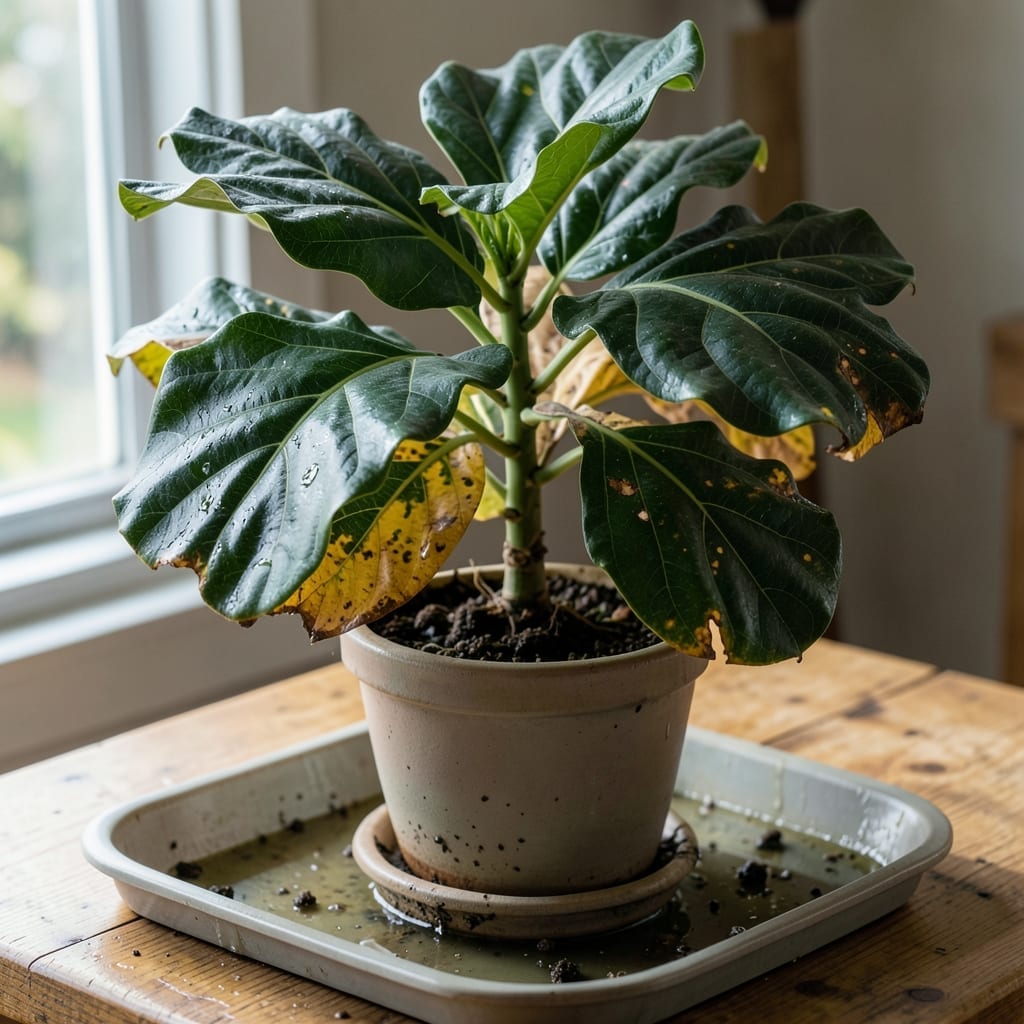
Drooping leaves and yellowing foliage on your Ficus Audrey mean one thing: too much water. I’ve rescued mine from the brink more times than I care to admit.
The signs are subtle at first—a few soft leaves, soil that stays soggy for days. Then the yellow spreads, and suddenly you’re staring at a sad, wilting plant. The fix starts with letting the soil dry out completely between waterings.
You’ll see improvement within 1-2 weeks if you act fast. Trim any mushy roots, repot in fresh mix, and hold off on water until the top 2 inches of soil are bone-dry.
Prevention is simpler than you think. A well-draining pot and a consistent watering schedule keep this from happening again.
Overwatering your Ficus Audrey isn’t just about giving it too much water—it’s about disrupting the delicate balance of moisture, oxygen, and root health. Here’s why it happens:
If your pot lacks drainage holes or uses a dense, water-retentive soil mix, excess water has nowhere to go. This creates a soggy environment where roots suffocate due to anaerobic conditions (lack of oxygen). Ficus Audrey roots need airflow to absorb nutrients, and waterlogged soil blocks this process, leading to root rot.
Many plant parents water on a fixed schedule (e.g., “every Monday”) rather than checking soil moisture. Ficus Audrey thrives when the top 1–2 inches of soil dry out between waterings. Overwatering disrupts osmosis—the process where roots absorb water—because saturated soil prevents the plant from taking up moisture efficiently, causing cells to burst and leaves to yellow.
Oversized pots hold excess moisture longer, while non-porous materials (like plastic) trap humidity. In contrast, terracotta pots wick away moisture naturally. A Ficus Audrey in too-large or non-breathable container is more prone to edema (water pressure in leaf cells) and fungal growth, both of which manifest as drooping or discolored leaves.
Pro tip: Use a well-draining mix with perlite or orchid bark to improve aeration.
If your Ficus Audrey is showing signs of overwatering, don’t panic—it’s often fixable with the right steps. Below are targeted solutions for common symptoms, along with prevention tips to keep your plant thriving.
Stop watering immediately and let the soil dry out completely. Check moisture by sticking your finger 2 inches deep—if it’s damp, wait. Once dry, resume watering only when the top 1-2 inches of soil feel dry. Use a well-draining potting mix to prevent future soggy soil.
Prevention: Water on a schedule only if the soil test confirms it’s needed. 💡 Pro Tip: Lift the pot—if it feels heavy, it’s likely still wet.
If the soil is waterlogged, repot your Ficus Audrey into fresh, dry soil with drainage holes. Trim any black, mushy roots (signs of rot) with sterilized scissors. Place the pot in a bright, indirect light spot to help the plant recover.
Prevention: Always use pots with drainage holes and a saucer to catch excess water. Empty the saucer after 10 minutes.
For severe cases with foul-smelling soil or black roots, act fast. Remove the plant from its pot, rinse the roots gently, and trim affected areas. Repot in fresh, sterile soil and avoid watering for a week. Consider a fungicide (like copper-based) if rot persists.
Prevention: Avoid overpotting—choose a container only 1-2 inches larger than the root ball. 🌡️ Pro Tip: Terracotta pots dry out faster than plastic, reducing rot risk.
With these fixes, your Ficus Audrey can bounce back in weeks. Stay consistent, and it’ll reward you with lush, vibrant foliage!
Water only when the top 2 inches of soil are completely dry. This typically means every 7-10 days, but always check the soil first. Overwatering is far more dangerous than underwatering for this plant.
Look for yellowing leaves, especially lower ones, and a general drooping appearance. The soil may stay wet for days and develop a sour smell. Catching these early prevents root rot.
Yes, if you act quickly. Remove it from the pot, trim black mushy roots, and repot in fresh soil. Skip watering for a week and keep it in bright, indirect light.
Oversized pots hold excess moisture, increasing rot risk. Choose a container just 1-2 inches larger than the root ball for best results.