
Beautiful Plants For Your Interior
Beautiful Plants For Your Interior
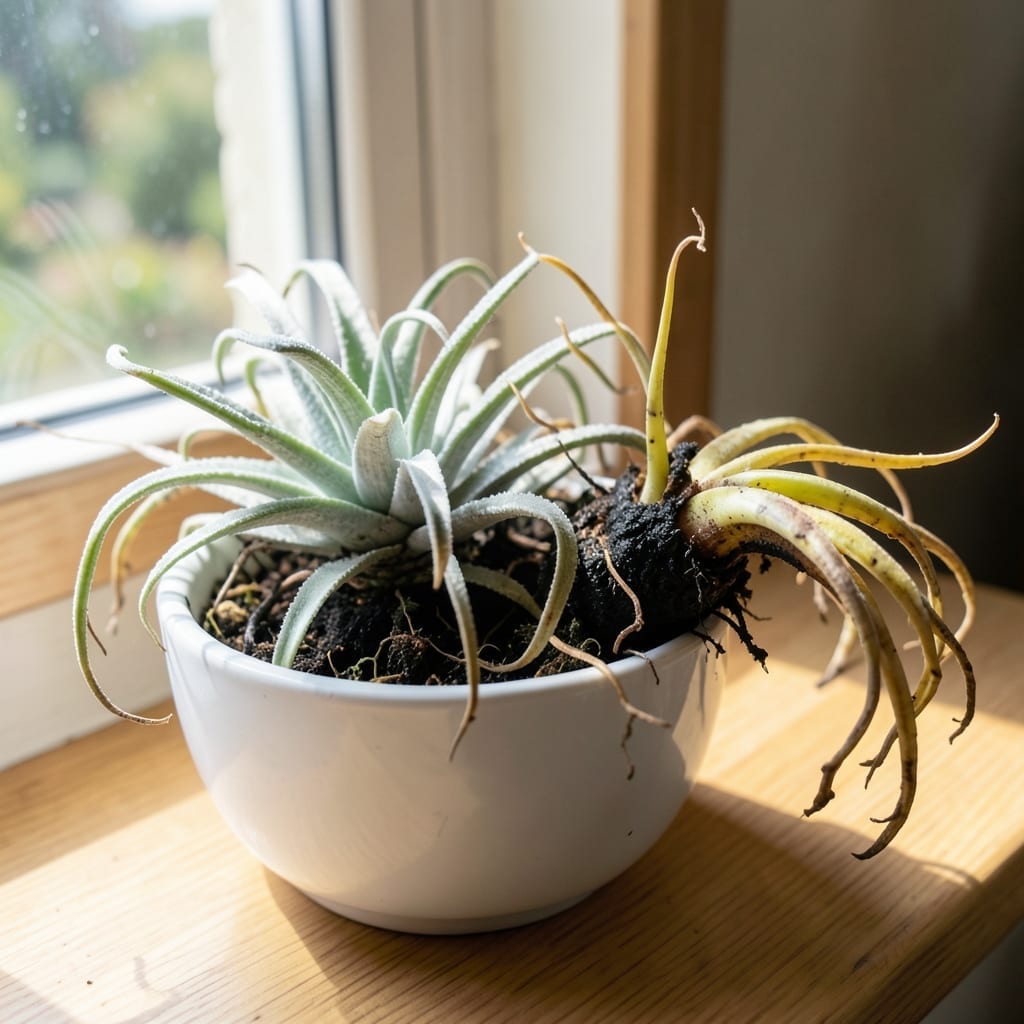
My air plant collection nearly died overnight. One extra spritz was all it took for the bases to turn mushy and the leaves to start peeling away like old wallpaper.
Here’s the thing—air plants absorb moisture through their leaves, not roots. When water sits too long, it suffocates them from the inside out. The first sign isn’t yellowing leaves, it’s a soft, squishy base that feels wrong between your fingers.
You can still save them. A 24-48 hour drying session in bright, indirect light often revives them. The key is airflow—set them on a mesh surface, not paper towels which can trap moisture.
Prevention is simpler than you think: soak for 10-15 minutes weekly, then let them dry completely upside down. No misting, no exceptions.
Air plants (Tillandsia) are hardy, but overwatering disrupts their natural survival mechanisms, leading to rot. Unlike soil-based plants, they absorb moisture and nutrients through their leaves via specialized cells called trichomes. Here’s why excess water becomes a problem:
Air plants thrive in fast-drying environments. When water pools in their leaf axils (the area where leaves meet the stem) or base, it creates a stagnant, oxygen-deprived zone. This encourages bacterial and fungal growth, breaking down the plant’s tissues from the inside out. In nature, rainwater drains quickly, but frequent misting or soaking without adequate drying time mimics a swamp—not their native habitat.
Water evaporates slower in cool, dim conditions. If your air plant sits in a shady, chilly spot (below 50°F/10°C), excess moisture lingers, accelerating rot. These plants evolved in bright, airy canopies where UV light and airflow promote rapid drying. Without these, their trichomes can’t regulate hydration effectively.
Soaking air plants for longer than 20–30 minutes or watering them daily overwhelms their absorption capacity. Their trichomes can only hold so much moisture; the rest sits uselessly, fostering decay. Worse, tap water (high in minerals) can clog trichomes, reducing their ability to “breathe” and exacerbating rot when combined with overwatering.
If your air plant is suffering from rot due to overwatering, don’t lose hope—there are practical ways to nurse it back to health. Below are targeted solutions for each cause, paired with prevention tips to keep your plant thriving long-term.
If the base of your air plant feels mushy or discolored, it’s likely waterlogged. Gently remove it from its display and place it in a well-ventilated area with indirect light. Let it dry completely for 24–48 hours, then mist lightly only if the leaves look shriveled. Prevention tip: 💡 Stick to a soak-and-dry method: Submerge the plant for 10–15 minutes once a week, then allow it to dry upside down to prevent water pooling at the base.
Air plants in enclosed containers (like glass terrariums) trap moisture, leading to rot. Move your plant to an open space or a wire/wood display that allows air circulation. If using a decorative holder, ensure it has drainage holes or remove the plant after watering to dry. Prevention tip: ✨ Avoid placing air plants in humid environments like bathrooms unless airflow is excellent.
Tightly clustered leaves can trap water, especially in species like Tillandsia xerographica. Carefully pull apart the leaves to improve drying, and use clean scissors to trim any black or mushy sections. Sterilize tools with rubbing alcohol to prevent spreading rot. Prevention tip: 🎯 After watering, give the plant a gentle shake to remove excess water from its crevices.
Weak light slows evaporation, leaving plants damp longer. Relocate your air plant to a brighter spot with indirect sunlight (e.g., near an east-facing window). Avoid direct sun, which can scorch recovering plants. Prevention tip: 🌡️ Rotate your plant weekly to ensure even light exposure and drying.
Check the base first—if it feels soft or mushy, that’s a red flag. Leaves may also turn brown or black, or start peeling away from the center. A healthy air plant should feel firm with vibrant leaves.
Yes, if caught early. Remove it from water, trim away any black or mushy parts with sterilized scissors, and place it in a dry, well-ventilated area for 24-48 hours. Avoid watering until it fully recovers.
Soak for 10-15 minutes once a week, then let it dry upside down completely. Mist only if the leaves look shriveled. Overwatering is the most common cause of rot, so less is always better.