
Beautiful Plants For Your Interior
Beautiful Plants For Your Interior
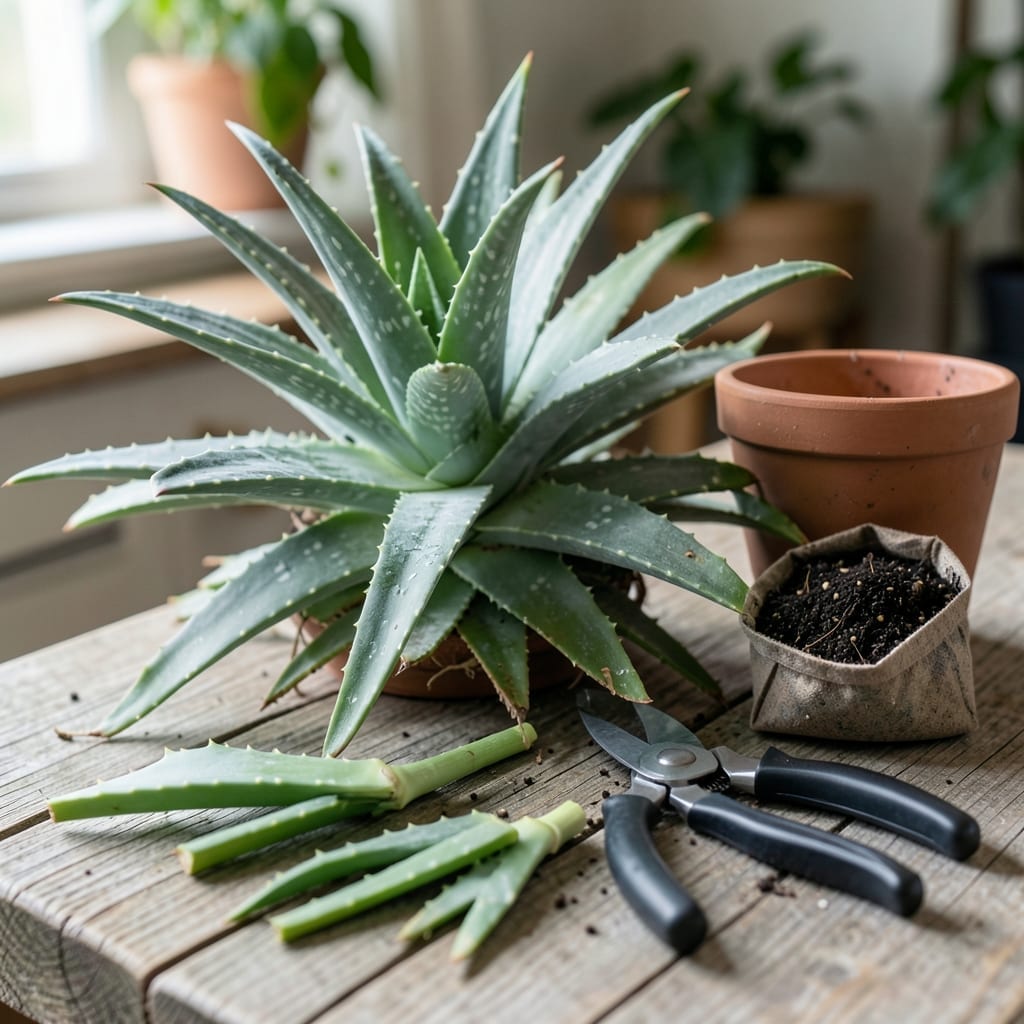
My aloe plant took over the windowsill last winter. 🌱 It started as a single pup, then suddenly I had a jungle of leggy, top-heavy leaves spilling everywhere.
Turns out, most people create this problem themselves. Too much water, not enough light, or zero pruning turns a tidy plant into an unruly monster. I fixed mine in one afternoon with three simple moves.
What you get is a compact, healthy aloe that fits its space and actually looks intentional. The best part? Those cuttings root easily, so you can share the wealth.
Works for overgrown specimens of any size. Here’s exactly how to bring it back under control.
An aloe plant spiraling out of control often stems from a few key environmental or care-related triggers. Understanding these causes helps you correct the issue before it worsens. Here’s why it happens:
Aloe plants thrive in bright, indirect light. When exposed to direct, intense sunlight (especially in hot climates), they grow rapidly and leggy as they stretch toward the light. This can lead to weak, sprawling leaves and a loss of the plant’s compact, healthy shape. Over time, the leaves may also thin out or develop sunburn spots.
Aloe plants are succulents, meaning they store water in their leaves. Overwatering or planting in soil without proper drainage causes root rot, which stresses the plant. In response, the aloe may grow erratically—sending up odd shoots or producing excessive offsets (pups) as a survival mechanism. Soggy roots also reduce nutrient uptake, leading to weak, unruly growth.
Too much fertilizer, particularly high-nitrogen blends, can cause an aloe to grow too fast. This results in tall, floppy leaves that lack the plant’s signature thickness and rigidity. On the flip side, nutrient deficiencies (like low phosphorus or potassium) may cause stunted or distorted growth. A balanced, diluted fertilizer applied sparingly is key.
When an aloe stays in the same pot for years, its roots become root-bound, circling tightly at the bottom. This restricts growth space, forcing the plant to send up new shoots in odd directions—often leading to a top-heavy, chaotic appearance. Repotting into a slightly larger container with fresh, well-draining soil can reset its growth pattern.
When your aloe plant starts looking wild, these targeted fixes will bring it back under control quickly and safely.
If your aloe has stretched out or grown too large, prune it back. Use clean, sharp scissors to trim long, spindly leaves at the base. Remove offsets (pups) growing at the sides to reduce crowding. Prevention tip 💡: Rotate the plant every few weeks to ensure even light exposure and prevent uneven growth.
Yellowing, mushy leaves often mean too much water. Stop watering immediately and let the soil dry out completely. If root rot is suspected, gently remove the plant, trim any black or mushy roots, and repot in fresh, well-draining soil. Prevention tip 🌡️: Water only when the top 1-2 inches of soil are dry, and always use a pot with drainage holes.
Aloe plants thrive in sandy, well-draining soil. If your plant is root-bound or in dense soil, repot it into a slightly larger container with cactus or succulent mix. Loosen the roots gently before replanting. Prevention tip ✨: Refresh the soil every 2-3 years to maintain optimal growing conditions.
Thin, weak leaves often signal a lack of sunlight. Move your aloe to a bright, indirect light source—south- or west-facing windows are ideal. If natural light is limited, consider a grow light. Prevention tip 🎯: Gradually acclimate the plant to stronger light to avoid sunburn.
Prune when it outgrows its space or looks leggy. Aim for every 6-12 months depending on growth rate. Always use clean shears to prevent disease.
Yes! Let cuttings dry for 1-2 days, then place in well-draining soil. Keep lightly moist until roots form in 2-4 weeks. Perfect for sharing or expanding your collection.
Choose a pot just 1-2 inches wider than the plant. Too much space encourages excessive growth. Always ensure it has drainage holes.
It’s reaching for light. Rotate the pot quarter-turn weekly for even growth. If already crooked, stake it gently until it straightens.