
Beautiful Plants For Your Interior
Beautiful Plants For Your Interior
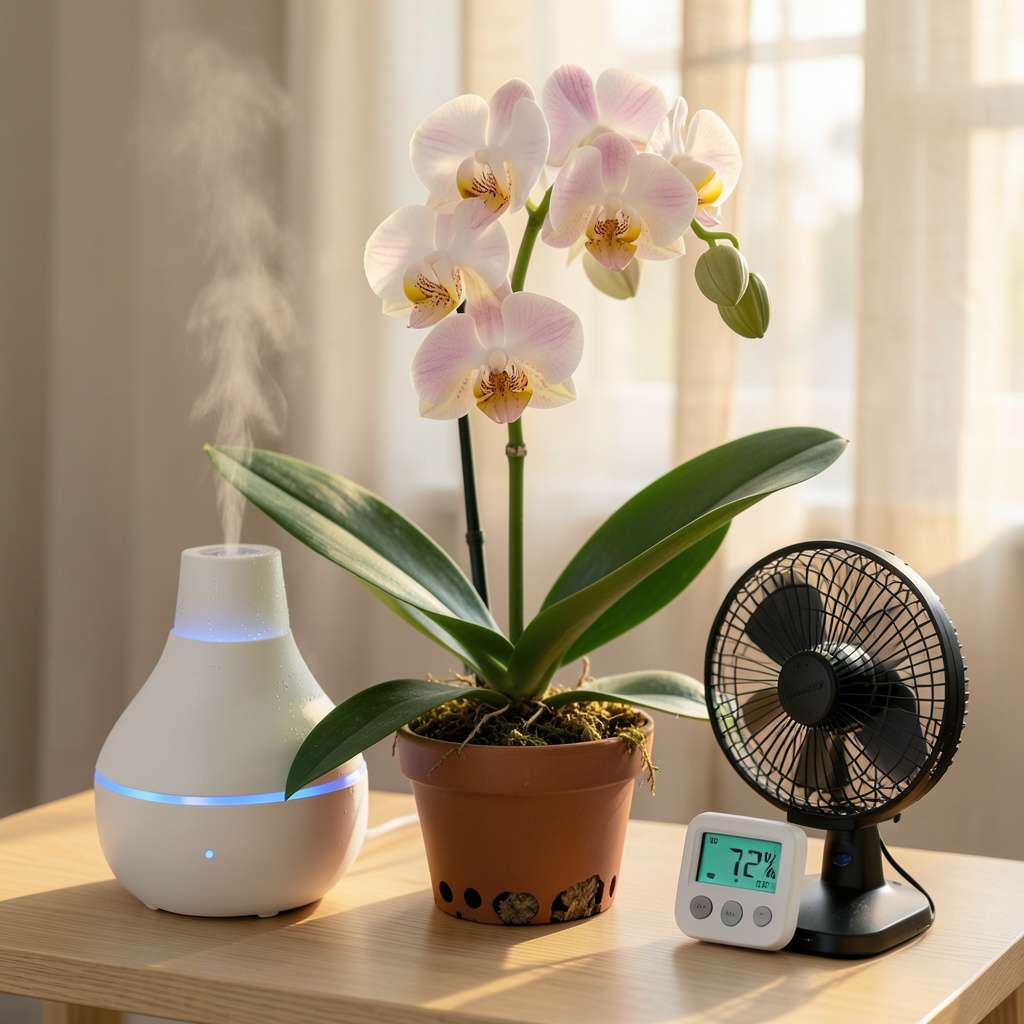
Orchids thrive with 40-70% humidity and moderate air movement to prevent rot and promote healthy air circulation. Use a humidifier or pebble tray, and ensure gentle airflow with a fan. Avoid stagnant air and direct drafts for optimal growth.
Maintaining the right moisture levels is crucial for these plants, as it helps avoid diseases like fungal infections. 🌱 I often use a hygrometer to monitor humidity and ensure it stays within the ideal range. Additionally, proper air circulation is key to strengthen the plants while preventing excess moisture that could lead to rot.
For best results, consider using humidity trays filled with water and pebbles. This setup not only boosts moisture but also looks great in your space. Remember, a little airflow can go a long way in keeping your orchids healthy and vibrant! 🌟
💡 In This Article
Maintaining the right moisture levels is essential for orchids, as humidity plays a crucial role in preventing fungal infections. Orchids thrive best when humidity is between 40-70%. This range helps keep the roots hydrated without causing rot. When humidity drops below 40%, orchids can suffer from dehydration, leading to wilting leaves and stunted growth. 🌱
Interestingly, the science behind this involves the plant’s transpiration process. Orchids absorb moisture through their roots, which is then released into the air from the leaves. When humidity is optimal, this cycle supports healthy growth. However, too much moisture can create an environment ripe for fungi, which can damage the plant’s delicate tissues. 🍃
Air movement complements humidity by reducing moisture buildup around the leaves. Gentle airflow helps strengthen the plant structure through a natural stress mechanism known as thigmomorphogenesis. This process encourages thicker stems and leaves, making orchids more resilient.
Fans positioned to create gentle breezes can significantly improve air circulation without causing drafts that might stress the plants. 🔄
It’s also vital to avoid stagnant air, as it can lead to conditions where diseases thrive. By ensuring there’s consistent airflow, you not only promote healthy growth but also help maintain a balanced environment for your orchids.
A simple way to check for airflow is to use a hygrometer alongside your fan setup to monitor both humidity and air movement effectively. 🌬️
For those using humidity trays or pebble trays, be cautious not to let your orchid pots sit in water. This can lead to root rot, especially in high-humidity environments. Instead, aim for a system where moisture is available but doesn’t overwhelm the roots.
By keeping an eye on both humidity and airflow, you can create an ideal habitat for your orchids that encourages vibrant growth and flowering. 🌺
