
Beautiful Plants For Your Interior
Beautiful Plants For Your Interior
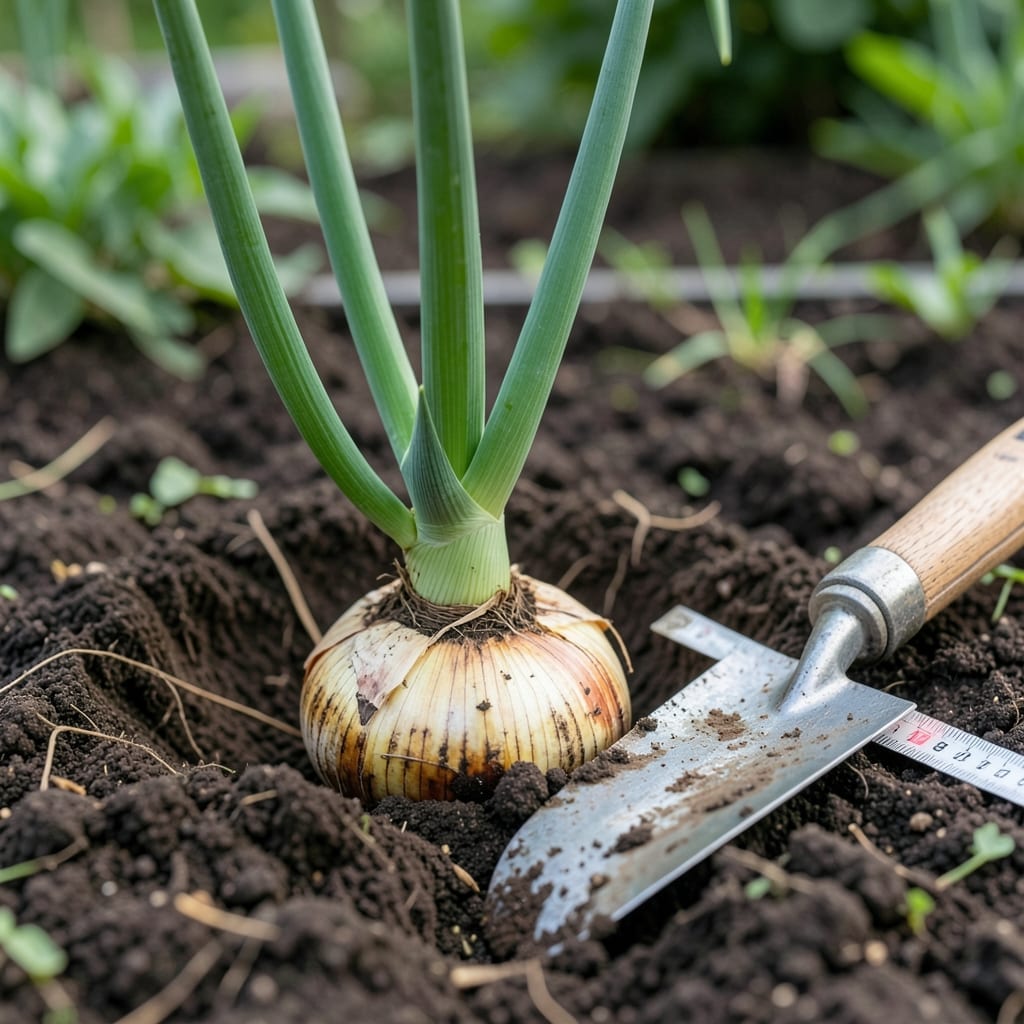
Planting your 🧅 Onion bulbs at the wrong depth can be the difference between a bountiful harvest and a garden disappointment. It’s a small detail that makes a huge impact.
I’ve seen even experienced gardeners struggle with this, but the solution is simpler than you might think. Getting the measurement right sets your onions up for success from day one.
Whether you’re planting sets or transplants, the depth affects how well your onions establish roots and develop bulbs. Let me share the perfect approach that works every time.
Discover the exact technique that’ll have you harvesting robust, full-sized onions come July. Your future self will thank you for taking this extra care now.

Getting the onion bulb planting depth right is crucial for strong root development and healthy growth. I’ve found that 1 to 2 inches deep works best for most onion sets, with the pointed end facing up. This depth ensures good soil contact without suffocating the bulb.
For onion transplants, I plant them slightly deeper, about 2 to 3 inches, to support their taller stems. If you’re starting from onion seeds, a shallow depth of ¼ to ½ inch is ideal to prevent them from drying out.
| Onion Type | Planting Depth | Notes |
|---|---|---|
| Sets | 1-2 inches | Pointed end up |
| Transplants | 2-3 inches | Deeper for stability |
| Seeds | ¼-½ inch | Keep moist |
Soil type also affects planting depth. In loose, well-draining soil, you can plant a bit deeper. For heavy clay soil, stick to the shallower end of the range to prevent waterlogging and rot.
Climate plays a role too. In warmer regions, I plant onions slightly deeper to protect them from heat. In cooler climates, a standard depth works, but ensure the soil warms up before planting.
Spacing is another key factor. I recommend 4 to 6 inches apart for onion sets and 8 to 10 inches for transplants. This gives them enough room to expand without competing for nutrients.
If you’re planting in raised beds, you can go a little deeper since the soil tends to dry out faster. Just make sure the top third of the bulb remains above the soil line to prevent rot.
For container gardening, use a pot that’s at least 8 inches deep and plant your onions at the same depth as you would in the ground. Containers dry out quickly, so monitor soil moisture closely.
I always check that the soil temperature is at least 50°F before planting. Onions prefer cool weather, but they won’t thrive if the soil is too cold. Use a soil thermometer to be sure.
Finally, after planting, give your onions a good watering to settle the soil around the bulbs. Keep the soil consistently moist but not soggy, especially during the first few weeks as they establish roots.
With the right depth and care, you’ll be rewarded with healthy, full-sized onions ready for harvest in about 90 days ☀️
Even small errors in onion bulb planting depth can lead to big problems. I’ve seen gardeners bury bulbs too deep, which often causes rot from poor drainage and lack of oxygen.
On the other hand, planting too shallow leaves bulbs exposed, making them vulnerable to drying out or getting pushed out of the soil by frost heave.
Too Deep: Risk of rot, stunted growth
Too Shallow: Bulbs dry out, poor rooting
✅ Fix: Replant at 1-2 inches deep immediately
If you notice yellowing leaves soon after planting, it might mean your bulbs are too deep. Gently dig around one to check the depth and adjust if needed.
For bulbs that keep popping out of the soil, they’re likely planted too shallow. Use a rake to gently cover them with ½ inch of soil to secure them in place.
In wet climates, shallow planting can save your crop from rot, but you’ll need to mulch to retain moisture. In dry areas, deeper planting helps access water but watch for compaction.
I always recommend checking your planting depth after a heavy rain. If you see bulbs exposed, it’s a sign they were too shallow to begin with. A quick fix now prevents problems later.
🌱