
Beautiful Plants For Your Interior
Beautiful Plants For Your Interior
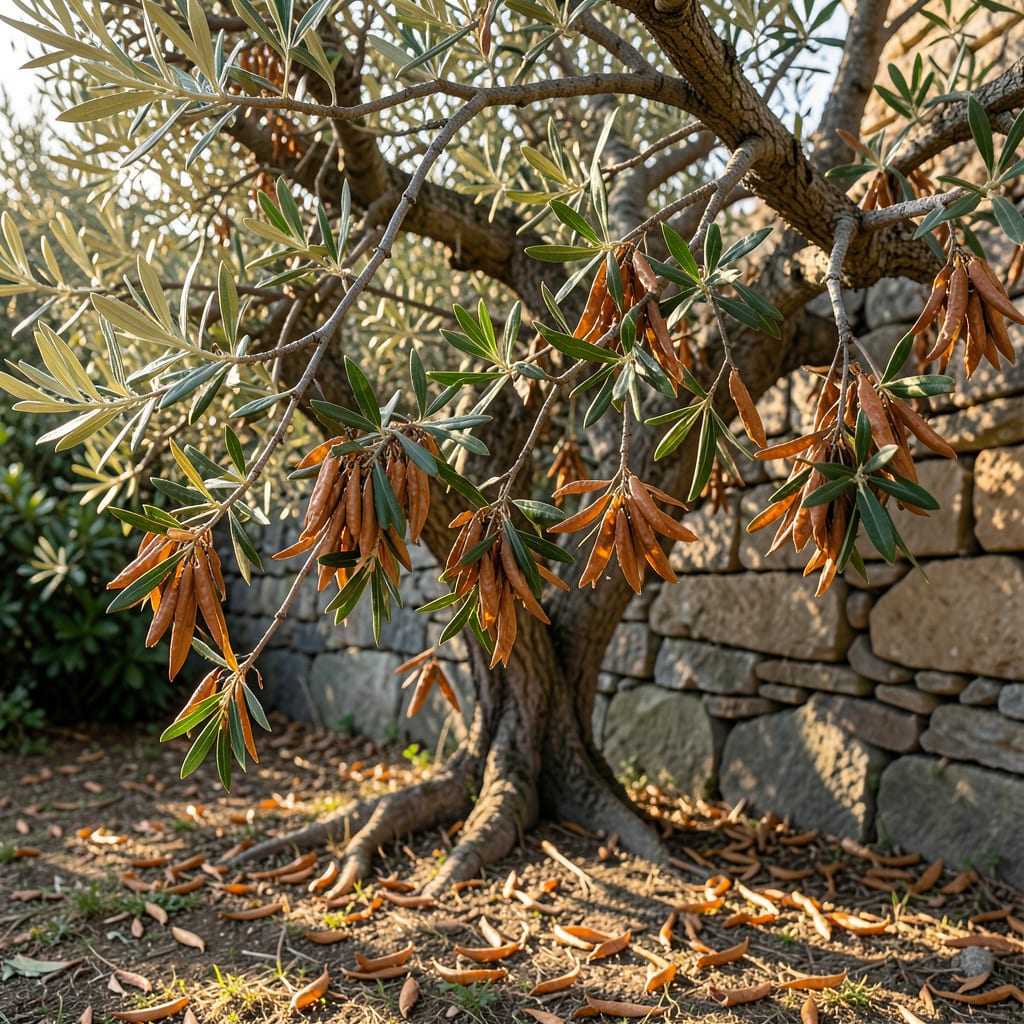
Brown leaves on your olive tree are a distress signal, not a death sentence. I’ve nursed several back to health by first identifying the root cause—usually water stress, disease, or pests hiding in plain sight.
Overwatering drowns roots just as fast as drought starves them. Check your soil 2 inches down before watering. Meanwhile, fungal spots or webbing reveal different culprits entirely.
Most problems fix themselves once you adjust care. Prune damaged foliage, improve drainage, or introduce beneficial insects. The tree often bounces back within 3-4 weeks.
Prevention is simpler than cure: consistent watering, good airflow, and regular inspections keep leaves vibrant green year-round without the drama.
Olive tree leaves turning brown can stem from several environmental, biological, or cultural factors. Below are the most common causes, explained with actionable insights:
Olive trees thrive in mild to warm climates (60–85°F). Heatwaves above 95°F or frost below 20°F disrupt cellular function, leading to leaf scorch. Brown edges or tips appear first, often crispy to the touch. Solution: Use shade cloth during heat peaks or move potted trees indoors during cold snaps.
Overwatering suffocates roots, reducing oxygen uptake and causing leaf browning (often yellowing first). Underwatering leads to dry, brittle leaves. Olive trees prefer deep, infrequent watering—let the top 2–3 inches of soil dry between sessions. Pro tip: Check soil moisture with a wooden stick; water only if the top layer is dry.
Peacock spot (Spilocaea oleagina) and anthracnose thrive in humid, poorly ventilated conditions. Look for dark spots with yellow halos or sunken lesions. Action: Prune infected branches, improve airflow, and apply copper-based fungicides preventatively in spring/fall.
Olive trees need well-draining, slightly alkaline soil (pH 6.0–8.5). Salt buildup (from tap water or fertilizers) or nutrient deficiencies (e.g., potassium, magnesium) trigger marginal browning. Fix: Leach soil with distilled water to remove salts, and test soil pH annually. Amend with compost for organic matter.
Olive fruit fly and scale insects sap nutrients, weakening leaves. Scale appears as sticky white/brown bumps; fruit flies lay eggs in olives, causing premature drop and browning. Control: Introduce beneficial insects (e.g., ladybugs) or use neem oil sprays for mild infestations.
Addressing brown leaves on your olive tree starts with identifying the root cause. Here’s a practical guide to reviving your tree, tailored to common issues:
Fix: Water deeply and slowly at the base of the tree, ensuring the soil is moist but not waterlogged. Use a soaker hose for even distribution. For established trees, water 2–3 times per week during dry spells; young trees need more frequent watering.
Prevention: Apply a 2–4-inch layer of mulch (wood chips or straw) around the base to retain moisture. Avoid letting the soil dry out completely. 💡 Pro tip: Check soil moisture by sticking your finger 2 inches into the soil—if it’s dry, it’s time to water.
Fix: Stop watering immediately and let the soil dry out. If the tree is in a pot, ensure it has drainage holes. For in-ground trees, improve drainage by amending the soil with sand or perlite.
Prevention: Water only when the top 1–2 inches of soil are dry. Use well-draining soil and avoid heavy clay. Consider planting in raised beds if drainage is a recurring issue.
Fix: Prune affected leaves and branches with sterilized shears to prevent spread. Apply a copper-based fungicide as directed on the label, especially in wet conditions.
Prevention: Improve air circulation by spacing trees properly and pruning dense foliage. Avoid overhead watering to keep leaves dry. ✨ Regularly clean up fallen leaves to reduce fungal spores.
Fix: For frost damage, prune dead branches in late winter to encourage new growth. Protect young trees with frost cloths or move potted trees indoors during cold snaps.
Prevention: Plant olive trees in a sheltered location. In colder climates, choose cold-hardy varieties like Arbequina or Frantoio. Use shade cloth during heatwaves to prevent leaf scorch.
Fix: Test your soil pH (olive trees prefer 6.0–8.0). If it’s too acidic, add lime; if too alkaline, use sulfur. For nutrient deficiencies, apply a balanced fertilizer (e.g., 10-10-10) or organic compost.
Prevention: Fertilize once in early spring and again in late summer. Avoid over-fertilizing, which can burn roots and stress the tree.
Water deeply 2-3 times per week during dry spells, letting the top 2-3 inches of soil dry between sessions. Established trees need less frequent watering than young ones.
No, once leaves turn brown they won’t recover. Remove them to prevent disease spread and focus on improving care. New growth should appear within 3-4 weeks.
Use well-draining, slightly alkaline soil with a pH of 6.0-8.5. Amend heavy clay with sand or perlite. Mulch with 2-4 inches of wood chips to retain moisture.
Prune infected branches and apply copper-based fungicides. Improve airflow and avoid overhead watering. Clean up fallen leaves regularly to reduce spores.
