
Beautiful Plants For Your Interior
Beautiful Plants For Your Interior
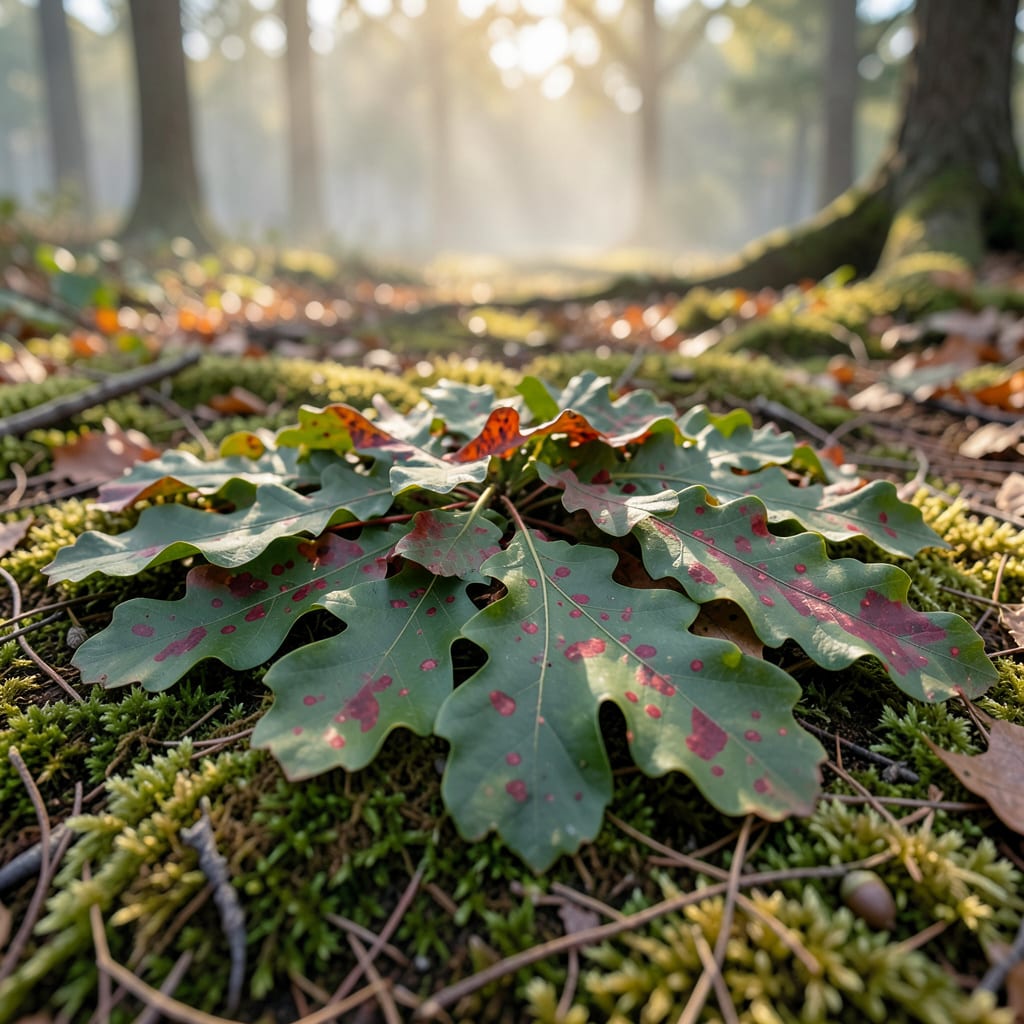
Red spots on oak leaves last summer had me worried sick. Turns out, it’s usually a fungal party crashing on your tree’s foliage.
Most cases trace back to anthracnose or leaf spot diseases that thrive in wet, cool springs. The good news? These rarely kill mature oaks, but they’ll stress your tree and make a mess of your yard.
You can fight back with better air circulation, 30-day fungicide applications, and raking up fallen leaves to break the disease cycle.
Early action means healthier trees next season. Here’s exactly what to look for and how to fix it.
Red spots on oak tree leaves often signal underlying issues, usually tied to environmental stress or pathogens. Below are the most common causes, explained with actionable insights.
Fungi like Diplodia or Anthracnose thrive in wet, humid conditions, leading to circular red or brown spots with defined edges. These pathogens overwinter in leaf litter and splash onto new growth during spring rains. Act quickly by removing infected leaves and improving airflow around the tree.
Extreme heat, drought, or poor soil drainage can stress oak trees, triggering red or purple blotches. This is often a survival response—anthocyanins (red pigments) build up to protect leaves from damage. Solution: Ensure consistent watering (1–2 inches weekly) and mulch to retain moisture.
Sap-feeding insects like spider mites or lace bugs pierce leaf cells, causing stippling or red speckling. Check the undersides of leaves for webbing or tiny bugs. Combat infestations with insecticidal soap or neem oil, focusing on early intervention.
Lack of potassium or phosphorus can manifest as red or purple mottling, especially between leaf veins. A soil test can confirm deficiencies. Fix it with a balanced fertilizer or organic amendments like compost.
If your oak tree’s leaves are sporting unsightly red spots, don’t panic—here’s how to tackle the most common causes and restore your tree’s health. 🌳✨
For fungal diseases like anthracnose or leaf spot, start by removing and destroying infected leaves (don’t compost them!) to stop the spread. Apply a copper-based fungicide or neem oil in early spring or at the first sign of spots. Reapply every 7–10 days during wet weather. Prevention tip: Improve airflow by pruning dense branches and avoid overhead watering to keep leaves dry. 💡
Red spots caused by mites, aphids, or scale insects? Blast pests off with a strong water spray early in the day. For stubborn infestations, use insecticidal soap or horticultural oil, applying in the evening to avoid harming beneficial insects. Prevention tip: Encourage natural predators like ladybugs by planting companion flowers nearby. 🎯
If the issue stems from nutrient imbalances (e.g., potassium or magnesium deficiency), conduct a soil test to pinpoint the problem. Amend the soil with balanced fertilizer or organic matter like compost. Water deeply but infrequently to encourage strong root growth. Prevention tip: Mulch around the base (but not touching the trunk) to retain moisture and regulate soil temperature. 🌡️
Red spots from heat stress, drought, or poor drainage? Ensure your oak gets 1–2 inches of water per week, especially during dry spells. If the soil is waterlogged, improve drainage with organic amendments. Prevention tip: Avoid planting in low-lying areas where water pools. ✨
Regularly inspect your oak tree for early signs of trouble, and act fast—the sooner you intervene, the easier the fix! 💪
Not always. While fungal infections like anthracnose are common, red spots can also stem from environmental stress, pest damage, or nutrient deficiencies. Check for patterns and accompanying symptoms.
Yes, most mature oaks recover with proper care. Remove infected leaves, improve airflow, and apply treatments like copper fungicide or neem oil. Early action prevents long-term damage.
Rake and destroy fallen leaves to break the disease cycle. Prune for better air circulation, water consistently, and test soil for nutrient imbalances. Preventative fungicide in spring helps too.
