
Beautiful Plants For Your Interior
Beautiful Plants For Your Interior
There’s nothing worse than watching aphids turn your thriving basil into a snack bar. I’ve lost count of how many plants I’ve rescued with neem oil—it’s the only natural solution that actually stops pests without leaving chemical residue on your leaves. The key is applying it correctly so you protect the plant without damaging those […]
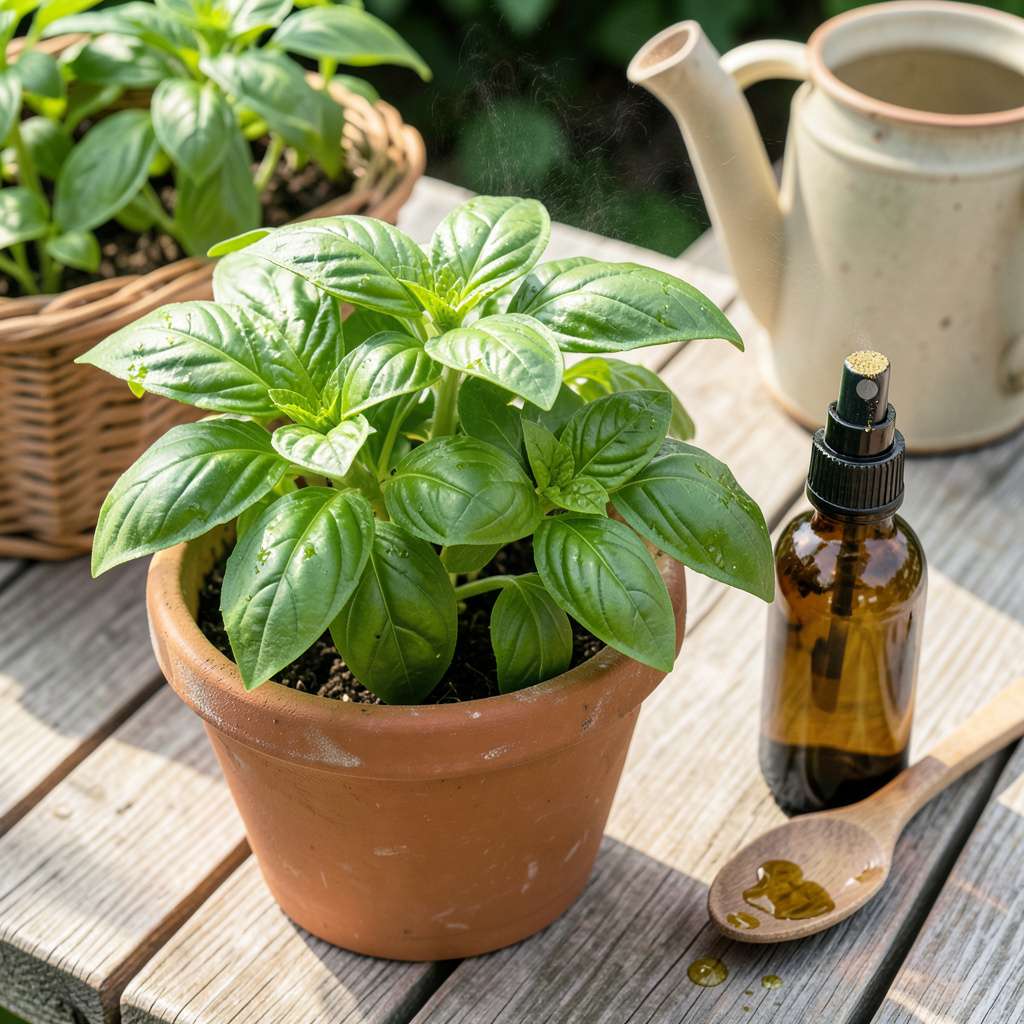
There’s nothing worse than watching aphids turn your thriving basil into a snack bar. I’ve lost count of how many plants I’ve rescued with neem oil—it’s the only natural solution that actually stops pests without leaving chemical residue on your leaves. The key is applying it correctly so you protect the plant without damaging those tender basil leaves we all love.
Neem oil works by disrupting pests’ life cycles, but basil’s delicate foliage can react poorly if you don’t dilute it properly. I learned this the hard way after my first attempt left some leaves with crispy edges. Now I use a 1% solution (that’s just 1 teaspoon oil per quart of water) with a drop of mild soap to help it spread evenly.
You’ll see results within 24-48 hours as pests stop feeding and eventually disappear. The basil keeps growing normally, and you can safely harvest leaves just a few days after treatment. No chemical taste, no residue—just healthy plants and frustrated pests.
This method works for container basil on windowsills, outdoor garden plants, or even large patio pots. The same technique protects against whiteflies, spider mites, and those stubborn fungus gnats that love hovering around your herbs. Here’s exactly how to mix and apply it without stressing your plants.
📚 In This Guide
Here’s my foolproof method for protecting basil while keeping those tender leaves safe and flavorful.
Apply neem oil in the early morning or late evening when temperatures are below 85°F. Direct sunlight combined with oil can burn basil leaves, so I always check the forecast for cool, overcast days when possible. The ideal window is right after the morning dew dries but before the sun gets intense.
Make sure your basil plants aren’t stressed from drought or heat. Water them lightly the day before treatment so the leaves are plump and resilient. You’ll notice the difference – well-hydrated basil has perky leaves that stand up straight, while thirsty plants look slightly wilted even in morning light.
Mix 1 teaspoon of cold-pressed neem oil with 1/2 teaspoon of mild liquid soap in 1 quart of warm water. The soap acts as an emulsifier to help the oil disperse evenly. I use a clean spray bottle and shake vigorously for at least 30 seconds until the mixture looks uniformly cloudy with no oil floating on top.
Test the solution first by spraying a single leaf and waiting 24 hours. Basil can be sensitive, and this quick test reveals if you’ve mixed it correctly. You’re looking for no signs of spotting, yellowing, or wilting on that test leaf before proceeding with full application.
Spray the neem solution on both the top and underside of leaves until they’re evenly coated but not dripping. Pests like aphids and whiteflies hide on leaf undersides, so that’s where you need to focus. I use a fine mist setting and hold the bottle 8-10 inches away from the plant to avoid blasting delicate leaves.
Pay special attention to the stem junctions and new growth areas where pests love to congregate. You’ll want to see a light sheen on the leaves when you’re done – if you see actual droplets forming, you’ve used too much. The solution should dry within 30-45 minutes in normal conditions.
Check your basil daily for the first 3 days after application. You’re watching for two things: pest activity and plant reaction. Healthy basil will maintain its vibrant green color and normal growth rate. If you notice any leaf curling or discoloration, that’s a sign to dilute your solution more next time.
For active infestations, reapply every 5-7 days until pests are gone. For prevention, a monthly treatment keeps most problems at bay. I always apply after harvesting leaves to maximize protection time. Remember that neem oil degrades in sunlight, so evening applications last longer than morning ones.
Wait at least 24 hours before harvesting leaves after treatment. While neem oil is natural, it needs time to break down and dissipate. I always wash harvested leaves gently with cool water, even after the waiting period, as an extra precaution.
Avoid applying neem oil within 2 weeks of frost or during extreme heat waves. Basil under stress handles treatments poorly. After application, keep plants well-watered but avoid getting water on the leaves for 48 hours to let the solution work effectively. You’ll know it’s working when you see fewer pests and new growth comes in strong and healthy.
After years of testing different approaches, here’s what I’ve learned about getting the best results with neem oil on basil.
Timing is Everything: The 24-hour test period in Step 2 isn’t just a suggestion—it’s your safety net. I once skipped this step and ended up with spotted leaves that took weeks to recover. That single leaf test reveals if your mixture is too strong or if your basil is particularly sensitive. Wait the full 24 hours before treating the whole plant, even if you’re eager to tackle pests.
Application Technique: When spraying in Step 3, the 8-10 inch distance makes all the difference. I used to hold the bottle closer thinking I’d get better coverage, but that just blasted leaves with too much solution. The fine mist from the proper distance creates that ideal light sheen without dripping. Pay extra attention to leaf undersides—this is where 90% of pest problems start.
Environmental Awareness: That 85°F threshold in Step 1 exists for good reason. I learned this after applying neem oil on a warm afternoon and watching my basil develop crispy edges overnight. Even if mornings are cool where you live, double-check the forecast for unexpected heat waves. The solution dries within 30-45 minutes as mentioned, but higher temps can cause it to evaporate too quickly, reducing effectiveness.
Post-Treatment Care: The 48-hour window after application when you avoid wetting leaves is critical. I made the mistake of watering from above too soon once, and it washed away most of the protective coating. Use a watering can at the base of plants instead. This also helps prevent any potential leaf burn from water droplets acting as magnifying glasses in sunlight.
Apply neem oil every 7–14 days as a preventative measure, or every 5–7 days if treating an active pest infestation. Always spray in the early morning or late evening to avoid leaf burn from sun exposure. Lightly mist both sides of the leaves for best results!
No—wait at least 3–5 days after the last application before harvesting. Neem oil is non-toxic but has a bitter taste. Wash leaves thoroughly with cool water and mild soap if you must harvest sooner to remove residue.
What’s the best neem oil mix ratio for basil?
Dilute 1–2 teaspoons of cold-pressed neem oil and ½ teaspoon of mild liquid soap (as an emulsifier) per 1 quart of water. Shake well before spraying! Avoid over-concentrating—it can clog basil pores or cause leaf damage.
Yes! Try these gentle options:
Test alternatives on a few leaves first to check for sensitivity.
Yellowing can signal over-application, sunburn, or poor dilution. Reduce frequency, spray only in low light, and ensure proper mixing. If issues persist, rinse leaves with water and pause treatments for 1–2 weeks to let the plant recover.
Neem oil is a game-changer for protecting your basil from pests—without the harsh chemicals or leaf damage! 🌿 By following the right dilution and application tips, you can keep your plants thriving while saying goodbye to aphids, whiteflies, and fungal issues.
Ready to give it a try? Start with a small test spray on a few leaves, then scale up once you see those happy, pest-free results. Your basil (and your pesto!) will thank you. 😊
