
Beautiful Plants For Your Interior
Beautiful Plants For Your Interior
Hydrangeas should be the showstoppers of your garden—not a buffet for pests or a canvas for fungal spots. I’ve watched too many beautiful blooms get ruined by aphids, powdery mildew, and those frustrating brown leaf spots that spread overnight. The solution isn’t harsh chemicals—it’s a simple bottle of neem oil that’s been my secret weapon […]
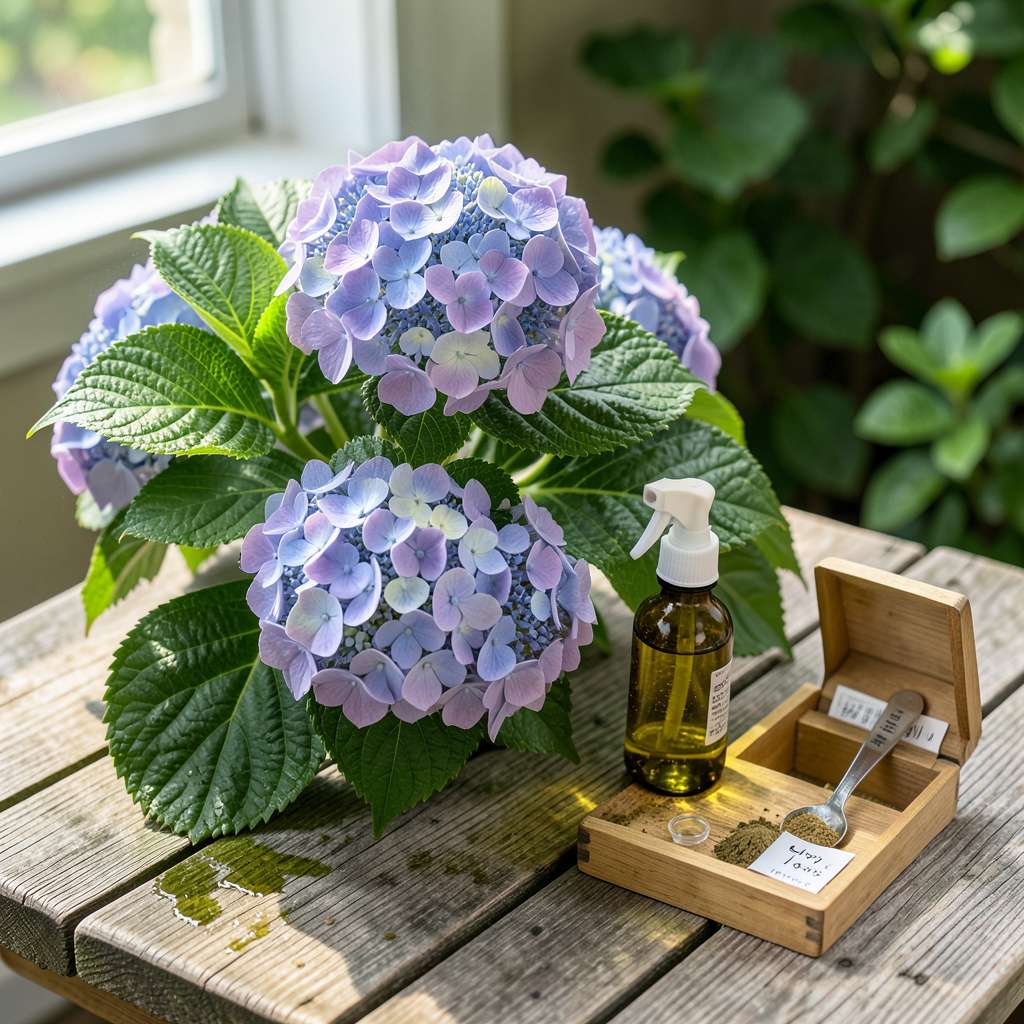
Hydrangeas should be the showstoppers of your garden—not a buffet for pests or a canvas for fungal spots. I’ve watched too many beautiful blooms get ruined by aphids, powdery mildew, and those frustrating brown leaf spots that spread overnight. The solution isn’t harsh chemicals—it’s a simple bottle of neem oil that’s been my secret weapon for five seasons now.
What makes neem oil different is how it works on multiple fronts. It doesn’t just kill pests on contact—it disrupts their life cycle so new generations don’t stand a chance. And unlike synthetic fungicides, it prevents fungal issues without harming beneficial insects when used correctly. My hydrangeas now stay lush from spring through fall, with leaves so healthy they practically glow.
You’ll need just three things: cold-pressed neem oil, a mild liquid soap (as an emulsifier), and a spray bottle. The application takes 10 minutes max, and you’ll see results within 48 hours—aphids disappearing, new growth coming in clean, and existing spots stopping their spread. Timing matters though: evening applications prevent leaf burn, and consistency beats any single heavy treatment.
Fair warning: neem oil smells strong (like garlic mixed with dirt) when first applied, but that fades within a day. The tradeoff? Hydrangeas that bloom bigger, stay healthier, and resist problems that wipe out untreated plants. Here’s exactly how to mix and apply it for best results—no guesswork, just what’s worked in my garden season after season.
📚 In This Guide
This method protects your hydrangeas naturally while avoiding chemical damage—follow these precise steps for best results.
Select 100% cold-pressed neem oil without additives, as synthetic blends can burn hydrangea foliage. I recommend checking the label for azadirachtin content (the active compound) between 0.5-3%—this ensures effectiveness against pests and fungi without overwhelming the plant.
Apply in early morning or late evening when temperatures stay below 85°F. Direct sunlight after application causes neem oil to volatilize too quickly, reducing its protective benefits. Avoid treatment if rain is forecast within 24 hours—water will wash away the oil before it absorbs.
Mix 1 tablespoon neem oil with 1 teaspoon mild liquid soap (as an emulsifier) per 1 gallon of warm water. The soap helps the oil disperse evenly in water—without it, the oil separates and clogs sprayers. Use a clean bucket and stir vigorously until the mixture appears uniformly cloudy.
Test the solution on a single hydrangea leaf first. Wait 24 hours and check for discoloration or spotting. Hydrangeas with thin leaves (like lacecaps) occasionally show sensitivity, so this step prevents damaging your entire plant. If no reaction occurs, proceed with full application.
Use a fine-mist sprayer to coat both the upper and lower leaf surfaces, where pests like spider mites and aphids hide. Pay special attention to leaf axils (where leaves meet stems) and the undersides of older leaves—these areas harbor early fungal spores and egg clusters.
Spray until leaves glisten but don’t drip. Excess runoff wastes product and risks soil saturation, which can inhibit root oxygen uptake. Reapply every 7-14 days during active pest seasons (spring through early fall), or after heavy dew that might dilute the protective coating.
Inspect treated plants 3 days after application. Look for reduced pest activity (fewer visible insects, no new leaf damage) and check that leaves maintain their natural color. Yellowing or browning edges signal either overapplication or insufficient dilution—adjust your mixture ratio by 25% for the next treatment.
For fungal issues like powdery mildew, focus applications on emerging growth and flower buds, where spores first appear. Neem oil prevents spore germination, so consistent coverage during humid periods (when fungi thrive) is critical. Rotate with baking soda sprays weekly to enhance fungal suppression without overusing any single treatment.
After years of protecting hydrangeas with neem oil, I’ve learned these key details make all the difference between success and disappointment.
Application Timing: The 85°F temperature threshold in Step 1 isn’t arbitrary—neem oil breaks down rapidly in heat. I’ve ruined applications by starting at 80°F thinking it was “close enough,” only to watch the oil evaporate before absorbing. Use a soil thermometer if you’re unsure, and remember that pavement radiates heat, so check temperatures at plant level, not just from weather reports.
Solution Preparation: When mixing your 1 tablespoon neem oil with 1 teaspoon soap per gallon in Step 2, water temperature matters more than you’d think. Lukewarm water (around 70°F) creates the most stable emulsion—cold water causes oil to clump, while hot water can degrade the azadirachtin. Stir for a full minute until the mixture develops a uniform milky appearance; skimping here leads to clogged sprayers and uneven coverage.
Test Patch Protocol: That 24-hour waiting period after testing a single leaf isn’t just caution—it’s your safety net. I once skipped this step on a lacecap hydrangea and watched an entire bush develop crispy edges overnight. Thin-leaved varieties like ‘Blue Wave’ are particularly sensitive, so test on the oldest leaf (most resilient) and check both surfaces for reactions. If you see any whitening or spotting, dilute your mixture by 25% before full application.
Reapplication Strategy: The 7-14 day window in Step 3 isn’t flexible during peak pest season. Japanese beetles and spider mites reproduce every 5-7 days, so stretching to 14 days gives new generations time to establish. Mark your calendar and reapply every 7 days during June-August, then extend to 10-14 days in early fall. After heavy rain or overhead watering, don’t wait—reapply immediately, as water removes up to 60% of the protective coating.
Apply neem oil early morning or late evening to avoid leaf burn—hydrangeas in full sun are sensitive! The oil can magnify sunlight, causing damage. If temperatures exceed 90°F, wait for cooler weather or dilute the spray further (1 tsp oil per gallon of water).
For active infestations, spray every 5–7 days until pests disappear (usually 2–3 treatments). For prevention, apply once monthly during growing season. Always coat undersides of leaves where pests hide! Shake the spray bottle often to prevent oil separation.
Yes! Neem oil is safe for all hydrangea types, but blue bigleaf varieties (pH-sensitive) may need extra care. Test-spray a small area first. Avoid overuse on drought-stressed plants—oil can clog pores. Oakleaf hydrangeas (with fuzzy leaves) may hold more residue; rinse with water if buildup occurs.
If neem oil fails after 2–3 applications, try:
Prune infected leaves and improve airflow to prevent recurrence.
Yellowing often signals overapplication or poor dilution. Neem oil suffocates leaves if used too heavily. Flush plants with water, skip the next treatment, and ensure proper mix (2–3 tbsp oil per gallon). Rule out other causes: underwatering, nutrient deficiency, or root rot (neem oil won’t fix these!).
Neem oil is a game-changer for keeping your hydrangeas thriving—naturally repelling pests, preventing fungal issues, and even boosting plant health without harsh chemicals! 🌿 With just a little consistency, you’ll enjoy lush blooms and worry-free gardening.
Ready to give it a try? Start with a small test spray on a few leaves, then treat your entire plant once you see great results. Happy gardening—your hydrangeas will thank you! 🌸
