
Beautiful Plants For Your Interior
Beautiful Plants For Your Interior
Yellowing leaves on your bird of paradise don’t mean the end—it’s often a fixable signal. I’ve nursed dozens of these tropical beauties back to health using one simple tool: neem oil. The transformation from sad, spotted foliage to vibrant green growth happens faster than you’d expect when you apply it correctly. Neem oil works because […]
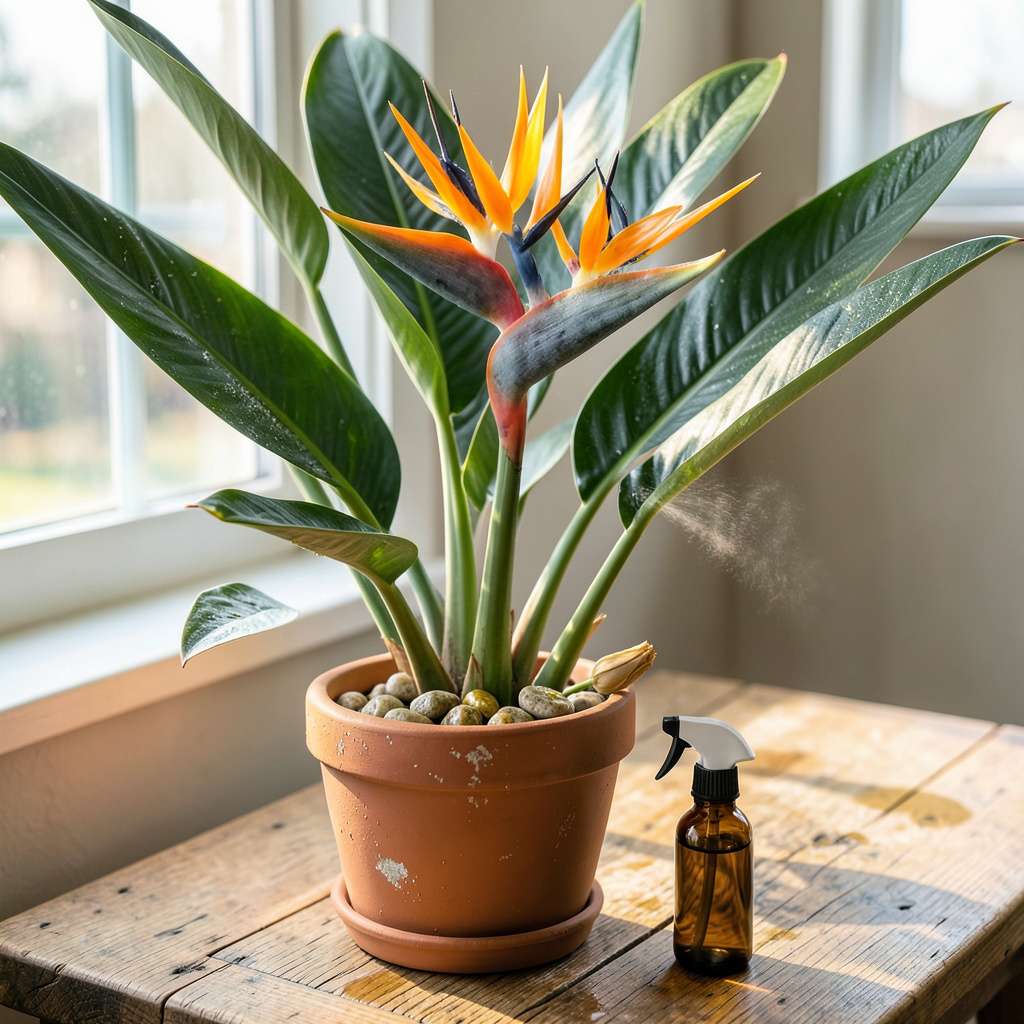
Yellowing leaves on your bird of paradise don’t mean the end—it’s often a fixable signal. I’ve nursed dozens of these tropical beauties back to health using one simple tool: neem oil. The transformation from sad, spotted foliage to vibrant green growth happens faster than you’d expect when you apply it correctly.
Neem oil works because it tackles both pests and fungal issues simultaneously, which is exactly what bird of paradise plants typically struggle with. I learned the hard way that those yellow spots often mean spider mites or scale insects are feasting unseen, while brown edges usually signal fungal problems. A single neem oil treatment addresses both without harsh chemicals.
You’ll see improvement within 7-10 days of your first application, with new growth emerging cleaner and healthier. The plants respond visibly—leaves unfurl brighter, stems stand taller, and that iconic tropical vibrancy returns. Best part? It’s safe for the plant, your pets, and beneficial garden insects when used properly.
Whether you’re dealing with indoor potted specimens or landscape plants, the method adapts easily. I’ll walk you through the exact dilution ratio, application timing, and safety checks that make this work every time. No more guessing what’s wrong with your bird of paradise.
📚 In This Guide
Here’s the gentle yet effective method I use to bring back vibrant green leaves without harsh chemicals.
Start by examining your plant’s leaves closely. Look for yellowing edges, brown spots, or sticky residue—these are telltale signs of either pest activity or fungal stress. I always check the undersides of leaves first, as that’s where spider mites and scale insects love to hide.
Note which leaves show the most damage. You’ll want to focus your treatment there, but don’t ignore the healthier leaves—they need protection too. If more than 30% of the foliage is affected, plan for a second application in 7-10 days.
Mix 1 tablespoon of cold-pressed neem oil with 1 teaspoon of mild liquid soap (this acts as an emulsifier) in 1 gallon of warm water. The water should feel slightly warmer than room temperature—about 80°F—to help the oil disperse evenly.
Stir the mixture thoroughly until it becomes a milky, consistent solution. I use a clean spray bottle for application, but if you’re treating a large plant, a pump sprayer works better. Always shake the container before and during application, as the oil will separate from the water.
Spray the solution generously on both the top and bottom surfaces of all leaves, not just the affected ones. Pay special attention to the leaf axils (where the leaf meets the stem) and along the midribs—these are prime hiding spots for pests.
Apply in the early morning or late evening to avoid leaf burn from the sun. You’ll see the solution bead up on the leaves at first, but it will absorb within 15-20 minutes. Don’t rinse it off—neem oil works best when left to penetrate.
Check your plant daily for the first 3-5 days after treatment. You should see improved leaf color within 7 days if the issue was pest-related. For fungal problems, it may take up to 14 days to see full recovery.
If you still notice pests or new yellowing after a week, repeat the treatment. I’ve found that three applications spaced 7-10 days apart usually resolves most issues completely. The plant’s natural resilience will take over from there.
After treating, keep your bird of paradise healthy with consistent watering—wait until the top 2 inches of soil feel dry before watering again. Place it where it gets bright, indirect light for at least 6 hours daily.
Every 4-6 weeks, give the leaves a gentle wipe with a damp cloth to remove dust. This simple habit prevents future pest infestations and helps the plant absorb light more efficiently. Your plant will reward you with lush, vibrant growth.
Having revived countless struggling plants with this method, I’ve learned what makes the difference between partial improvement and complete recovery.
Application Timing: The early morning or late evening window in Step 3 isn’t just a suggestion—it’s critical. Neem oil can cause leaf burn when exposed to direct sunlight, especially on sensitive tropical plants like bird of paradise. I’ve found that treating just after sunrise or right before sunset gives the oil those crucial 15-20 minutes to absorb without risk of sun damage. The cooler temperatures also help the solution adhere better to leaf surfaces.
Solution Consistency: When mixing your neem oil solution in Step 2, don’t rush the stirring process. The mixture should look uniformly milky with no oil separation—this ensures even coverage when spraying. I use a small whisk rather than just stirring with a spoon, as it creates a more stable emulsion. Remember that the 80°F water temperature is ideal for dispersion; water that’s too hot can degrade the neem oil’s active compounds.
Comprehensive Coverage: Many people focus only on the visibly damaged leaves, but Step 3 emphasizes treating all surfaces for good reason. Pests and fungal spores often spread to healthy foliage before symptoms appear. I use a paintbrush dipped in the solution to carefully coat the leaf axils and midribs where spray bottles might miss. This thorough approach prevents reinfestation between your 7-10 day treatments.
Monitoring Technique: During the 3-5 day observation period in Step 4, don’t just look at the leaves—check the soil too. Overwatering can mimic pest damage symptoms, so verify the top 2 inches are dry before watering. I keep a small notebook to track daily changes, which helps identify whether you’re dealing with pests (which improve quickly) or fungal issues (which take the full 14 days to resolve).
Apply neem oil every 7–14 days as a preventative treatment or weekly for active pest issues. Always spray in the early morning or late evening to avoid leaf burn from sun exposure. Reduce frequency in winter when growth slows.
Avoid spraying neem oil directly on blooms, as it may cause discoloration or damage delicate petals. Focus on the leaves, stems, and soil. If pests target flowers, spot-treat with a diluted solution (1 tsp oil per gallon of water).
Use 1–2 tbsp neem oil + 1 tsp mild soap (like Castile) per gallon of water. Shake well before spraying! For severe infestations, increase to 2 tbsp/gallon, but test on a small leaf first to check for sensitivity.
Yes! Try insecticidal soap (for soft-bodied pests) or horticultural oil (for scale/aphids). For fungal issues, baking soda spray (1 tsp baking soda + 1 quart water + drop of soap) works well. Always patch-test first!
Yellowing can signal overapplication, sunburn (if sprayed midday), or soil pH imbalance. Rinse leaves with water, pause treatment for 2 weeks, and check for pests. If soil is soggy, improve drainage—neem oil isn’t the culprit!
Neem oil is a game-changer for reviving your bird of paradise, tackling pests, and restoring those stunning green leaves—naturally! ✨ With just a little consistency, you’ll see your plant thrive without harsh chemicals. Remember, prevention is key: regular applications and proper care keep problems at bay.
Ready to give your tropical beauty the TLC it deserves? Start with a small test spray today, and watch your bird of paradise bounce back to its vibrant, show-stopping self! 🌿 Happy gardening!
