
Beautiful Plants For Your Interior
Beautiful Plants For Your Interior
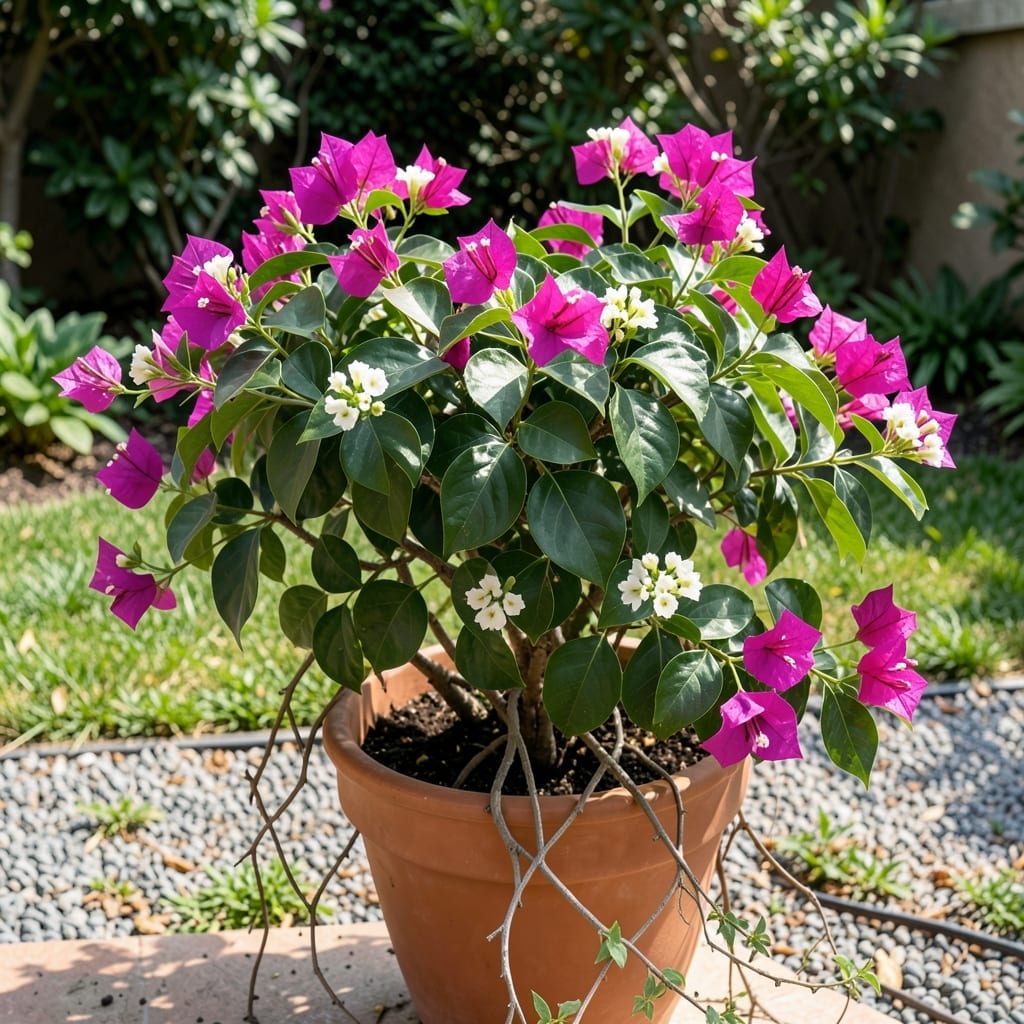
My bougainvillea explodes with color from spring to frost. The secret isn’t magic—it’s understanding what these tropical plants actually need to thrive in your climate.
You’ll get vibrant blooms in pinks, purples, and oranges with the right sunlight, well-draining soil, and a pruning routine that encourages new growth. Even in colder zones, a few simple tricks keep them flowering for months.
📚 In This Guide
This method keeps your plants vibrant through every season with consistent care.
Bougainvillea thrives in full sun (at least 6-8 hours of direct light daily) and well-draining soil. I use a mix of 50% cactus/succulent soil and 50% perlite to ensure sharp drainage, which prevents root rot. Plant in a container at least 12-18 inches deep to accommodate the extensive root system.
If your climate drops below 30°F, grow bougainvillea in pots so you can move them indoors during winter. Outdoors, choose a south-facing wall or fence where reflected heat boosts growth. You’ll see the most vibrant blooms in these conditions.
Water deeply but infrequently—once every 10-14 days in hot weather, less in cooler months. The goal is to let the top 2-3 inches of soil dry out completely between waterings. Overwatering is the fastest way to kill bougainvillea, as it leads to root suffocation and leaf drop.
I check soil moisture by sticking my finger in the pot. If it feels dry at the second knuckle, it’s time to water. Always water at the base, never overhead, to avoid fungal issues on the foliage. After a few weeks, you’ll notice the plant signals thirst with slight wilting in the late afternoon.
Prune after each blooming cycle to encourage new growth and more flowers. Use clean, sharp shears to remove up to one-third of the oldest stems, cutting just above a leaf node. This stimulates branching and leads to denser, flower-covered growth.
I prune in early spring before new growth starts and again in late summer. Avoid heavy pruning in fall, as it can reduce winter hardiness. You’ll see fresh growth within 2-3 weeks after pruning, followed by new blooms.
Use a low-nitrogen, high-phosphorus fertilizer (like a 5-10-10 or 6-12-12 blend) every 4-6 weeks during the growing season. Bougainvillea blooms best when slightly root-bound and nutrient-stressed, so don’t over-fertilize. Too much nitrogen results in lush leaves but fewer flowers.
I dilute liquid fertilizer to half strength to avoid burning the roots. Apply it to moist soil to prevent shock. You’ll notice deeper color and more abundant blooms within a few weeks of starting this routine.
In colder climates, move potted bougainvillea indoors before the first frost. Place it in a cool, sunny room (around 50-60°F) and reduce watering to once a month. The plant will enter dormancy, dropping some leaves, but will bounce back in spring.
I stop fertilizing in late fall and resume when new growth appears in spring. If your plant looks leggy, prune it lightly in early spring to shape it before moving it back outside. This ensures a strong start to the next blooming season.
Small adjustments make the difference between a struggling plant and one covered in vibrant blooms.
Sunlight Strategy: That 6-8 hours of direct sun in Step 1 isn’t just a suggestion—it’s essential. In cooler climates, maximize exposure by placing pots near south-facing walls where reflected light adds extra warmth. I’ve found that morning sun with afternoon shade works best in scorching regions to prevent leaf burn.
Watering Wisdom: The 10-14 day watering interval in Step 2 might seem long, but bougainvillea thrives on neglect. Between us, I killed my first three plants by overwatering before learning to trust the finger test at the second knuckle. When in doubt, wait another day.
Pruning Precision: For Step 3, clean shears are non-negotiable—dirty tools spread disease. When removing up to one-third of old stems, cut at a slight angle just above the node to prevent water pooling. You’ll notice the 2-3 weeks to new growth feels long, but resist the urge to over-prune.
Overwintering Insight: The 50-60°F range in Step 5 is ideal for dormancy, but don’t panic if your indoor space runs warmer. Just reduce watering even further and expect some leaf drop. I keep mine near a cool, sunny window and it bounces back beautifully each spring.
Prune regularly and ensure full sunlight (6+ hours daily). Multi-colored varieties like ‘Double Pink’ or ‘Rainbow Gold’ naturally produce varied hues. Fertilize with a low-nitrogen, high-phosphorus mix to encourage vibrant blooms.
Plant in spring or early summer when temperatures stay above 60°F (15°C). This gives roots time to establish before winter. In warm climates, fall planting works too—just avoid frost risk.
Color shifts depend on variety, age, and light exposure. Some types bloom in one hue, while others (like ‘Helen Johnson’) change with maturity. Ensure consistent sunlight and check for nutrient deficiencies.
Yes! Use a well-draining mix and a pot with drainage holes. Dwarf varieties like ‘Hamburg’ thrive in containers. Water when the topsoil is dry, and move pots indoors if temperatures drop below 30°F (-1°C).