
Beautiful Plants For Your Interior
Beautiful Plants For Your Interior
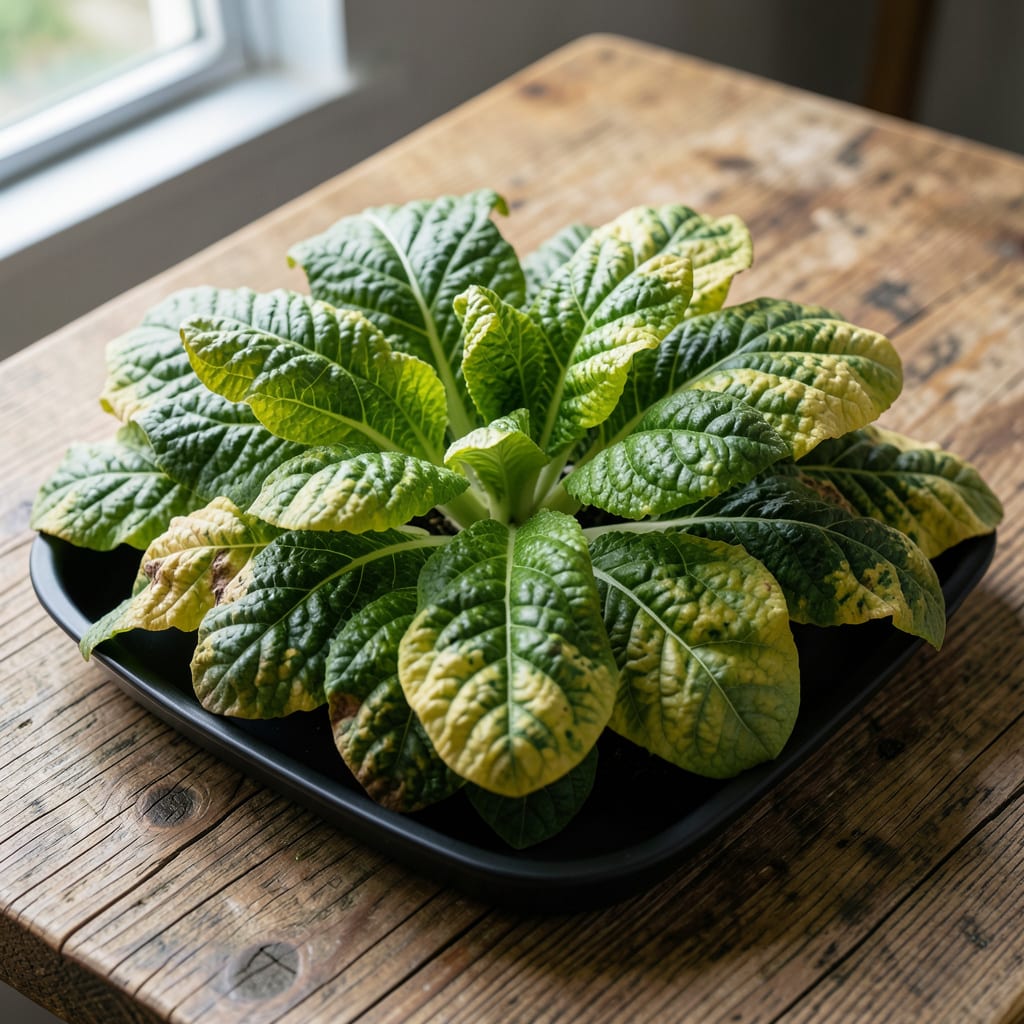
Spot those mottled leaves or stunted growth? Mosaic virus hit my zucchini patch last summer, and it spreads faster than I expected through aphids and contaminated tools.
I learned the hard way that prevention beats treatment—remove infected plants immediately, control aphids naturally, and always sterilize your pruners. The good news? Healthy plants resist better with proper spacing and organic care.
📚 In This Guide
Use this method to spot the signs early and apply organic solutions before it spreads.
Examine leaves for distinctive mottling patterns—alternating light and dark green patches that resemble a mosaic. These often appear first on younger leaves and can later spread to older foliage. I look for any curling, puckering, or stunted growth that accompanies the discoloration.
Check the undersides of leaves for yellowing or chlorotic spots, as these often develop before the top surface shows damage. Early detection is critical, as the virus spreads rapidly through plant sap and insect vectors like aphids. Act within 24-48 hours of noticing symptoms to prevent further contamination.
Remove infected plants from the growing area and place them in a sealed bag or container. This prevents aphids or other pests from transmitting the virus to nearby healthy specimens. I use a dedicated pair of pruners for this step, sterilizing them with 70% isopropyl alcohol after each cut to avoid mechanical transmission.
Do not compost infected material—burn it or dispose of it in sealed trash bags to eliminate the virus completely. Even small plant debris can harbor the pathogen and reintroduce it to your garden. Keep isolated plants at least 20 feet away from healthy ones during this process.
Introduce beneficial insects like ladybugs or lacewings to control aphid populations naturally. These predators feed on the primary vectors of mosaic virus, reducing the risk of new infections. I release them in the evening when temperatures are cooler and they’re less likely to fly away immediately.
Apply neem oil as a foliar spray every 5-7 days to disrupt the lifecycle of remaining pests. Mix 2 tablespoons of neem oil per gallon of water and add a few drops of mild soap as an emulsifier. Always spray in the early morning or late evening to avoid leaf burn from the sun.
Clean all gardening tools, stakes, and containers with a 10% bleach solution (1 part bleach to 9 parts water) to kill any lingering virus particles. I soak metal tools for at least 10 minutes and scrub plastic containers thoroughly before rinsing. This step is often overlooked but prevents reinfection in subsequent planting seasons.
Remove and replace the top 1-2 inches of soil in affected beds, as the virus can persist in soil particles. Solarize the soil by covering it with clear plastic for 4-6 weeks during hot weather to kill remaining pathogens through heat. This is particularly effective in warmer climates.
Inspect all new plants for signs of infection before introducing them to your garden. I quarantine new arrivals for 2-3 weeks in a separate area to observe them for symptoms. This practice has saved my garden from multiple potential outbreaks.
Plant resistant varieties when available, as some cultivars show tolerance to specific mosaic virus strains. Rotate crops annually to disrupt the lifecycle of pests that may carry the virus. Maintain healthy plant vigor through proper watering and fertilization, as stressed plants are more susceptible to infection.
Small details make the difference between containing the virus and letting it spread through your entire garden.
Early Detection: In Step 1, don’t wait for obvious symptoms—check leaf undersides daily for those first chlorotic spots. I learned this the hard way after losing a whole row of tomatoes to a delayed response. That 24-48 hour window is non-negotiable for effective containment.
Sanitization Precision: For Step 4, the 10% bleach solution must be exact—1 part bleach to 9 parts water. I’ve seen gardeners eyeball this ratio and end up with either ineffective solutions or bleach damage to their tools. Soak metal tools for the full 10 minutes; cutting this short risks reinfection.
Neem Oil Timing: The 5-7 day neem oil schedule in Step 3 isn’t arbitrary. Spraying more frequently can harm beneficial insects, while less frequent applications allow aphid populations to rebound. I set calendar reminders to stay consistent, especially during peak aphid seasons.
Isolation Distance: That 20 feet separation in Step 2 isn’t just a suggestion—aphids can travel surprising distances. I mark my isolation zone with flags to ensure I maintain the full distance, and I’ve never had cross-contamination when I stick to this rule.
Look for yellow or white mottling on leaves, stunted growth, and distorted foliage. These patchy discolorations often resemble a mosaic pattern, giving the virus its name.
Yes, it spreads easily through contaminated tools, insects like aphids, or even human touch. Always sanitize pruners and avoid working with wet plants to prevent transmission.
No cure exists, but removing infected plants and controlling pests can limit its spread. Organic methods like neem oil or resistant varieties may help manage the issue.
Use virus-free seeds, rotate crops, and remove weeds that host the virus. Disinfect tools and encourage beneficial insects to control aphid populations.
