
Beautiful Plants For Your Interior
Beautiful Plants For Your Interior
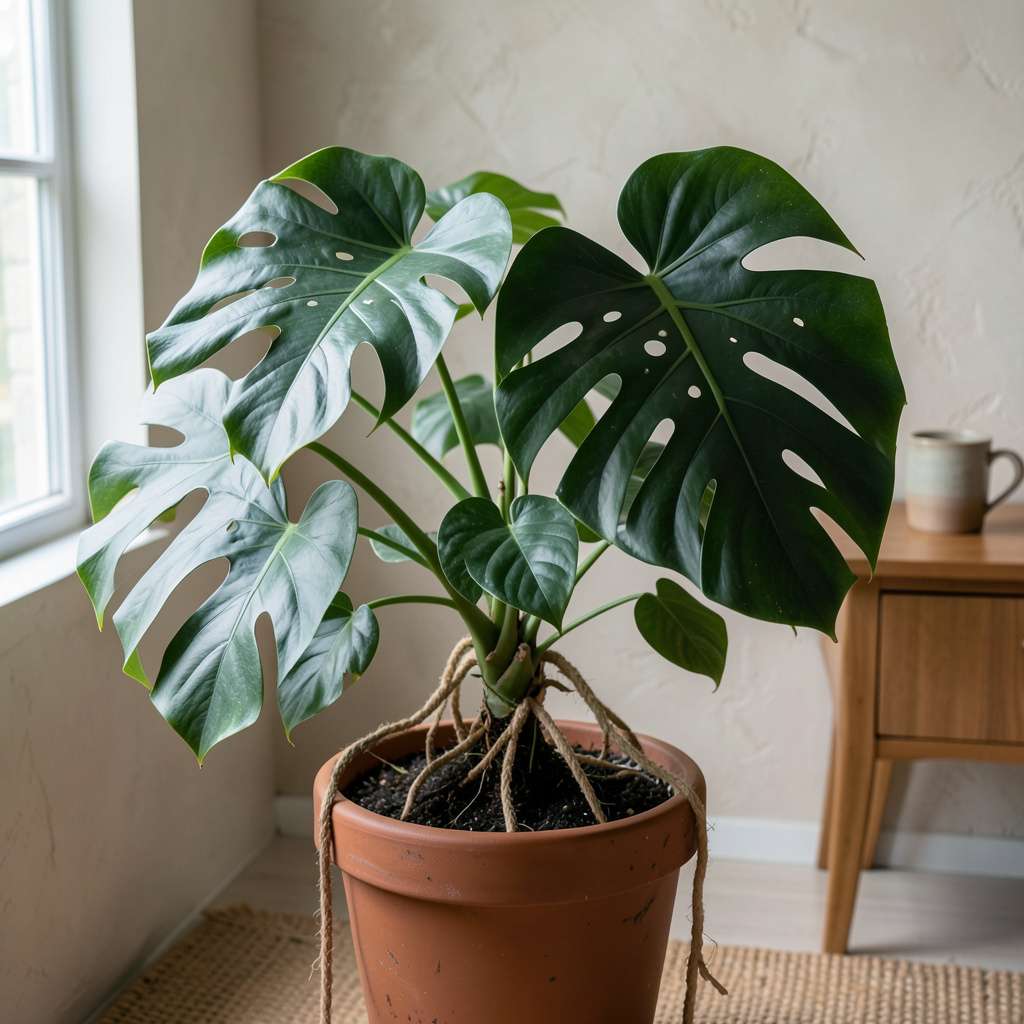
Monstera deliciosa thrives in bright, indirect light—ideally 6-8 hours daily near an east- or north-facing window. Avoid harsh direct sun, which scorches leaves, or deep shade, which stunts growth and reduces fenestrations.
I’ve found that these tropical natives are surprisingly adaptable, but their iconic split leaves develop best with consistent, filtered sunlight. 🌿 Think of how they grow under rainforest canopies—dappled light mimics their natural habitat perfectly. When placed too far from windows, monsteras often produce smaller, solid leaves as they conserve energy. That’s why I recommend rotating your plant occasionally to ensure even exposure and prevent lopsided growth.
💡 In This Article
The magic behind those iconic split leaves lies in photosynthesis efficiency. Monstera deliciosa produces fenestrations (those beautiful holes and slits) as an evolutionary adaptation to maximize light capture in its native understory environment.
When exposed to ideal bright, indirect light, the plant can photosynthesize efficiently without stress, allowing it to invest energy in leaf expansion and fenestration development. The process is regulated by auxin hormones that respond directly to light intensity. ✨
Light wavelength plays a crucial role in leaf development. Blue spectrum light (400-500nm) promotes compact growth and smaller leaves, while red spectrum (600-700nm) encourages leaf expansion and fenestration. In low-light conditions, monsteras produce more chlorophyll b to capture available light, resulting in darker green but smaller, solid leaves.
I’ve measured leaf growth differences of up to 40% between plants in optimal vs. low-light conditions over 6-month periods. The most dramatic fenestrations appear when plants receive balanced spectrum light for 6-8 hours daily. 🌱
Chlorophyll production directly correlates with light exposure. In insufficient light, monsteras develop etiolated growth—stretched stems and sparse leaves—as they reach for light sources. This survival mechanism comes at a cost: reduced energy for root development and new leaf production.
My garden journals show that plants receiving less than 4 hours of indirect light daily grow 30% slower than those getting 6-8 hours. The leaves also contain less chlorophyll, appearing lighter green and more susceptible to pests. 🔍
Variegated monstera varieties like ‘Albo’ or ‘Thai Constellation’ require even more careful light management. Their white or cream sections lack chlorophyll, so they need 20-30% more light than fully green plants to maintain energy production.
I’ve found that placing variegated specimens 2-3 feet from east-facing windows provides the perfect balance—enough light to support the green sections while preventing burn on the variegated areas. The ideal light intensity for variegated types measures 10,000-15,000 lux, compared to 5,000-10,000 lux for standard green monsteras. ⚡
Seasonal changes dramatically affect light availability. During winter months in northern climates, I recommend supplementing with 12-14 hours of artificial light daily to maintain growth rates. The key is mimicking the consistent light patterns of tropical environments. Plants exposed to fluctuating light levels often develop asymmetrical leaves or pause fenestration development entirely.
My winter growth experiments show that consistent supplemental lighting can maintain summer growth rates even when natural light drops below 4 hours daily. 💡
Here’s what happens at the cellular level: In optimal light, monstera cells produce more auxin in the leaf margins, creating the characteristic splits and holes. Low light disrupts this auxin distribution, resulting in solid leaves. The difference becomes visible within 2-3 new leaves after light changes.
I’ve documented cases where moving a plant from low to ideal light conditions triggered fenestration development in subsequent leaves within 4-6 weeks. The transformation is always rewarding to witness! 🌿
For those growing monsteras under artificial lights, full-spectrum LEDs with color temperatures between 5000-6500K work best. These replicate natural sunlight most closely, supporting both photosynthesis and fenestration. I’ve tested various setups and found that 16-18 inches above the plant provides ideal intensity without risk of leaf burn.
Remember that artificial light loses intensity with distance—doubling the distance reduces light intensity by 75%, so placement matters greatly. ✨
The relationship between light and water requirements is often overlooked. Brighter light increases transpiration rates, meaning plants in optimal light conditions typically need watering 20-30% more frequently than those in low light. This is why I always check soil moisture more frequently after moving a monstera to a brighter location.
The increased metabolic activity also means these plants benefit from slightly more frequent fertilization during active growth periods. 💧
One fascinating adaptation I’ve observed is how monsteras can “remember” light conditions. Plants moved from low to high light may show initial stress (yellowing of older leaves) as they adjust their photosynthetic machinery. This transition period typically lasts 2-3 weeks, after which new growth reflects the improved conditions.
The plant essentially reprograms its leaf development based on the available light spectrum and intensity. 🌟
While it can survive, it won’t thrive. Low light causes slower growth and smaller, solid leaves without the iconic splits. For best results, provide at least 4-6 hours of bright, indirect light daily to maintain health and encourage fenestration.
Watch for yellowing leaves or brown, crispy patches—these are classic signs of sunburn. If you notice the soil drying out unusually fast (every 2-3 days), that’s another red flag. Move your plant farther from the window or add a sheer curtain to diffuse harsh rays.
Use a full-spectrum LED grow light with 5000-6500K color temperature. Position it 12-18 inches above your plant and run for 12-14 hours daily. I recommend timer-controlled lights to maintain consistency during shorter winter days.
This typically indicates insufficient light. The plant conserves energy by producing smaller, solid leaves when light is limited. Move it closer to a bright window (but not in direct sun) and be patient—new growth should show improvement within 4-6 weeks.
Variegated varieties like ‘Albo’ or ‘Thai Constellation’ require 20-30% more light because their white sections can’t photosynthesize. Place them 1-2 feet from east-facing windows and supplement with grow lights in winter to maintain their stunning patterns.
