
Beautiful Plants For Your Interior
Beautiful Plants For Your Interior
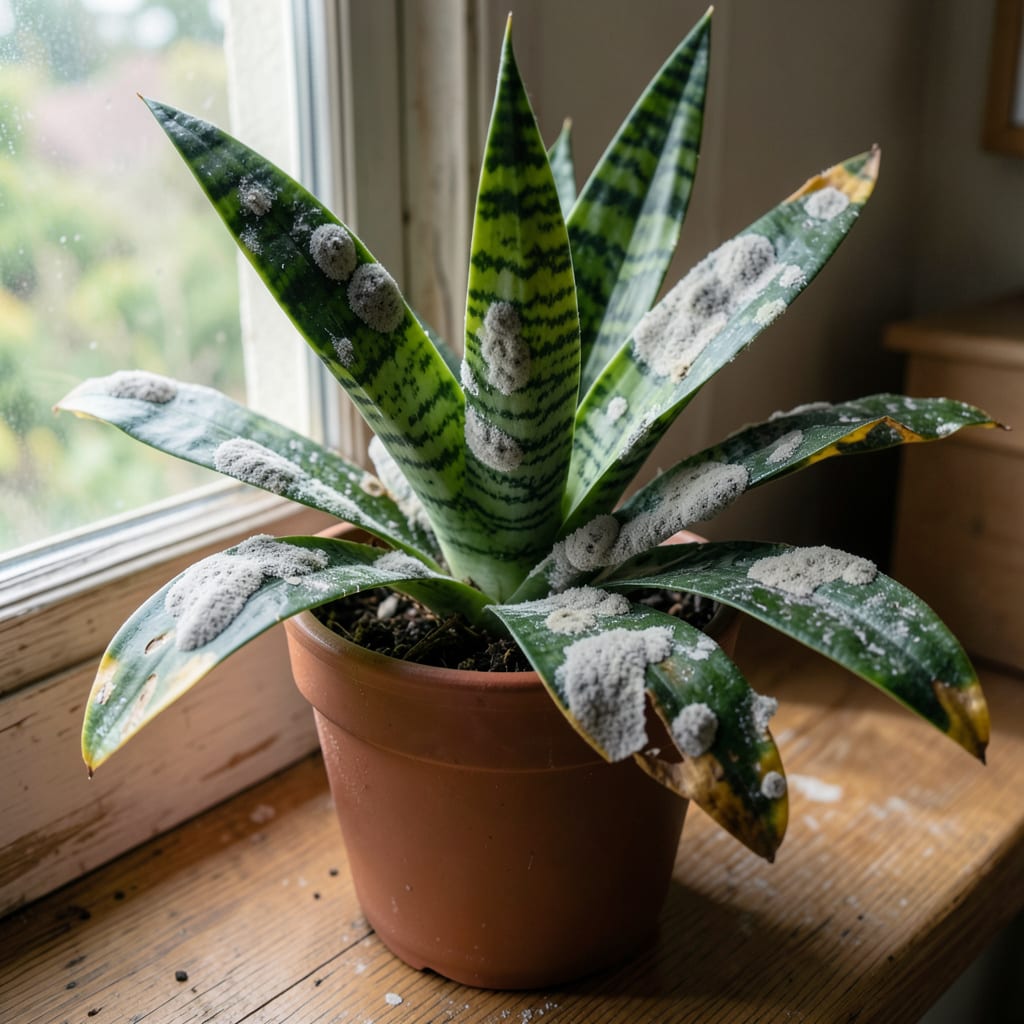
White fuzz on your snake plant isn’t just unsightly—it’s a red flag. I’ve seen this mold spread fast, turning healthy leaves into a mushy mess within days if left unchecked.
Overwatering is usually the culprit, but poor airflow and low light play their part too. The good news? Catching it early means you can fix this with simple changes—better drainage, a sunnier spot, or a gentle wipe-down with diluted neem oil.
Your plant can bounce back, but speed matters. Remove affected leaves first, then adjust your care routine to keep the problem from returning.
Works for any snake plant variety, whether it’s in a bright living room or a dim corner. Here’s how to tackle it.
Mold on snake plants often stems from environmental and care-related factors. Here’s why it happens:
Overwatering or poor drainage creates a damp environment where mold thrives. Snake plants (Sansevieria) prefer dry soil, so soggy conditions invite fungal spores to settle and multiply. Fix: Water only when the top 2-3 inches of soil are dry.
Stagnant air traps humidity around the plant, accelerating mold growth. Crowded spaces or enclosed terrariums worsen this. Fix: Space plants apart and use a fan for gentle airflow.
Snake plants tolerate low humidity but struggle in consistently moist air (above 60%). Mold spores germinate faster in such climates. Fix: Use a dehumidifier or move the plant to a drier area.
Dead leaves or debris in the pot provide nutrients for mold. Snake plants shed old foliage, which can decompose if not removed. Fix: Regularly clear fallen leaves and refresh the soil.
Cold drafts or sudden temperature drops stress the plant, weakening its defenses against mold. Ideal range: 60–85°F (15–29°C). Fix: Keep plants away from AC vents or drafty windows.
Tackling mold on your snake plant starts with identifying the root cause and applying the right fix. Here’s how to address common issues and keep your plant thriving:
If soggy soil is the culprit, stop watering immediately and let the soil dry out completely. Remove the plant from its pot, inspect the roots for rot, and trim any affected areas with clean scissors. Repot in fresh, well-draining soil and a pot with drainage holes. Going forward, water only when the top 1-2 inches of soil are dry.
Mold thrives in stagnant air. Move your snake plant to a spot with better airflow, like near an open window (but avoid direct drafts). A small fan on low can also help circulate air gently. For severe cases, wipe down leaves with a damp cloth dipped in a 1:10 vinegar-water solution to remove existing mold spores.
If humidity is too high, use a dehumidifier or place a moisture absorber (like silica gel packets) near the plant. Grouping plants too closely can trap humidity—space them out to allow airflow. For prevention, mist leaves sparingly and avoid wetting the soil surface.
White mold is typically harmless to humans but can damage your plant if untreated. It often appears as fuzzy patches on leaves or soil. Remove affected areas immediately and improve airflow to prevent spread.
Water only every 2-3 weeks, allowing soil to dry completely between waterings. Overwatering creates damp conditions that encourage mold growth. Use a pot with drainage holes for best results.
Yes, a diluted 1:10 vinegar-water solution can remove mold from leaves. Gently wipe affected areas with a soft cloth. Avoid getting the solution on soil, as vinegar can alter pH levels.
