
Beautiful Plants For Your Interior
Beautiful Plants For Your Interior
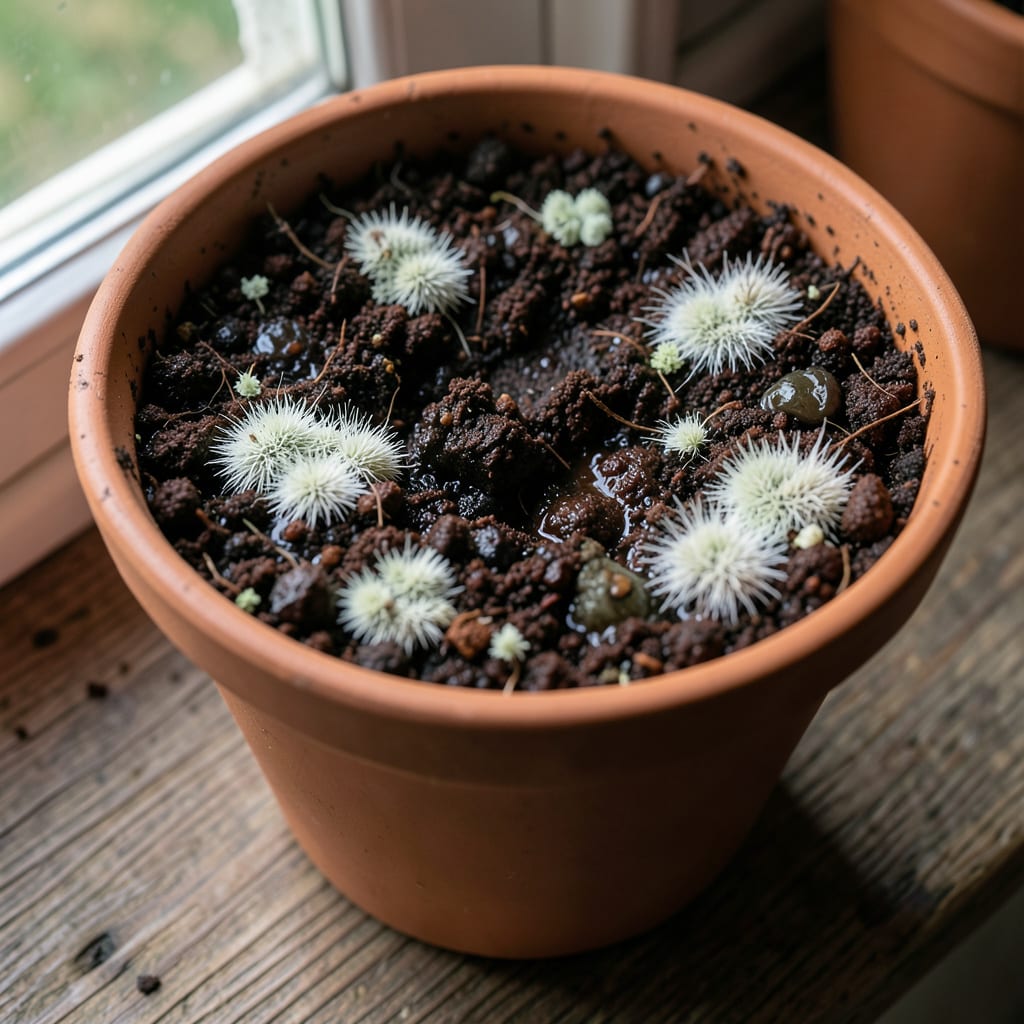
White fuzz on your potting soil doesn’t mean your plant is doomed. I’ve seen this dozens of times—usually from overwatering or poor drainage.
The fix is simpler than you think. A little sunlight, better airflow, and adjusting your watering routine often clears it up in a week without harsh chemicals.
Prevention is even easier. Use clean pots, sterile soil, and give your plants room to breathe. Your potted greens will thank you with healthier growth and zero mold.
Works for all indoor plants, from herbs to houseplants. Here’s how to keep your soil clean and your plants thriving.
Mold thrives in potting soil due to a combination of environmental and care-related factors. Understanding these causes helps you prevent and address the issue effectively.
Overwatering is the #1 culprit behind mold on potting soil. When soil stays soggy, it creates an ideal breeding ground for mold spores, which are naturally present in the environment. Potting soil retains moisture longer than garden soil, so frequent watering—especially without proper drainage—leads to stagnant, waterlogged conditions. Fungi like Saprophytic mold (white, fuzzy growth) flourish in these damp, low-oxygen environments.
Stagnant air traps moisture and prevents soil from drying out. If your plants are crowded, or their pots lack ventilation, humidity builds up around the soil surface. This is especially common in indoor gardens or terrariums where airflow is limited. Mold spores settle and germinate when they’re not dispersed by moving air.
Mold spores activate and grow rapidly in temperatures between 70–90°F (21–32°C). Potting soil stored or used in dark, warm areas (like basements or under dense foliage) accelerates mold development. Heat speeds up organic decomposition, providing more nutrients for mold to feed on.
Decaying leaves, bark, or uneaten fertilizer in the soil introduce extra organic matter. As these materials break down, they release nutrients that feed mold. This is why old or reused potting mix is more prone to mold—it often contains decomposed plant matter that wasn’t fully removed.
Using non-sterilized potting soil or dirty gardening tools can introduce mold spores directly into your plant’s environment. Many commercial potting mixes contain peat moss or compost, which may harbor dormant spores. If not pasteurized, these spores can reactivate when exposed to moisture.
Mold on your potting soil can be frustrating, but don’t worry—it’s fixable! Below are practical solutions tailored to the most common causes, along with prevention tips to keep your plants healthy. Act quickly to avoid spreading or harming your plants.
If excess moisture is the culprit, let the soil dry out before watering again. How? Stick your finger an inch into the soil—if it feels damp, wait. Ensure pots have drainage holes, and empty saucers after watering to prevent soggy roots.
Prevention: Use a moisture meter or water only when the top inch of soil is dry. Consider self-watering pots with wicking systems for better control.
Stagnant air traps moisture and encourages mold growth. Move your plants to a breezy spot or use a small fan on low to circulate air gently. For indoor gardens, crack a window or invest in a dehumidifier if humidity is high.
Prevention: Space plants apart to allow airflow, and avoid crowding them on trays.
Mold thrives in dark, damp conditions. Shift your plants to a sunnier windowsill or supplement with grow lights for 6–8 hours daily. UV light naturally inhibits mold spores, so even indirect sunlight helps.
Prevention: Rotate plants weekly for even light exposure, and clean windows to maximize natural light.
Remove visible mold with a spoon or paper towel, then sprinkle a thin layer of cinnamon (a natural antifungal) or baking soda over the soil. For stubborn cases, repot the plant with fresh, sterile potting mix, discarding the old soil.
Prevention: Avoid leaving fallen leaves or dead plant matter on the soil. Use a layer of sand or gravel on top to deter spores.
💡 Pro Tip: A weekly mist of diluted hydrogen peroxide (1 part 3% peroxide to 10 parts water) can kill mold without harming plants. Just don’t overdo it!
White mold is usually harmless to plants but signals poor conditions. It competes for nutrients and can spread if left unchecked. Remove it and improve airflow to protect your plant’s health.
Water only when the top 1-2 inches of soil are dry. For most potted plants, this means every 7-10 days, depending on humidity and light. Always check moisture first.
Sterilize it first by baking at 200°F for 30 minutes or microwaving for 2 minutes. This kills spores but may also kill beneficial microbes. For best results, mix with fresh soil.
