
Beautiful Plants For Your Interior
Beautiful Plants For Your Interior
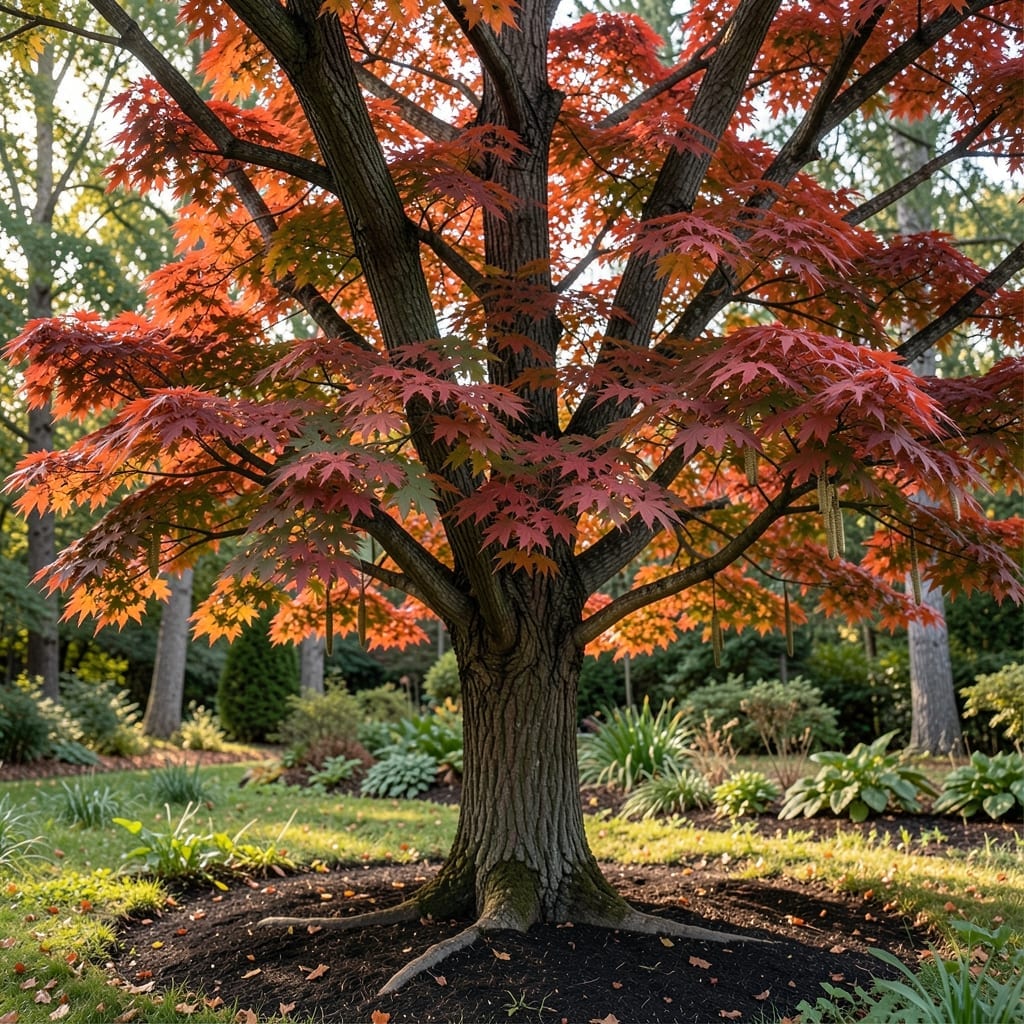
The bark of a 🌳 Red Maple tells a fascinating story of growth and time. As this tree matures, its bark transforms from smooth and gray to deeply furrowed and dark.
These changes aren’t just beautiful—they’re key identifiers for gardeners and nature lovers. Recognizing them helps you understand your tree’s age and health at a glance.
I’ll walk you through how to spot these stages and what they mean for your Red Maple’s care. Let’s discover nature’s subtle language together.


As a red maple tree grows, its bark undergoes a striking transformation. Young trees start with smooth gray bark, almost silvery in appearance, which is a hallmark of their early years.
By the time a red maple reaches 10-15 years, you’ll notice the bark beginning to develop shallow ridges and small scales as it thickens and matures. 🌳
| Tree Age | Bark Appearance | Key Features |
|---|---|---|
| Young (1-10 years) | Smooth gray | Silvery, unblemished |
| Mature (15-30 years) | Scaly with ridges | Peeling plates, darkening |
| Old (30+ years) | Deeply furrowed | Dark brown to black, rough |
As the tree reaches full maturity (typically 30+ years), the bark becomes deeply furrowed with long, vertical ridges separated by dark crevices. This texture is rough to the touch and often appears almost black.
The color shifts from light gray in youth to dark brown or black in maturity, with the ridges often having a reddish tint when newly exposed. This change happens as the outer bark thickens to protect the tree.
These bark changes aren’t just cosmetic—they serve important functions. The thicker bark of mature trees provides better protection against pests, disease, and environmental stress like extreme temperatures.
I’ve found that the transition period (around 15-25 years) is when gardeners most often misidentify red maples. The bark starts developing characteristic scales but hasn’t yet formed the deep furrows of full maturity.
The peeling bark you might notice on intermediate-aged trees is completely normal. This is the tree’s way of shedding older, damaged outer bark to make way for new growth underneath.
For the best care, observe these changes closely. A healthy red maple will show gradual, consistent bark development. Sudden changes or unusual discoloration might indicate stress or disease.
Remember that these transformations happen at different rates depending on growing conditions. Trees in ideal environments with plenty of sunlight and water tend to mature faster than those in less optimal settings. ☀️
By understanding these stages, you’ll not only be able to identify red maples more accurately but also better assess their health and age. This knowledge is particularly valuable when planning landscape designs or tree maintenance schedules. 🌿
Spotting a mature red maple in the wild starts with its bark. Unlike younger trees, mature specimens display deep ridges and dark crevices that create a rugged, textured appearance. The color shifts to a rich, dark brown or black base.
What really sets it apart are the long vertical furrows that run up and down the trunk. These grooves can be several inches deep on older trees, and the ridges between them often have a slight reddish tint when freshly exposed. 🌳
| Feature | Mature Red Maple | Sugar Maple |
|---|---|---|
| Bark Color | Dark brown/black | Light brown/gray |
| Texture | Deep ridges, peeling | Smoother, less furrowed |
| Scale Pattern | Large, curling plates | Smaller, tighter scales |
I always recommend running your hand along the trunk to feel the rough texture. Mature bark isn’t just visually distinct—it’s tactilely different too. The ridges are sharp and pronounced, while the furrows collect moisture and debris that support micro-ecosystems.
Look for peeling bark in patches, especially on older trees. This is the tree’s natural exfoliation process, revealing fresher, lighter-colored bark underneath. It’s a great sign of a healthy, actively growing red maple.
Remember that environmental factors can affect bark appearance. Trees in drier climates might develop deeper furrows sooner, while those in moist areas could retain smoother bark longer. 🌿
For the most accurate identification, examine the bark in multiple spots on the trunk. The base often shows the most pronounced furrowing, while higher sections may still display some scaly characteristics from earlier growth stages.