
Beautiful Plants For Your Interior
Beautiful Plants For Your Interior
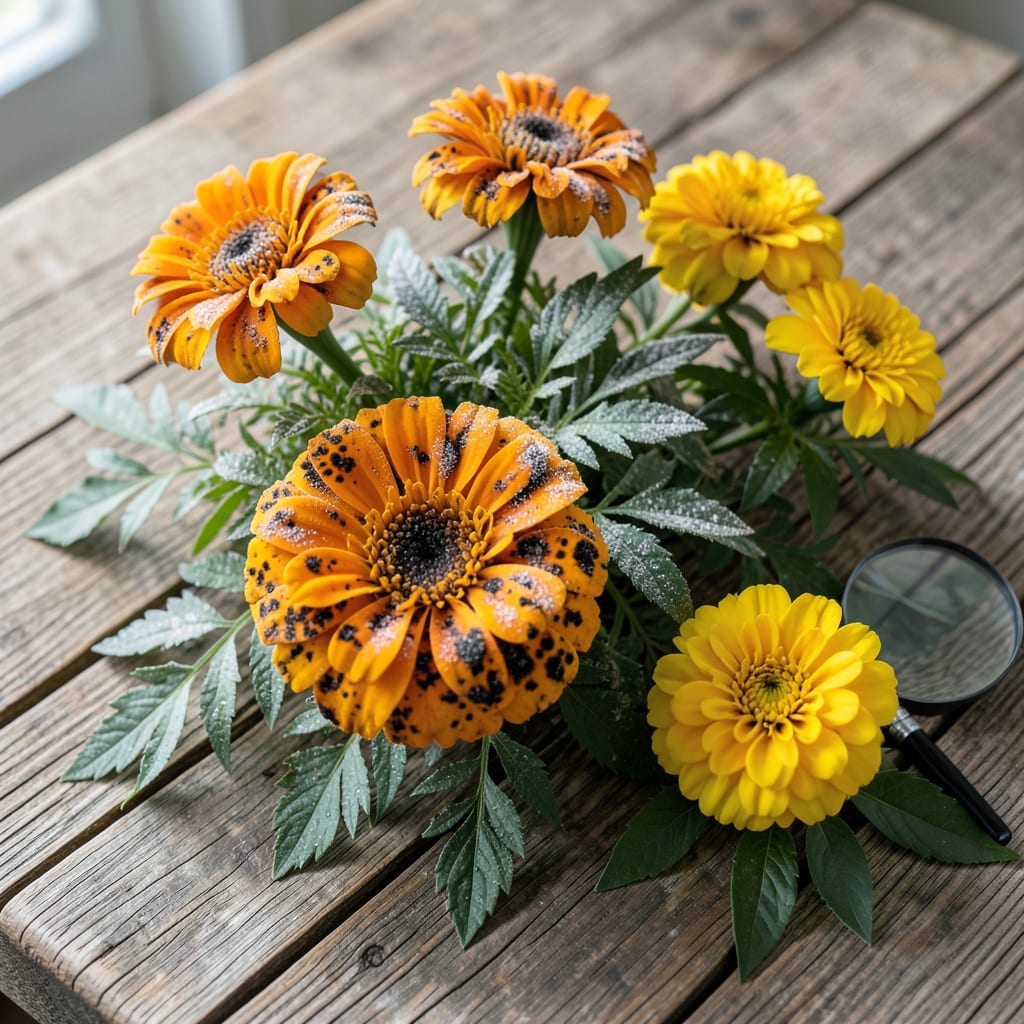
Spotted leaves on your marigolds aren’t just ugly—they’re a warning. I’ve seen healthy plants turn to brown crisp in 48 hours when disease strikes, but catching it early makes all the difference.
The culprits usually show up as powdery coating, black spots, or wilting stems. Most gardeners miss the first signs because they look like water stress or nutrient issues. Here’s the thing—marigolds are tough, but they need your attention to stay that way.
What you end up with is a garden that bounces back faster. The right diagnosis means targeted treatment instead of guessing. Organic options work surprisingly well when you identify the problem correctly.
Works for container gardens, flower beds, or border plantings. Let’s keep those marigolds thriving.
Marigolds are hardy, but even they fall victim to diseases when conditions align against them. Here’s why these issues emerge:
Most marigold diseases, like powdery mildew and alternaria leaf spot, stem from fungal spores thriving in humid, wet environments. Overwatering, poor air circulation, or splashing water on leaves create the perfect breeding ground. Fungi such as Erysiphe cichoracearum (powdery mildew) or Alternaria spp. exploit stressed plants, especially in crowded gardens.
Soggy soil suffocates roots, leading to root rot (often caused by Phytophthora or Pythium). Marigolds prefer well-draining soil; standing water invites pathogens to attack. Tip: Water at the base, not the foliage, and ensure pots have drainage holes.
Insects like aphids and whiteflies don’t just damage plants—they spread viral diseases such as Tomato Spotted Wilt Virus (TSWV). These pests pierce plant cells, introducing pathogens directly into the marigold’s vascular system.
Heatwaves, sudden cold snaps, or nutrient-deficient soil weaken marigolds, making them susceptible to infections. Bacterial leaf spot (Xanthomonas spp.) often targets stressed plants, especially in high-heat, high-humidity zones.
Dirty pruners or reused potting mix can harbor spores or bacteria from previous infections. Always sterilize tools with rubbing alcohol and use fresh, pasteurized soil to prevent cross-contamination.
Marigolds are hardy, but even they can fall victim to diseases. The good news? Most issues can be fixed with the right approach. Below, we break down common problems and their practical solutions, so your marigolds can thrive again. 🌼
If you spot a white, powdery coating on leaves, prune infected parts immediately to stop the spread. Increase airflow by spacing plants 12–18 inches apart. Water at the base in the morning so foliage dries quickly. For severe cases, apply neem oil or a baking soda spray (1 tbsp baking soda + 1 tsp dish soap + 1 gallon water). Prevention tip: 💡 Avoid overhead watering and plant in full sun.
Yellowing leaves and wilting despite wet soil? Your marigolds may have root rot. Stop watering and let the soil dry out. If the pot lacks drainage holes, repot into fresh, well-draining soil. For garden beds, amend heavy clay with compost. Prevention tip: 🌱 Always use containers with drainage and water only when the top inch of soil is dry.
Tiny pests like aphids or spider mites cause curled leaves and sticky residue. Blast them off with a strong stream of water, then apply insecticidal soap or neem oil. Repeat every 5–7 days until gone. Prevention tip: 🎯 Encourage ladybugs and lacewings—natural predators—by planting companion flowers like alyssum.
Brown or black spots with yellow halos? Remove infected leaves and avoid wetting foliage. Rotate crops yearly to prevent fungal buildup. Apply a copper fungicide if the problem persists. Prevention tip: ✨ Mulch with straw to reduce soil splashing onto leaves.
Look for white powdery coating, black spots, or yellowing leaves. Powdery mildew appears as a white film, while leaf spot shows as brown or black patches with yellow edges.
Space plants 12-18 inches apart for airflow. Water at the base in the morning, and avoid overhead watering. Always use well-draining soil.
Yes! A baking soda spray (1 tbsp baking soda + 1 tsp dish soap + 1 gallon water) works for powdery mildew. Neem oil is effective against pests and fungi.
This often signals root rot. Stop watering immediately and let the soil dry out. Repot in fresh, well-draining soil if needed.
