
Beautiful Plants For Your Interior
Beautiful Plants For Your Interior
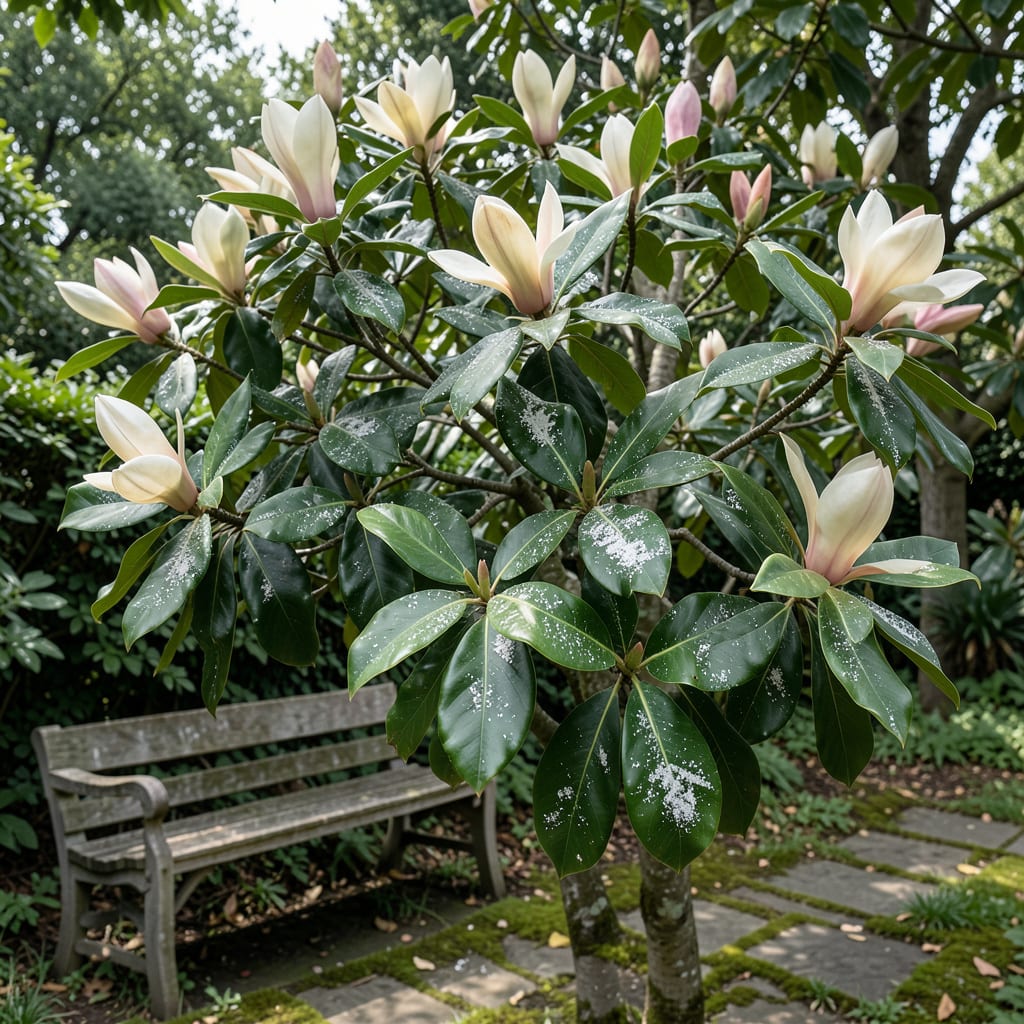
White spots on your magnolia leaves aren’t just unsightly—they’re a cry for help. I’ve seen these exact patches ruin a tree’s beauty in one season if ignored.
Most often, it’s powdery mildew or leaf spot fungus, thriving in damp, shady conditions. Pests like scale can cause similar damage, but the patterns differ. Here’s the thing—early action saves the tree.
With the right treatment, you’ll see new growth return clean and healthy. Copper fungicides work wonders, and improving air circulation prevents future outbreaks.
Don’t wait until the leaves drop. Catch it now, and your magnolia will thank you next spring.
White spots on magnolia leaves often stem from environmental stressors or pathogens. Below are the most common causes, explained in clear, scientific terms to help you diagnose the issue.
Erysiphe or Podosphaera fungi thrive in humid, shaded conditions, forming a white, powdery coating on leaves. These fungi spread via airborne spores, germinating when leaf surfaces remain wet for extended periods. Poor air circulation exacerbates the problem, especially in dense canopies.
Pseudomonas syringae or Xanthomonas bacteria can cause white or water-soaked spots with yellow halos. Bacteria enter through wounds or stomata (leaf pores), often after rain or overhead irrigation. Unlike fungal spots, bacterial lesions may ooze or appear greasy.
Sap-sucking pests like magnolia scale (Neolecanium cornuparvum) or mealybugs leave cottony white residues on leaves. Their feeding weakens the tree and promotes sooty mold growth, which appears as black or white fuzzy patches. Inspect leaf undersides for clusters of these pests.
Excessive sunlight (sunscald) or chemical burns from improper pesticide application can create white, necrotic spots. Sunscald occurs when leaves overheat after sudden exposure to intense light, while herbicide drift may cause irregular bleaching.
White spots on your magnolia tree’s leaves can be frustrating, but most causes are treatable with the right approach. Below are targeted solutions for common issues, along with prevention tips to keep your tree healthy long-term.
If the white spots look like a powdery coating, prune overcrowded branches to boost airflow. Remove and destroy infected leaves to prevent spread. Apply a baking soda solution (1 tbsp baking soda + 1 tsp dish soap + 1 gallon of water) or neem oil every 7–10 days until the issue clears. Prevention tip: 💡 Space plants properly and water at the base to keep foliage dry.
For white, cottony or hard bumps (scale insects), gently scrub leaves with a soft toothbrush dipped in soapy water. For severe infestations, use horticultural oil or insecticidal soap, following label instructions. Prevention tip: ✨ Inspect new plants before bringing them near your magnolia and encourage beneficial insects like ladybugs.
If spots are circular with defined edges, remove and destroy affected leaves immediately. Apply a copper-based fungicide or sulfur spray, repeating every 10–14 days as needed. Prevention tip: 🌡️ Avoid overhead watering and clean up fallen leaves to reduce fungal spores in the soil.
White or bleached spots from excessive sun can’t be reversed, but you can provide afternoon shade with a shade cloth or relocate potted magnolias. Prevention tip: 🎯 Gradually acclimate young trees to full sun to prevent shock.
Yes, fungal spores and pests can spread to nearby plants. Isolate affected magnolias and remove fallen leaves to prevent contamination.
With proper care, you may see improvement in 1-2 weeks for fungal issues. Pests may require 2-3 applications spaced 7-10 days apart.
A baking soda spray or neem oil works well for mild cases. For severe infestations, copper fungicides are more reliable.
Most magnolias fully recover with timely treatment. New growth will emerge healthy, but damaged leaves won’t heal.
