
Beautiful Plants For Your Interior
Beautiful Plants For Your Interior
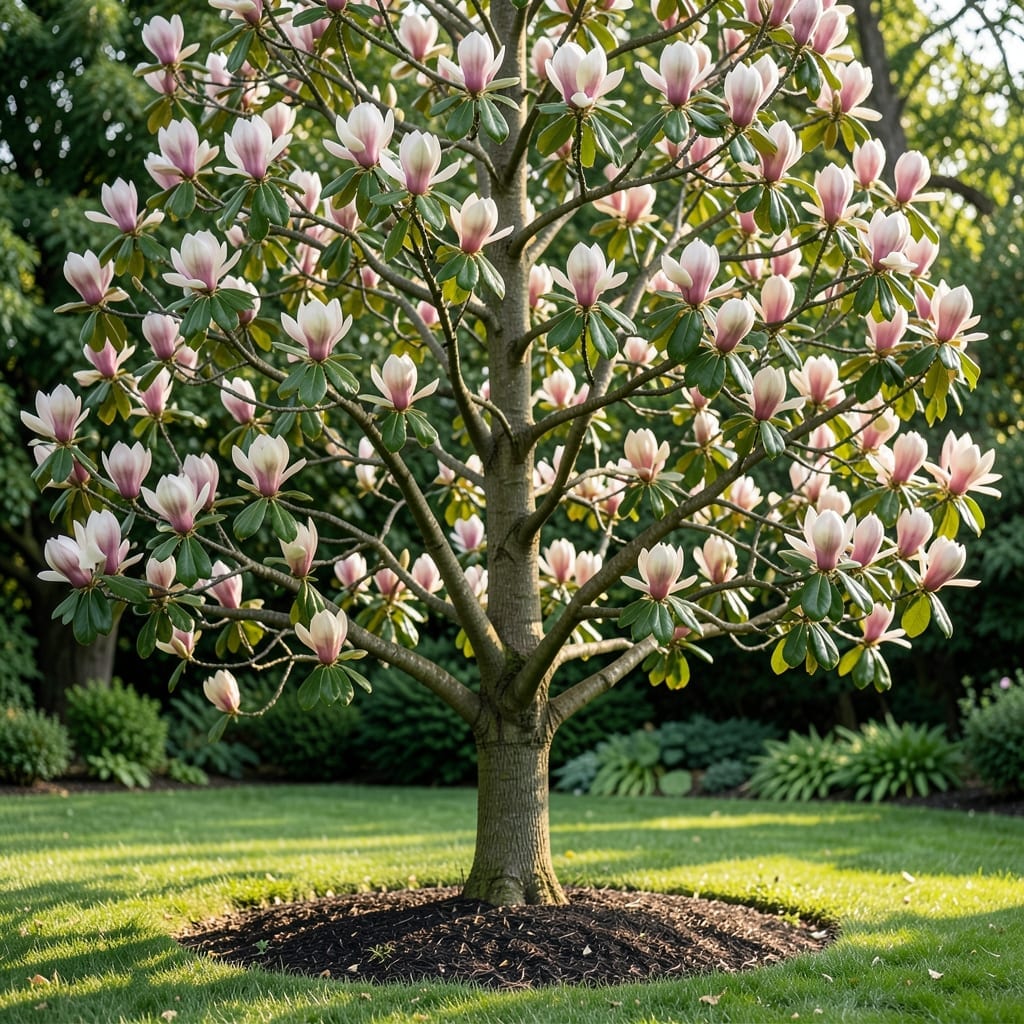
There’s something magical about watching a 🌳 Magnolia Tree transform your landscape over the years. From its humble beginnings to its majestic full-grown form, this tree commands attention like no other.
But here’s what many don’t realize: the mature size varies dramatically by species. Some reach a modest 15 feet, while others tower over 80 feet tall.
I’ll help you understand these dimensions and how to plan for them. Whether you’re planting one Magnolia Tree or a dozen, knowing their potential is the key to success.
When I plan a landscape, I always consider the mature size of a magnolia tree. The Southern Magnolia can reach 60-80 feet tall with a 30-50 foot spread. That’s a massive presence!
Smaller varieties like the Star Magnolia stay compact at 15-20 feet tall and wide. The Saucer Magnolia typically grows 20-25 feet tall with a similar spread. These sizes help me choose the right spot.
| Variety | Height | Spread |
|---|---|---|
| Southern Magnolia | 60-80 ft | 30-50 ft |
| Star Magnolia | 15-20 ft | 10-15 ft |
| Saucer Magnolia | 20-25 ft | 20-25 ft |
| Jane Magnolia | 10-15 ft | 8-12 ft |
I’ve found that climate and soil conditions can significantly impact growth. In warmer climates, magnolias tend to grow taller and faster. The Jane Magnolia is perfect for smaller spaces at just 10-15 feet tall.
For urban gardens, dwarf varieties like the Little Gem Magnolia are ideal. They typically reach 12-20 feet tall with a 6-10 foot spread. This makes them perfect for patio containers too.
I always recommend checking the mature spread as well as height. A Southern Magnolia can have a 50-foot canopy, which means it needs plenty of space. Planting too close to structures can cause problems later.
The growth rate varies by species too. Some magnolias grow 1-2 feet per year, while others may grow faster under ideal conditions. I’ve seen Southern Magnolias add 2-3 feet in a good year.
For best results, I plant magnolias in well-draining, slightly acidic soil. They thrive in full sun to partial shade. Proper spacing ensures they reach their full potential without crowding.
Remember that pruning can help control size, but it’s best to choose a variety that naturally fits your space. I’ve learned that preventative planning saves a lot of work later.
Whether you want a grand statement or a compact accent, there’s a magnolia variety that will work. Understanding these sizes helps me create harmonious landscapes every time. 🌳
I always start by examining the current age and growth rate of my magnolia tree. Most varieties grow 1-2 feet per year under ideal conditions. This helps me project their future dimensions accurately.
For a more precise estimate, I check the species-specific growth chart. For example, a 5-year-old Southern Magnolia might already be 15-20 feet tall, while a Jane Magnolia of the same age could be 8-10 feet tall.
I’ve learned that local climate plays a huge role. In warmer zones, magnolias often grow 20-30% faster than in cooler areas. This means a tree that’s supposed to reach 40 feet might hit 50 feet in the South.
Another key factor is soil quality. Magnolias thrive in well-draining, slightly acidic soil. I always test my soil and amend it if needed. Poor soil can stunt growth by 30-50% over time.
For spacing recommendations, I follow the mature spread rule. I plant magnolias at least half their expected width away from structures. For a Southern Magnolia with a 50-foot spread, that means 25 feet of clearance.
I also consider future landscape changes. If I plan to add a patio or pool later, I’ll plant the magnolia farther away. This prevents costly transplanting or pruning down the line. 🌳