
Beautiful Plants For Your Interior
Beautiful Plants For Your Interior
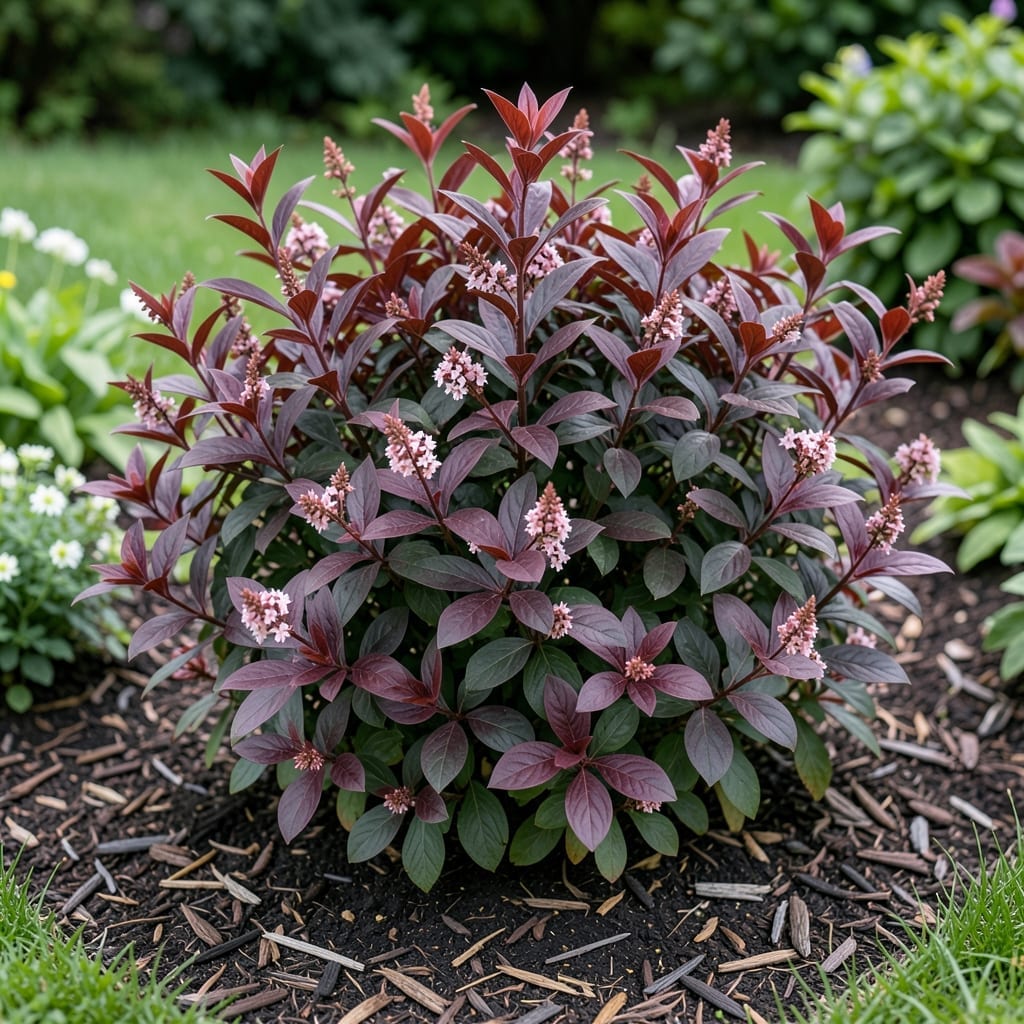
I used to struggle with finding the perfect shrub that stayed compact yet made a big impact in my garden. Then I discovered the 🌿 Little Devil Ninebark – a true game-changer for small spaces.
This hardy shrub packs serious visual punch without overwhelming your landscape. Its manageable size makes it ideal for borders, foundations, or container gardens.
Find out exactly how tall and wide this beauty grows, plus the best tips to maintain its perfect shape through the seasons.


When I first planted Little Devil Ninebark, I was amazed by how quickly it filled out my garden space. This dwarf shrub typically reaches a mature height of 3-4 feet with an equal spread.
Its compact growth habit makes it perfect for small landscapes. The dense branching creates a full appearance that looks established even when young.
| Characteristic | Specification |
|---|---|
| Mature Height | 3-4 feet |
| Mature Spread | 3-4 feet |
| Growth Rate | Moderate |
| USDA Zones | 3-7 |
| Light Needs | Full sun to partial shade |
I’ve noticed that in full sun, my Little Devil tends to grow slightly more compact with richer foliage color. In partial shade, it may stretch a bit taller while searching for light.
The first year growth is usually slower, with plants reaching about 1-2 feet. By year two, expect 2-3 feet of height and width.
This shrub’s rounded form develops naturally without much intervention. However, I find that occasional pruning helps maintain its neat appearance.
In my experience, well-draining soil promotes healthier growth. The shrub tolerates a range of soil types but prefers slightly acidic to neutral pH. 🌿
The deep purple foliage maintains its color throughout the growing season. In fall, it develops subtle orange-red tones that add extra interest.
I appreciate how this plant maintains its size consistently. Unlike some shrubs that can get leggy, Little Devil Ninebark stays dense and bushy with minimal care.
For best results, I recommend planting in spring or early fall. This gives the roots time to establish before extreme temperatures set in.
Remember that mature size can vary slightly based on growing conditions. In ideal settings, some specimens may reach the upper end of the height range. ✂️
I’ve found that maintaining the perfect size for my Little Devil Ninebark is easier than I expected. This dwarf shrub naturally stays compact, but a little annual maintenance keeps it looking its best.
Pruning is the key to controlling both height and spread. I recommend trimming in late winter or early spring before new growth starts, as this encourages dense branching and maintains its rounded shape.
When I prune my Little Devil, I focus on thinning out the oldest stems first. This opens up the center for better air circulation while maintaining the natural form. I also remove any crossing branches to prevent damage.
For height control, I cut back the tallest stems by about 1/3 of their length. This encourages the plant to branch out lower down, creating a fuller appearance rather than a leggy one.
I’ve learned that light pruning after the first flush of flowers can help maintain size throughout the growing season. Just be sure to stop pruning by late summer to avoid stimulating new growth that might be damaged by frost.
The beauty of Little Devil is that it responds well to hard pruning if needed. If your shrub has gotten too large, you can cut it back more severely in early spring and it will bounce back quickly.
Remember that consistent maintenance is easier than major corrections. A few minutes of pruning each year keeps my Little Devil looking neat and healthy without much effort. ✂️