
Beautiful Plants For Your Interior
Beautiful Plants For Your Interior
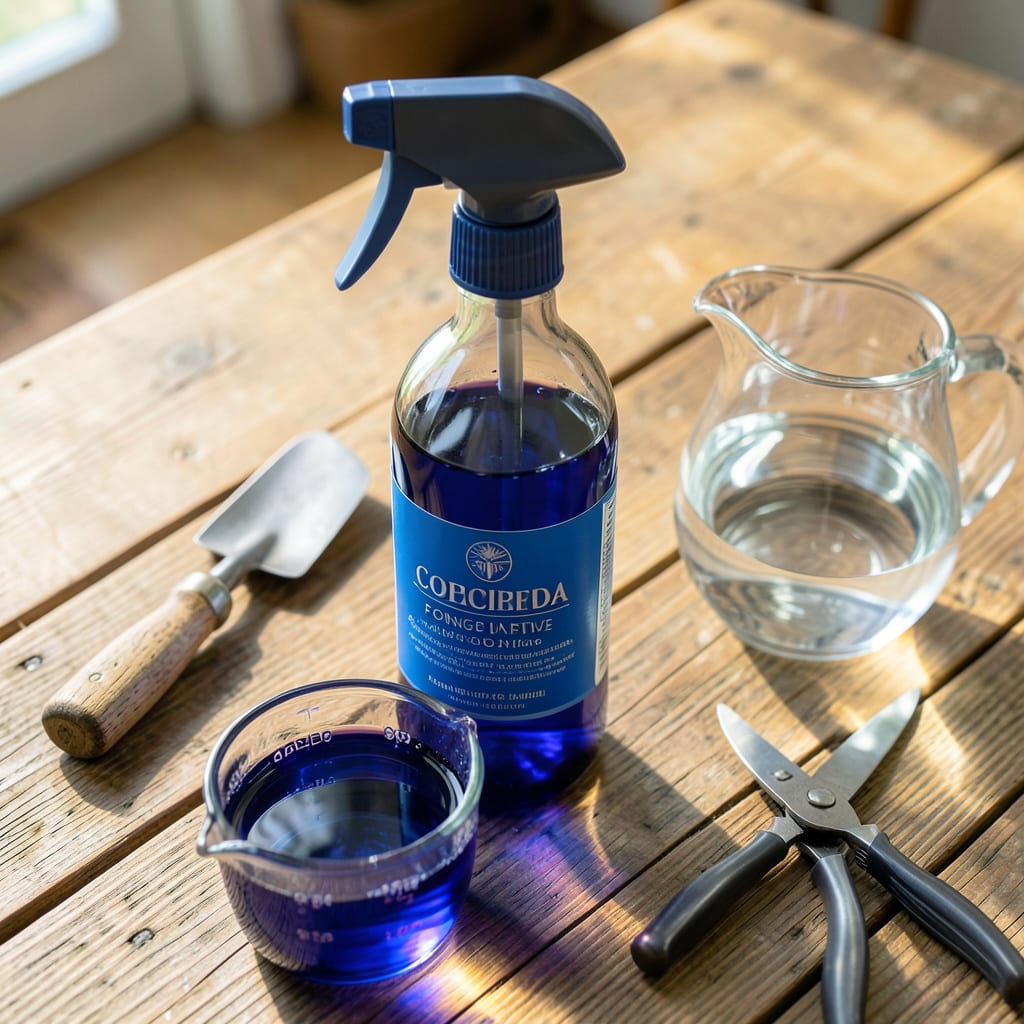
I lost half my tomato crop to blight last season. Liquid copper fungicide concentrate changed everything—it stops fungal diseases in their tracks without harsh chemicals.
This organic treatment works on blight, mildew, and leaf spots. Mix it right, apply at dusk, and watch your plants recover in days. Just follow the safety guidelines to protect yourself and your garden.
📚 In This Guide
Here’s the professional method I use to mix and apply this organic disease prevention solution effectively.
Determine the total spray volume needed for your garden area—most home applications require 1 gallon of solution per 1,000 square feet. For this, you’ll typically mix 1-2 tablespoons of concentrate per gallon of water, but always check the label as formulations vary slightly.
Use a clean measuring spoon dedicated to gardening (never kitchen utensils) to avoid cross-contamination. I’ve found that a small funnel helps prevent spills when transferring the concentrate to your sprayer. Precision here prevents both under-dosing (ineffective) and over-dosing (phytotoxic).
Fill your sprayer halfway with room temperature water first—this helps the concentrate disperse evenly. Add the measured copper fungicide, then fill the sprayer to the top with more water. The reason for this order is that adding water to concentrate can cause clumping that clogs sprayer nozzles.
Seal the sprayer and agitate vigorously for 30-60 seconds. I shake mine in a figure-eight motion to ensure complete mixing. You’ll know it’s properly mixed when the solution appears uniformly cloudy with no visible streaks or separation.
Before treating your entire garden, test the spray pattern on a small, non-plant surface like a driveway. Adjust the nozzle to produce a fine, even mist rather than a concentrated stream. This ensures complete coverage without runoff.
Spray a small section of your target plants first and wait 24 hours. Check for any signs of phytotoxicity like leaf browning or spotting. If the test area looks healthy, proceed with full application. Real talk: some sensitive plants like tomatoes may show slight leaf spotting—this is normal and temporary.
Choose a calm morning with temperatures between 50-85°F and no rain forecast for 24-48 hours. Copper fungicides need time to dry and adhere to plant surfaces. Avoid applying in direct midday sun as this can cause leaf burn.
Spray until all plant surfaces—including undersides of leaves—are thoroughly wet but not dripping. Begin at the top of the plant and work downward, paying special attention to leaf axils where fungal spores often collect. I’ve found that wearing gloves and long sleeves prevents skin irritation from the solution.
After application, rinse your sprayer thoroughly with clean water to prevent copper buildup that could damage the equipment. I run clean water through the sprayer for 1-2 minutes and then spray a small amount of household vinegar to neutralize any remaining copper residue.
Store unused concentrate in its original container, tightly sealed, in a cool, dry place away from children and pets. The mixed solution is most effective when used within 24 hours, though it can remain potent for up to a week if stored in a sealed, opaque container.
These professional insights will help you achieve optimal results with your organic plant protection.
Precision in Measurement: In Step 1, using exactly 1-2 tablespoons of concentrate per gallon of water is crucial. I’ve learned that even small deviations can lead to either ineffective treatment or phytotoxicity. Always use a dedicated gardening spoon to avoid cross-contamination with kitchen utensils.
Mixing Technique: For Step 2, the order of operations matters significantly. Filling your sprayer halfway with room temperature water first prevents the clumping that occurs when adding water to concentrated copper fungicide. The 30-60 seconds of vigorous agitation in a figure-eight motion ensures uniform dispersion.
Application Timing: Step 4’s temperature window of 50-85°F isn’t arbitrary. Copper fungicides adhere best in this range, and applying outside these parameters can reduce effectiveness. The 24-48 hours without rain forecast is equally important for proper drying and adhesion.
Equipment Maintenance: In Step 5, the 1-2 minutes of rinsing with clean water followed by vinegar neutralization prevents copper buildup that could damage your sprayer. This step is often overlooked but extends the life of your equipment significantly.
Dilute the concentrate with water as directed on the label, then apply using a sprayer. Cover both sides of leaves and stems evenly, ideally in the early morning or late afternoon to avoid leaf burn. Reapply every 7–10 days or after heavy rain.
Use it preventively before disease appears or at the first signs of fungal issues. Avoid applying during extreme heat (above 85°F) or when plants are stressed, as this can cause phytotoxicity.
Yes! Copper fungicides are OMRI-listed for organic use. However, use sparingly—excessive copper can build up in soil. Always follow label rates to stay eco-friendly.
For organic options, try neem oil, sulfur-based sprays, or baking soda solutions. These work well for mild infections but may be less effective for severe fungal diseases like late blight.
This could signal copper toxicity or phytotoxicity. Rinse plants with water immediately, and avoid spraying in hot weather. Next time, test on a small area first and dilute properly.
