
Beautiful Plants For Your Interior
Beautiful Plants For Your Interior
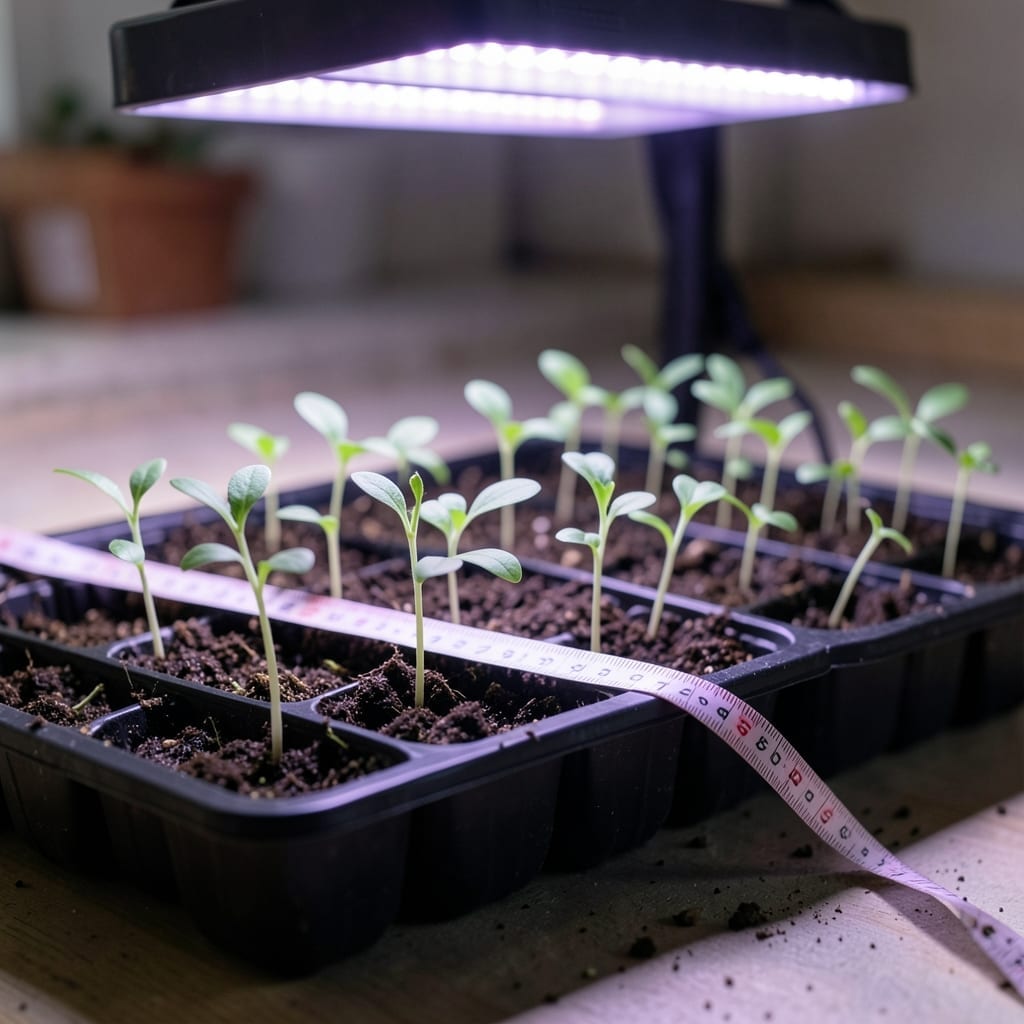
Setting the right LED light distance from your 🌱 Seedlings can make or break your indoor garden. Too close, and you risk burning tender leaves; too far, and your plants stretch weakly toward the light.
I’ve seen both scenarios play out in my own growing space, and it’s always a lesson in balance. The good news? Finding that sweet spot is easier than you might think.
Let me walk you through the key factors that determine the perfect height, so your Seedlings get just what they need to thrive from the very first sprout.

Getting the LED light distance right is crucial for healthy seedling development. Too close, and you’ll scorch those delicate first leaves. Too far, and your plants will stretch unnaturally toward the light source.
I’ve found that most seedlings thrive with lights positioned 12-18 inches above them during the first growth phase. This range provides enough intensity without causing heat stress or light burn.
| Growth Stage | Recommended Distance | Light Intensity |
|---|---|---|
| Seedling | 12-18 inches | Medium-High |
| Vegetative | 18-24 inches | High |
| Flowering | 12-18 inches | Very High |
The vegetative stage typically requires a bit more space. I recommend raising lights to 18-24 inches as your plants develop more leaves and stronger stems. This gives them room to grow while still receiving adequate light.
For flowering plants, you’ll want to lower the lights back to that 12-18 inch range. The increased intensity encourages bud development, which is exactly what you want during this critical phase.
Remember that wattage matters too. Lower wattage LEDs (under 200W) can often be placed closer, while higher wattage units (400W+) need more distance to prevent heat damage.
I always keep a small notebook to track my light positions and plant responses. This simple practice has helped me fine-tune my setup over time, leading to noticeably stronger, healthier seedlings.
Another factor to consider is your light spectrum. Full-spectrum LEDs can typically be placed a bit further away than blue-spectrum lights, which are often used specifically for vegetative growth.
Don’t forget that as your plants grow taller, you’ll need to adjust the light height accordingly. I check my light positioning every few days, especially during rapid growth phases.
The key is to observe your plants daily. If you notice the tops of your seedlings turning white or yellow, your lights are probably too close. If they’re stretching toward the light, they’re likely too far away.
With a little practice, you’ll develop an eye for that perfect balance between distance and intensity 🌱
Your seedlings will often tell you if the LED light distance isn’t quite right. I check mine daily for subtle changes that indicate they need adjustment.
The most obvious sign is leggy seedlings—tall, thin stems with sparse leaves. This means your lights are too far away, and the plants are stretching to reach more light.
If you see bleached or yellowing at the top of your seedlings, your lights are probably too close. This is light burn, and it can stunt your plants’ growth permanently.
Slow growth with dark green leaves might seem healthy, but it often means your seedlings aren’t getting enough light intensity. Try lowering your lights slightly.
I once had a batch of tomato seedlings that grew tall but weak. After lowering my lights from 24 inches to 18 inches, they became stocky and strong within days.
Remember that different plant types may show these signs at different distances. Leafy greens often tolerate closer lights, while more delicate plants may need more space.
With regular observation, you’ll spot these visual cues early and adjust before permanent damage occurs 🌱