
Beautiful Plants For Your Interior
Beautiful Plants For Your Interior
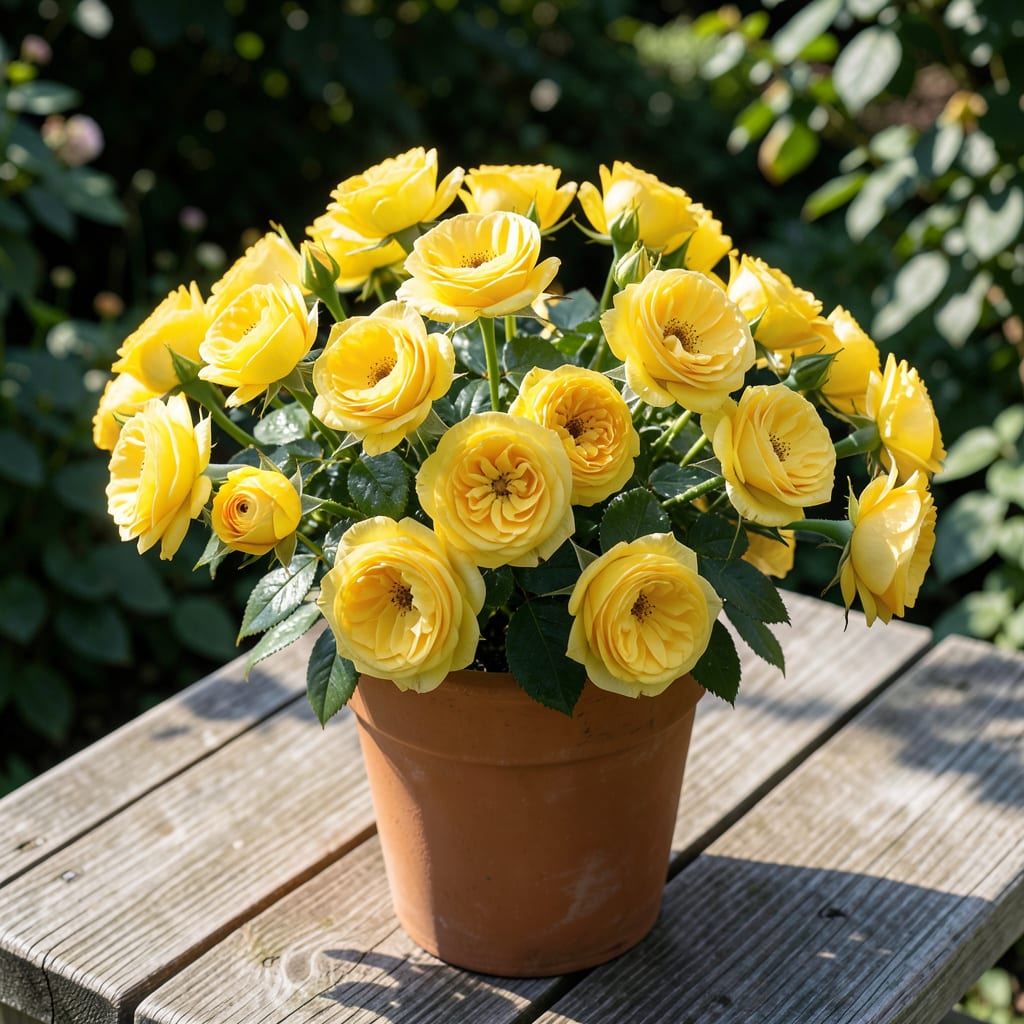
I planted my first Knock Out Yellow Roses three years ago, and they’ve been blooming nonstop ever since. These are the easiest roses you’ll ever grow.
They laugh at heat, shrug off most diseases, and keep pumping out golden-yellow flowers from spring to frost. With just basic care—sun, occasional water, and a light trim—they’ll outperform any finicky hybrid in your garden.
📚 In This Guide
Here’s the method that keeps my roses blooming nonstop with almost no effort from me.
Choose a location with full sun exposure, meaning at least 6-8 hours of direct sunlight daily. Knock Out roses thrive in bright conditions, and insufficient light leads to weak stems and sparse blooms. I always test the spot by observing sunlight patterns throughout the day.
Ensure the soil drains well—these roses despise soggy roots. If your soil is heavy clay, amend it with compost or plant in a raised bed. The ideal pH range is 6.0-6.5, slightly acidic. A simple soil test kit confirms this quickly.
Dig a hole twice as wide as the root ball but no deeper. This gives roots room to spread without sinking the plant too low. I like to loosen the roots gently if they’re circling the container—this encourages outward growth.
Place the rose in the hole so the graft union (the bulge near the base) sits 1-2 inches above soil level in warm climates or 2-3 inches below in colder zones. Backfill with native soil, water deeply, and mulch with 2-3 inches of organic matter to retain moisture.
Give your roses a deep soak 2-3 times per week during the first growing season, tapering to once weekly once established. The goal is consistent moisture without waterlogging. I water at the base in the early morning to prevent fungal issues.
Check soil moisture by sticking your finger 1-2 inches into the soil—if it feels dry, it’s time to water. Knock Out roses are drought-tolerant once mature, but they bloom best with regular hydration. Avoid overhead watering to keep foliage dry.
Feed your roses with a balanced, slow-release fertilizer in early spring, then again after the first bloom cycle. I use a formula like 10-10-10 or 12-6-6 for steady growth. Avoid high-nitrogen fertilizers, which promote leafy growth at the expense of flowers.
Scatter the granules around the base, following package instructions for quantity, and water thoroughly to activate. Knock Out roses are heavy feeders, but over-fertilizing causes excessive growth that’s prone to disease. A light mid-summer application keeps blooms coming.
Prune in early spring, just as new growth begins, removing dead or crossing canes first. I cut back the entire plant by about one-third to encourage vigorous new growth. Use clean, sharp bypass pruners to make cuts at a 45-degree angle just above an outward-facing bud.
Deadhead spent blooms regularly to stimulate continuous flowering. Simply snip off the faded flower cluster just above the first 5-leaflet leaf. This prevents seed formation and redirects energy into new blooms. Don’t worry about precision—Knock Out roses are forgiving.
Small adjustments here make a surprising difference in your results.
The Sunlight Factor: Those 6-8 hours of daily direct sun aren’t just a suggestion—they’re critical. I learned this the hard way when my first planting spot only got 5 hours of sun. The stems grew leggy and the blooms were sparse. Test your location by marking where sunlight hits at different times of day before committing.
Planting Depth Precision: Getting the graft union placement right is more important than most realize. In warm climates, keep it 1-2 inches above soil level to prevent suckering. In colder zones, planting it 2-3 inches below offers winter protection. I use a ruler the first few times until it becomes instinctive.
Watering Technique: The 1-2 inch finger test for soil moisture is your best tool. I check at sunrise, when the soil is coolest and moisture levels are most stable. Watering at the base in early morning, as mentioned in Step 3, prevents both fungal issues and water waste from evaporation.
Pruning Insight: That one-third reduction in Step 5 might seem dramatic, but it’s what triggers the vigorous reblooming these roses are famous for. I use sharp bypass pruners and make each cut at that 45-degree angle just above an outward-facing bud—this encourages growth away from the center for better air circulation.
These hardy roses bloom continuously from early spring until the first frost, with waves of flowers every 5-6 weeks. Deadheading spent blooms encourages more frequent flowering.
Plant in early spring or fall, when temperatures are mild. This gives roots time to establish before extreme heat or cold. Avoid planting in peak summer or winter.
No! They’re low-maintenance—drought-tolerant, disease-resistant, and thrive in most soils. Just ensure full sun (6+ hours daily) and well-draining soil for best results.
Check for insufficient sunlight, over-fertilizing (especially high-nitrogen), or poor pruning. Ensure they’re not waterlogged and trim dead wood to stimulate new growth.
Yes! Try ‘Sunny Knock Out’ (brighter yellow) or ‘Julia Child’ (disease-resistant, fragrant). For similar ease, ‘Drift’ or ‘Oso Easy’ roses are great substitutes.
