
Beautiful Plants For Your Interior
Beautiful Plants For Your Interior
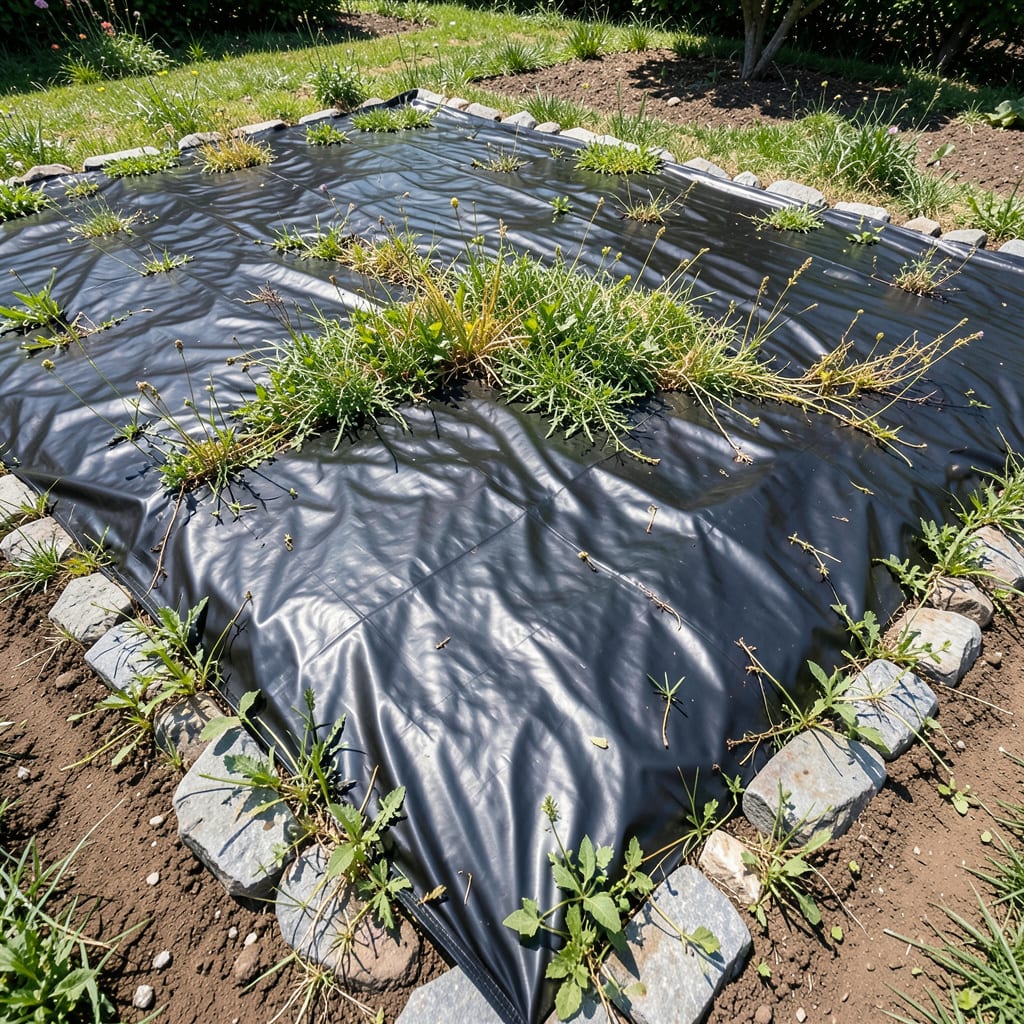
Black plastic transforms weed control into a hands-off process. I’ve used this method to clear stubborn patches without chemicals or constant pulling.
It works by blocking sunlight and trapping heat, killing weeds in 4-6 weeks. The approach is simple, effective, and requires minimal effort once the plastic is down.
📚 In This Guide
This solar smothering technique eliminates weeds without chemicals, using heat and darkness to break their life cycle.
Identify the weedy section you want to treat and clear any large debris, rocks, or established vegetation that might puncture the material. This method works most effectively in areas receiving full sun for at least 6-8 hours daily, as solar heat accumulation is critical to the process.
Remove any existing mulch or thick organic matter that could create air pockets, which reduce the effectiveness of the heat transfer. The soil surface should be as smooth and level as possible to maximize contact with the plastic.
Cover the entire area with heavy-duty black plastic sheeting, ensuring it extends at least 6-12 inches beyond the perimeter of the weedy zone. This overhang prevents weeds from creeping in from the edges and ensures complete light exclusion.
The plastic must be opaque black to absorb maximum solar radiation while blocking all light. Secure the edges with soil, rocks, or landscape staples to prevent wind from lifting it, which would allow light to reach the weeds below.
For optimal results, apply the plastic during the hottest months of the year when ambient temperatures consistently reach 80-90°F. The black material will elevate soil temperatures to 120-140°F beneath the surface, effectively cooking weed roots and seeds.
Check the plastic periodically to ensure it remains taut and fully in contact with the soil. Any gaps or tears will compromise the heat retention and light exclusion, reducing the method’s efficacy.
Leave the plastic in place for a minimum of 4-6 weeks to ensure complete weed suppression. This duration allows the heat to penetrate deeply and destroy both surface weeds and dormant seeds in the soil profile.
Monitor the area for any signs of weed regrowth at the edges. If weeds begin to emerge beneath the plastic’s perimeter, extend the coverage immediately to maintain the light-blocking barrier.
After the treatment period, carefully peel back the plastic and inspect the soil. The surface should appear bare, with no visible green growth. Any remaining weed roots or seeds will likely be too weakened to recover.
If the area appears clear, you can proceed with planting or mulching. For persistent weeds, repeat the process for an additional 2-4 weeks to ensure thorough eradication before moving forward.
These professional insights will help you maximize the effectiveness of this chemical-free weed control method.
Sunlight Requirement: As noted in Step 1, ensure your target area receives full sun for the specified 6-8 hours daily. This duration is critical for achieving the necessary solar heat accumulation. Areas with less sunlight may require extending the treatment period beyond the recommended 4-6 weeks.
Plastic Selection: For Step 2, use only heavy-duty opaque black plastic sheeting. Thin or non-black plastic will not absorb sufficient solar radiation to reach the required soil temperatures of 120-140°F. The 6-12 inch overhang is essential to prevent edge regrowth.
Heat Accumulation: Step 3 emphasizes applying during the hottest months when ambient temperatures reach 80-90°F. Monitor the plastic regularly for tears or lifting, as even small gaps can significantly reduce the soil temperature and compromise the process.
Persistence for Results: In Step 4, the 4-6 week minimum coverage period is non-negotiable for complete eradication. If you notice any regrowth at the edges during this time, extend the plastic coverage immediately. For stubborn weeds, the additional 2-4 weeks mentioned in Step 5 may be necessary.
Typically, 4-6 weeks of full sun exposure is enough to smother weeds. For tough perennials or thick infestations, extend it to 2-3 months. Ensure the plastic is tightly secured to block all light.
No, clear plastic allows light through, which can promote weed growth. Black plastic blocks sunlight, heating the soil and killing weeds effectively. Stick with black for best results.
Late spring to early summer is ideal, as the sun is strongest. Warm soil temperatures accelerate the process. Avoid cold seasons, as the method relies on heat buildup.
No, it’s safe for soil health. In fact, it can improve soil by retaining moisture and reducing erosion. Just remove the plastic before planting to avoid suffocating new growth.
Yes! Cardboard, newspaper, or biodegradable landscape fabric can also smother weeds. However, they may break down faster and require thicker layers for effectiveness.
