
Beautiful Plants For Your Interior
Beautiful Plants For Your Interior
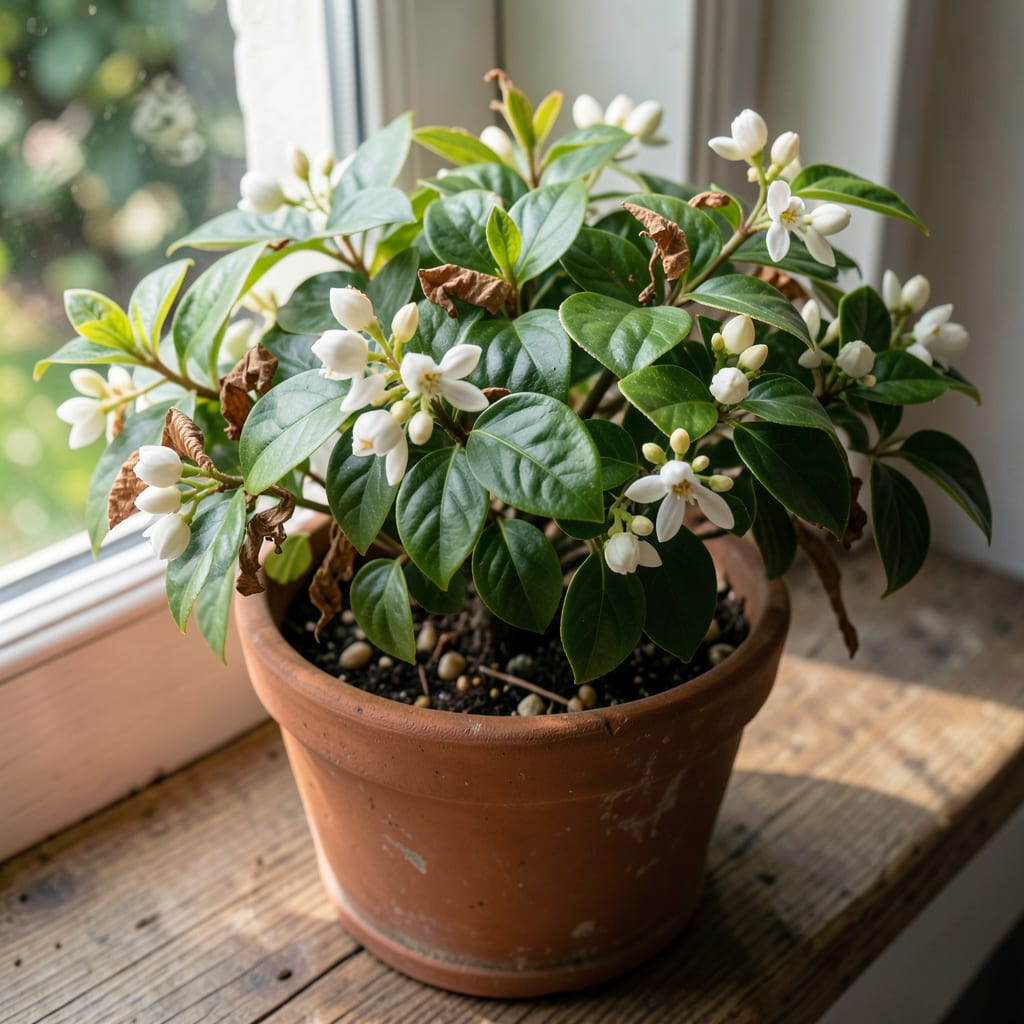
Brown leaves on your jasmine aren’t just unsightly—they’re a distress signal. I’ve seen this happen to my own plants, and it always comes down to one of four culprits: water, nutrients, pests, or environment.
Most people jump to conclusions about disease, but overwatering is the most common cause. The roots drown, the leaves turn brown, and the plant slowly declines. Underwatering does the same thing, just faster.
What you’re looking for is consistent moisture—not too much, not too little. Check the soil 2 inches down before watering. If it’s dry, water deeply. If it’s damp, wait.
We’ll cover the other causes and solutions next. This is fixable—your jasmine can bounce back.
Brown leaves on your jasmine plant are a distress signal, often tied to environmental stress or care gaps. Below are the most common causes, each with clear explanations and actionable fixes.
Jasmine plants need consistent moisture but despise soggy roots. Underwatering causes leaves to dry out and crisp, while overwatering suffocates roots, blocking nutrient uptake. Check soil moisture 1-2 inches deep—if bone-dry or waterlogged, adjust your watering schedule. Use well-draining soil and pots with drainage holes to prevent root rot.
While jasmine loves bright light, intense direct sunlight (especially afternoon heat) can scorch leaves, turning them brown and brittle. This is common in outdoor plants during summer. Provide dappled shade or move potted jasmine to a spot with morning sun and afternoon protection. Indoor plants should sit near an east-facing window.
Jasmine thrives in 60–75°F (15–24°C). Sudden cold drafts (below 40°F/4°C) or low humidity (below 40%) can trigger leaf browning. Keep plants away from AC vents, heaters, or drafty windows. Use a humidity tray or mister to maintain 50–60% humidity, especially indoors.
Brown leaves with yellow edges often signal magnesium or potassium deficiency. Jasmine is a heavy feeder; depleted soil lacks essential minerals. Test soil pH (ideal: 6.0–7.0) and fertilize monthly in growing season with a balanced 10-10-10 or 20-20-20 formula. For magnesium, add Epsom salt (1 tbsp/gallon of water) every 2–4 weeks.
Sap-sucking pests like spider mites or aphids drain plant fluids, causing brown, speckled, or curled leaves. Inspect leaf undersides for webbing or tiny insects. Treat with neem oil or insecticidal soap weekly until pests are gone. Isolate infected plants to prevent spread.
Once you’ve identified the likely cause, use these targeted fixes to nurse your jasmine back to health and keep leaves lush and green.
Give the plant a deep drink until water runs out of the drainage hole, then let the top inch of soil dry before watering again. Prevention tip: Stick your finger in the soil weekly—if it feels dry at 1-inch depth, it’s time to water. 💡
Stop watering immediately and let the soil dry out. If root rot is suspected, repot into fresh, well-draining mix. Trim any black, mushy roots. Prevention tip: Use a pot with drainage holes and a saucer to catch excess. ✨
Move the plant to bright, indirect light—an east-facing window is ideal. If outdoors, provide afternoon shade. Prevention tip: Acclimate plants gradually to stronger light over a week. 🎯
Apply a balanced, water-soluble fertilizer (10-10-10) every 4–6 weeks during the growing season. For magnesium deficiency, use Epsom salt (1 tbsp per gallon of water) as a foliar spray. Prevention tip: Refresh soil annually with compost. 🌱
Wipe leaves with a damp cloth to remove pests, then spray with insecticidal soap or neem oil weekly until gone. Prevention tip: Isolate new plants for 2 weeks to avoid infestations. 🛡️
Keep jasmine in temperatures between 60–75°F and away from cold drafts or heat vents. Mist leaves or use a pebble tray to increase humidity. Prevention tip: Monitor indoor climate with a simple hygrometer. 🌡️
Water when the top 1-2 inches of soil feel dry. Typically, this means every 5-7 days in warm weather, less in cooler months. Always check soil moisture first.
Once leaves turn brown, they won’t recover. Remove them and focus on improving care to prevent new leaves from browning. Healthy new growth will replace the damaged ones.
Use a balanced 10-10-10 or 20-20-20 water-soluble fertilizer every 4-6 weeks during the growing season. For magnesium, add Epsom salt (1 tbsp/gallon) monthly.
Overwatering or poor drainage can suffocate roots, causing browning despite consistent watering. Ensure pots have drainage holes and use well-draining soil.
