
Beautiful Plants For Your Interior
Beautiful Plants For Your Interior
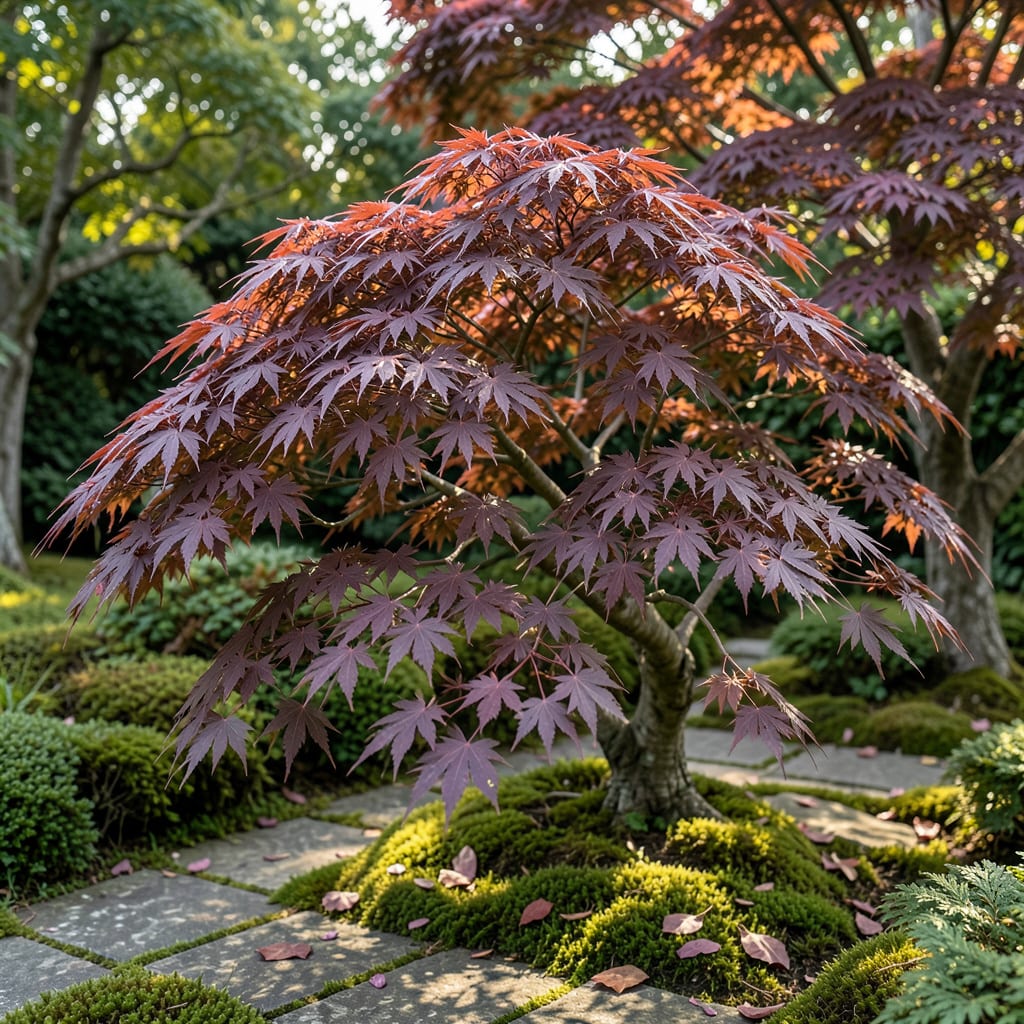
That first glimpse of deep purple foliage in spring never gets old. Japanese maples with these leaves bring year-round drama—from burgundy spring growth to fiery fall colors.
I planted my first one in partial shade, and within 3 years it became the focal point of my garden. The secret is well-draining soil and protection from harsh afternoon sun, which can scorch those stunning leaves.
📚 In This Guide
Here’s the method I use to ensure vibrant color and healthy growth every season.
Select a spot with partial shade to protect the delicate leaves from scorching in full sun. Morning sunlight with afternoon shade produces the richest purple tones. Avoid deep shade, which causes the foliage to revert to green and weakens growth.
Ensure the location has well-draining soil. Japanese maples despise soggy roots, so test drainage by digging a 1-foot-deep hole, filling it with water, and checking if it empties within 2-3 hours. If water lingers, amend the soil or choose a raised bed.
Dig a hole that is twice as wide as the root ball but no deeper. The wider space allows roots to spread easily. Loosen the soil at the sides and bottom of the hole to encourage outward root growth rather than circling.
If your soil is heavy clay, mix in one-third compost or peat moss to improve drainage and aeration. Avoid adding sand, as it can compact and create a concrete-like texture. The amended soil should feel crumbly and loose in your hands.
Remove the tree from its container and gently loosen any circling roots with your fingers. Place the root ball in the hole so the top sits 1-2 inches above the surrounding soil to allow for settling. This prevents the trunk from sinking too deep, which can suffocate the tree.
Backfill the hole with the amended soil, pressing lightly to eliminate air pockets. Water thoroughly to settle the soil, then add more mix if needed. The tree should stand straight without support—staking is rarely necessary unless the site is windy.
Spread a 2-3 inch layer of organic mulch (such as wood chips or bark) around the base of the tree, keeping it 3-4 inches away from the trunk to prevent rot. Mulch retains moisture and regulates soil temperature, which is critical for establishing new roots.
Water deeply immediately after planting, giving the tree 10-15 gallons of water to soak the entire root zone. For the first 2-3 weeks, water every 2-3 days unless rain provides an inch of moisture. Check soil by feeling 2 inches down—if it’s dry, it’s time to water again.
Once established, Japanese maples prefer consistent moisture but tolerate short dry spells. Water when the top 1-2 inches of soil feel dry. Reduce watering in late summer to encourage the tree to harden off before winter.
Fertilize lightly in early spring with a balanced, slow-release fertilizer, following package instructions. Over-fertilizing leads to excessive green growth and dulls the purple color. Prune only to shape or remove dead wood, doing so in late winter before new growth begins.
Small adjustments in planting and care make a big difference in vibrant color and healthy growth.
The Shade Factor: Partial shade is non-negotiable for purple-leaf varieties. I learned this the hard way after planting one in full sun—the leaves scorched within days. Morning sun with afternoon shade gives you that deep, rich purple without the stress.
Drainage Test: That 2-3 hour drainage check in Step 1 isn’t just a suggestion. Dig your test hole, fill it with water, and time it. If it doesn’t empty within 2-3 hours, amend the soil or use a raised bed. Soggy roots are the fastest way to kill a Japanese maple.
Planting Height: In Step 3, placing the root ball 1-2 inches above surrounding soil prevents settling that can suffocate the trunk. I’ve seen too many trees planted too deep, leading to slow decline. Trust the process—it looks high at first but settles perfectly.
Mulch Strategy: Keep that 2-3 inch mulch layer 3-4 inches away from the trunk. Mulch touching the base invites rot and pests. I use wood chips for their slow decomposition and moisture retention, which new roots love during establishment.
Spring or early fall is ideal, as it allows the tree to establish roots before extreme heat or cold. Avoid planting in summer or winter to reduce stress on the tree.
These trees thrive in partial shade, especially in hotter climates. Morning sun and afternoon shade help maintain their vibrant purple foliage without leaf scorch.
Too much shade or nutrient deficiencies (like nitrogen) can cause color fading. Ensure balanced sunlight and use a slow-release fertilizer for vibrant purple hues.
Yes! Varieties like ‘Bloodgood’ or ‘Emperor I’ stay compact (6-10 ft tall), perfect for small gardens or containers. Check mature size labels when selecting.
Mulch heavily around the base and wrap young trees in burlap during harsh winters. Avoid late-season fertilizing, which can encourage tender new growth.
