
Beautiful Plants For Your Interior
Beautiful Plants For Your Interior
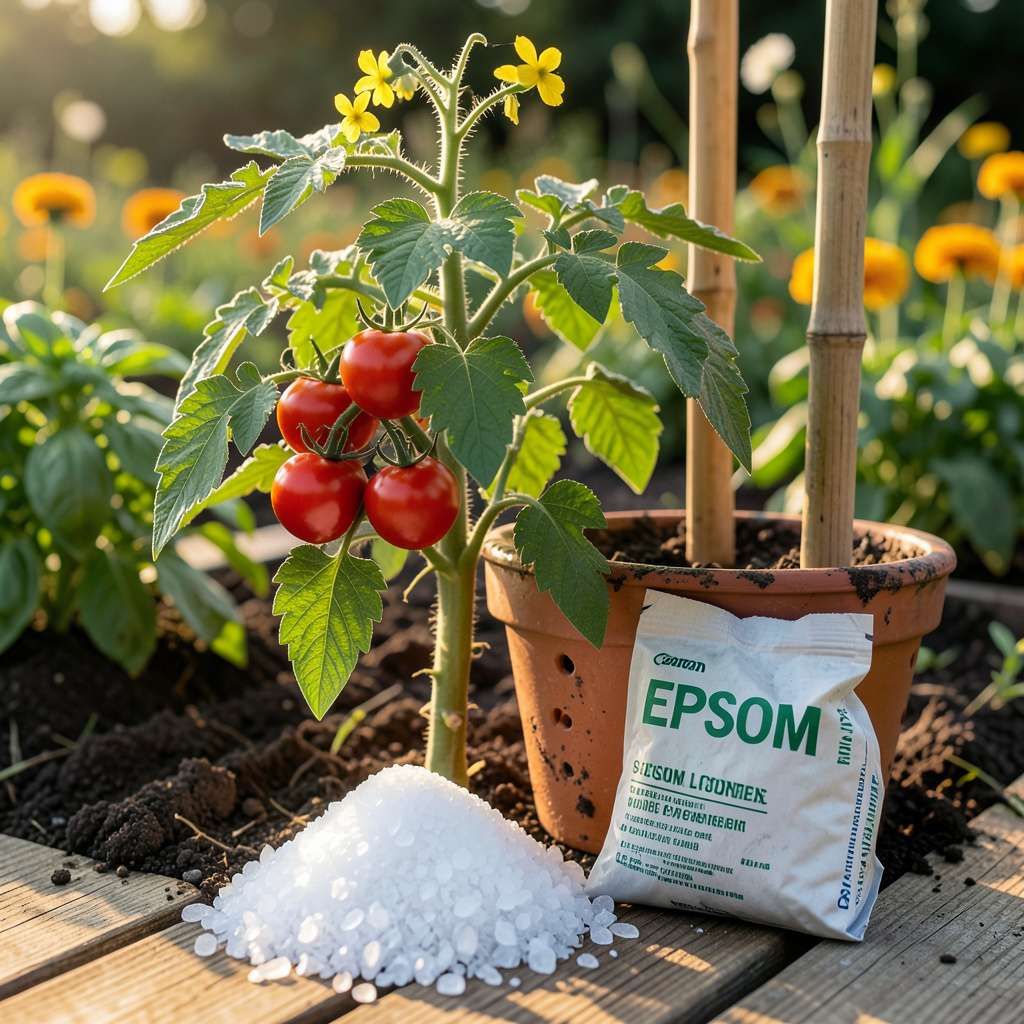
Epsom salt can benefit tomato plants by providing magnesium and sulfur, which support healthy foliage and fruit production. However, overuse may harm soil balance—use only if a deficiency is confirmed through testing or visible symptoms like yellowing leaves.
I’ve seen firsthand how magnesium deficiency can transform vibrant tomato plants into struggling ones—yellow patches between leaf veins are a dead giveaway. 🌱 The sulfur in Epsom salt also plays a crucial role in protein synthesis and chlorophyll formation, which explains why some gardeners swear by it during the fruiting stage. But here’s the catch: most balanced soils already contain sufficient magnesium, and adding unnecessary Epsom salt can disrupt calcium uptake, leading to blossom end rot. Always test your soil before reaching for this remedy.
💡 In This Article
At the heart of Epsom salt’s impact lies its chemical composition: magnesium sulfate (MgSO₄). Magnesium is the central atom in chlorophyll molecules, which means it’s directly responsible for photosynthesis efficiency. When tomato plants lack magnesium, they develop interveinal chlorosis—yellow patches between leaf veins—because chlorophyll production slows dramatically.
The sulfur component, meanwhile, aids in protein synthesis and enzyme activation, particularly for nitrogen metabolism.
Research from the University of California shows that magnesium deficiency reduces photosynthetic capacity by up to 40% in severe cases. What’s fascinating is how quickly plants respond to magnesium supplementation—foliar applications can show visible greening within 48-72 hours.
The sulfur in Epsom salt also helps form essential amino acids like cysteine and methionine, which are building blocks for plant proteins. 🌿 This dual action explains why some gardeners report improved fruit set and size after application.
However, the soil chemistry is more complex than it appears. Magnesium competes with calcium for uptake, and excessive Epsom salt can trigger calcium deficiency—manifesting as blossom end rot in tomatoes. Soil tests revealing magnesium levels below 50 ppm typically indicate deficiency, while levels above 100 ppm suggest supplementation isn’t needed.
Most garden soils naturally contain sufficient magnesium, which is why blind application often does more harm than good.
The effectiveness also depends on application method. Foliar sprays (1 tablespoon per gallon) allow direct absorption through stomata, bypassing soil chemistry issues. Soil drenches, while slower, provide longer-term availability. Studies comparing Epsom salt to traditional fertilizers show it’s most effective for correcting acute deficiencies rather than general fertilization.
For balanced soils, organic matter like compost often provides magnesium more gradually and safely.
What many don’t realize is that Epsom salt’s solubility (745 g/L at 20°C) makes it prone to leaching in sandy soils. This means repeated applications may wash away before plants can utilize them fully. The ideal scenario?
Use it only when tissue tests confirm deficiency, applying 1 tablespoon per foot of plant height at first flowering and again at fruit set. Always water thoroughly after application to prevent salt buildup at the roots.
For container-grown tomatoes, the dynamics change entirely. Potting mixes often lack sufficient magnesium, making Epsom salt more beneficial here than in garden beds. I’ve seen container plants respond dramatically to monthly applications of 2 tablespoons per 5 gallons of soil, particularly when using peat-based mixes that tend to be magnesium-deficient.
The key is monitoring leaf color and growth patterns—healthy tomatoes should maintain deep green leaves throughout the growing season.
For established plants, apply a foliar spray every 2-3 weeks during flowering and fruiting. Container plants benefit from monthly soil drenches. Always start with half the recommended dose and monitor plant response before increasing frequency.
Watch for yellow patches between leaf veins (interveinal chlorosis) on older leaves first. Severe deficiency causes leaf curling and purple veins. These symptoms typically appear 4-6 weeks after planting if magnesium is lacking.
Yes, but with caution. Never combine with calcium-rich fertilizers as they’ll compete for uptake. Safe to alternate with nitrogen sources like fish emulsion. Always apply Epsom salt separately from other treatments by at least 3-5 days.
This usually indicates overapplication or dry soil. Flush immediately with water and avoid further treatments for 2 weeks. Brown leaf edges suggest salt burn. Always water thoroughly before and after applying Epsom salt.
Composted banana peels, wood ash, and worm castings provide magnesium more gradually. These improve soil structure while addressing deficiencies. For quick correction, Epsom salt works faster, but organic options build long-term soil health.
