
Beautiful Plants For Your Interior
Beautiful Plants For Your Interior
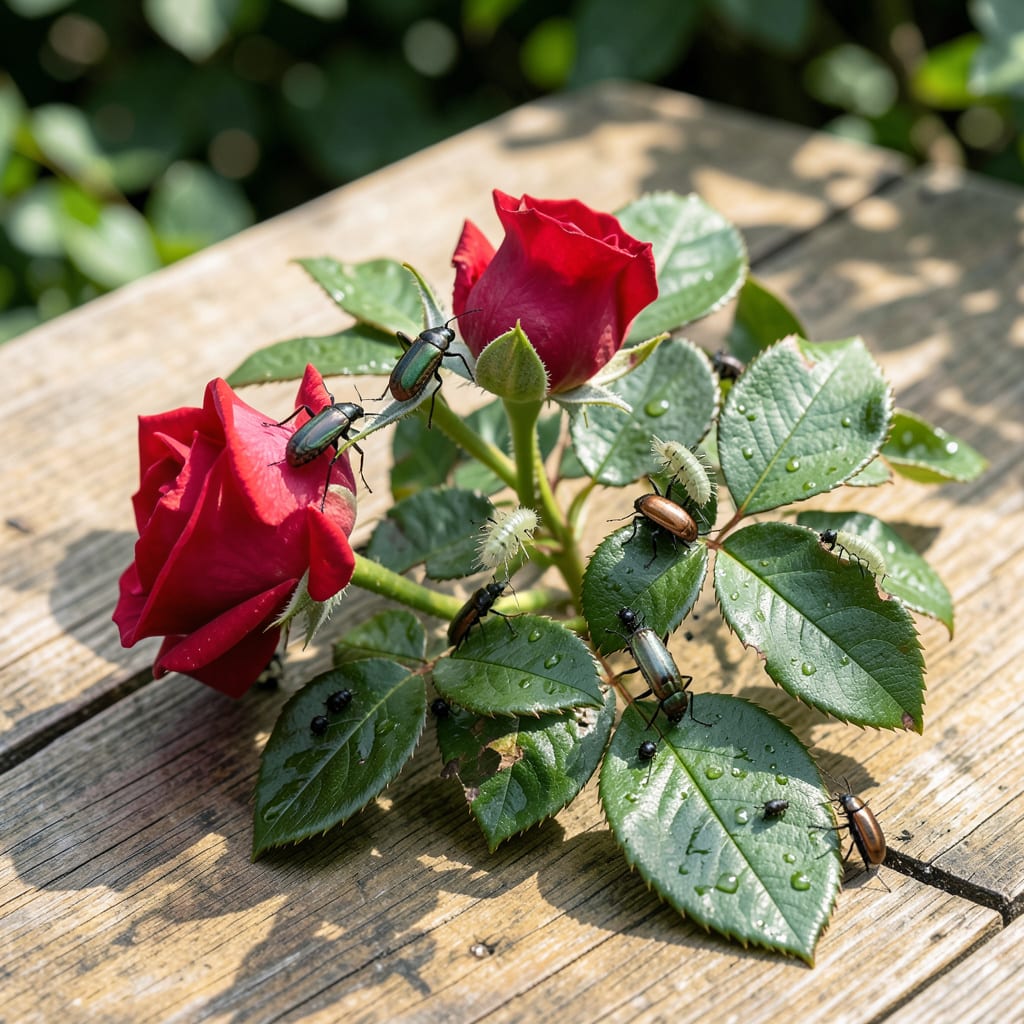
My rose bushes looked perfect until I noticed the jagged edges on the leaves. Turns out, aphids and beetles had moved in overnight, turning my garden into their personal buffet.
Here’s the thing—you don’t need harsh chemicals to fight back. A simple spray of soapy water or neem oil can stop the damage fast, and it keeps your roses healthy and thriving all season.
📚 In This Guide
Here’s the method I trust to protect roses without harsh chemicals, tested in my own garden.
Examine both the upper and lower surfaces of affected leaves with a magnifying glass. Look for the specific culprits: aphids cluster at new growth tips, Japanese beetles leave skeletonized foliage, and sawfly larvae resemble small green caterpillars. Each requires a different approach.
Check for telltale signs like silvery trails (slugs), webbing (spider mites), or chewed edges (beetles). I photograph the damage and pests, then compare to reliable gardening resources. Misidentification leads to ineffective treatments that waste time and let infestations worsen.
For light infestations, physically remove pests early in the morning when they’re sluggish. Drop Japanese beetles into soapy water and crush sawfly larvae between gloved fingers. A strong blast from the hose dislodges aphids but requires early morning application so foliage dries before evening.
Prune heavily infested leaves and stems, placing them in sealed bags for disposal. I carry a small bucket of soapy water while inspecting plants, which lets me address problems immediately. This step alone often prevents the need for further intervention.
Introduce beneficial insects like ladybugs and lacewings, which feed on aphids and other soft-bodied pests. Evening release works best when temperatures are below 85°F. Companion planting with garlic, chives, or marigolds creates a natural barrier that repels many rose pests.
Apply neem oil or insecticidal soap at dusk to avoid harming pollinators, repeating every 5-7 days until the problem subsides. I mix solutions fresh each time and test on a small area first to check for phytotoxicity. Always follow label instructions precisely.
Healthy roses resist pests better, so prioritize proper care: water at the base to keep foliage dry, fertilize according to soil test recommendations, and prune for good air circulation. I remove fallen leaves and debris weekly, as these often harbor overwintering pests.
Apply a 2-3 inch layer of organic mulch to conserve moisture and suppress weeds that may attract additional pests. Monitor plants regularly, especially the undersides of leaves where many pests begin their damage. Early detection makes all the difference.
These practical insights will help you implement the natural pest control methods more effectively.
Precision in Identification: In Step 1, use a 10x magnifying glass for the clearest view of pests. I learned the hard way that aphids can look like tiny dust specks without proper magnification, leading to misidentification. Photograph both the pest and the damage pattern from multiple angles for accurate comparison with gardening resources.
Timing Matters: For Step 2, the early morning application of water blasts is non-negotiable. I’ve found pests are most sluggish between 5-7 AM, making them easier to dislodge. Foliage dries fastest in morning sun, reducing the risk of fungal issues that can develop if leaves stay wet into the cooler evening hours.
Temperature Consideration: When releasing beneficial insects in Step 3, the below 85°F guideline exists for a reason. Evening temperatures typically drop below this threshold, but if you’re applying during the day, check with a thermometer. I once released ladybugs at 88°F and they immediately sought shade rather than hunting pests.
Application Consistency: For the neem oil or insecticidal soap applications in Step 3, the 5-7 day repetition schedule accounts for pest life cycles. Missing even one application can allow new hatchlings to survive. I mix solutions fresh each time because the active ingredients degrade within 24 hours, especially in sunlight.
Insects like aphids, Japanese beetles, or sawfly larvae are attracted to rose leaves for their tender texture and nutrients. They often target new growth, leaving holes or skeletonized leaves.
Early morning or late evening is ideal for applying treatments, as beneficial insects are less active. Act at the first sign of damage to prevent infestations.
Yes! Neem oil, insecticidal soap, or a garlic spray can deter pests without harming beneficial bugs. Reapply after rain for best results.
Check for clues: aphids leave sticky residue, beetles chew large holes, and sawfly larvae skeletonize leaves. Use a magnifying glass for tiny pests!
Absolutely! Remove heavily infested leaves to reduce pest populations and improve airflow. Always sterilize pruners between cuts to avoid spreading disease.
