
Beautiful Plants For Your Interior
Beautiful Plants For Your Interior
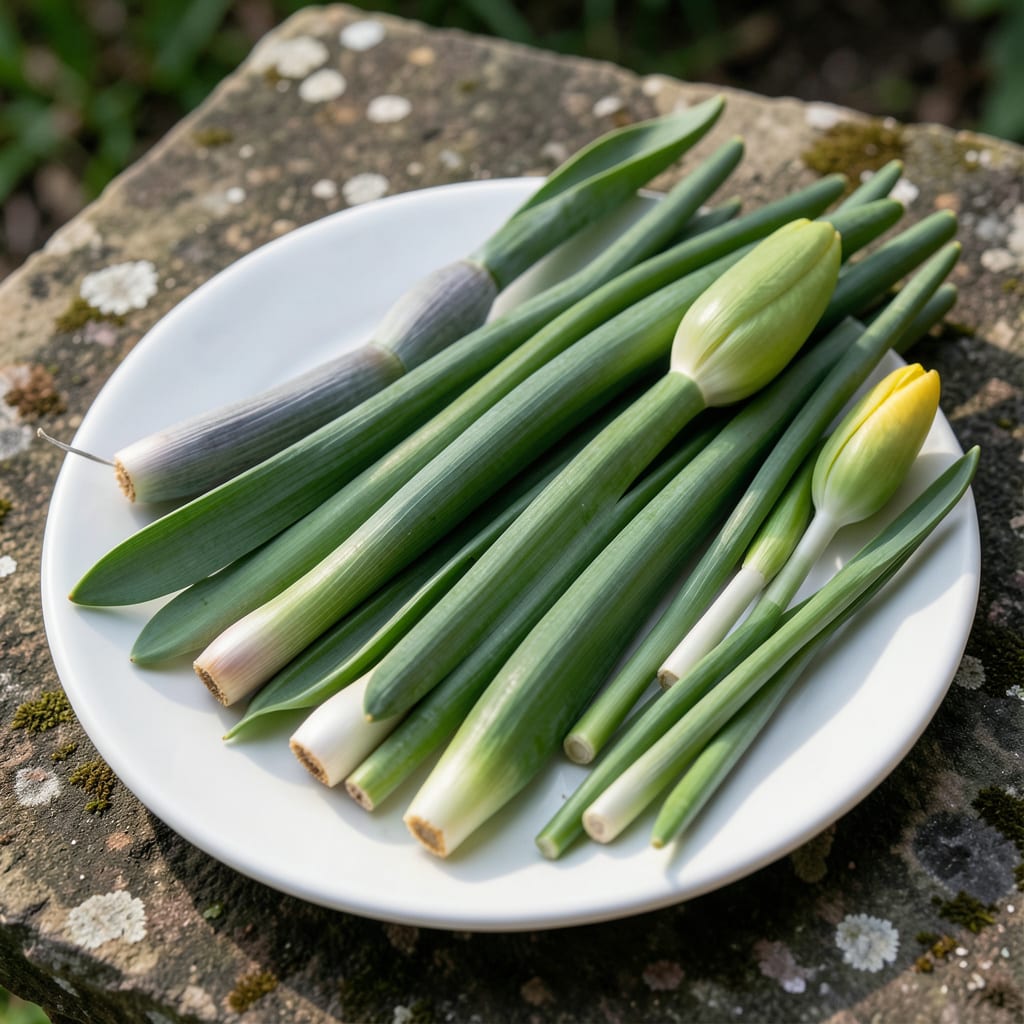
I used to dig up mystery bulbs every spring, wondering what would appear. Then I learned the leaves tell the whole story—shapes, veins, and textures give away their identity before they bloom.
Narrow grass-like leaves often mean daffodils, while broad flat blades usually belong to tulips. Even the way veins run parallel or in a pattern helps distinguish alliums from hyacinths. It’s like having a plant ID guide built into the foliage.
📚 In This Guide
Here’s the straightforward method I use to distinguish bulb types just by examining their foliage.
Start by looking at the general outline of the leaves. Long, strap-like leaves that grow from the base are typical of daffodils and tulips. These leaves are usually flat and can stretch 12-18 inches long. If the leaves are thick and fleshy, like those of a succulent, you might be looking at a hyacinth or an agapanthus.
I’ve found that leaves with a rounded or oval shape often belong to alliums or lilies. Pay attention to the edges—smooth margins usually indicate one type, while slightly wavy edges can point to another. This first glance often narrows it down significantly.
Next, focus on the veins. Parallel veins running the length of the leaf are a hallmark of monocots, which include most bulbs. If the veins are prominent and raised, you’re likely dealing with a hosta or a similar plant, but true bulbs usually have veins that are subtle and evenly spaced.
For example, tulips and daffodils have leaves with veins that run straight from base to tip, barely visible unless you hold the leaf up to the light. In contrast, some irises have a more pronounced central vein with finer veins branching off—this detail can help you tell them apart.
Note how the leaves are arranged. Bulbs like crocuses produce leaves that emerge directly from the soil in a tuft, while others, such as lilies, may have leaves that wrap around the stem. This is called an alternate arrangement and is a key identifier.
Texture matters too. Glossy, smooth leaves are common in tulips, whereas dull or slightly hairy leaves might indicate a fritillaria or a crown imperial. Run your fingers gently over the surface—this tactile check often reveals details you’d miss visually.
Think about when the leaves appear. Spring bulbs like daffodils push their leaves up in early spring, often before the flowers. Summer bulbs, such as dahlias, produce leaves later in the season. If the leaves die back in summer, you’re likely looking at a spring bulb entering dormancy.
Also, observe the growth habit. Some bulbs, like daylilies, produce clumps of leaves that spread over time, while others, like hyacinths, have a more upright, compact form. This can help confirm your identification after narrowing it down with the other steps.
Once you’ve noted the shape, veins, arrangement, and season, cross-reference your observations with a reliable guide. I keep a small notebook with sketches of leaf types and their corresponding bulbs. This helps me spot patterns and confirm identifications over time.
If you’re still unsure, take a photo and compare it to images in a gardening book or app. Real talk: even experienced gardeners second-guess themselves sometimes. The more you practice, the more instinctive this process becomes.
Small details can make or break your bulb identification, so here’s what I’ve learned to watch for.
Leaf Shape Insight: The 12-18 inch length mentioned in Step 1 is a dead giveaway for daffodils and tulips. If you see leaves shorter than this, you’re likely dealing with a different bulb type entirely. I once misidentified hyacinths because I overlooked their compact foliage.
Vein Pattern Clarity: In Step 2, the difference between parallel veins and raised veins is subtle but critical. True bulbs rarely have prominent veins—if you see them, double-check for hostas or other imposters. Hold the leaf up to the light to spot the faint lines that confirm it’s a bulb.
Texture Tell: Step 3’s texture tip is gold. Glossy leaves almost always mean tulips, while hairy or dull surfaces point to fritillaria. I run my fingers over leaves now as a habit—it’s caught me more than a few misidentifications over the years.
Yes! Many bulbs have unique leaf shapes, vein patterns, or textures. For example, daffodils have long, strap-like leaves, while tulips have broader, waxy ones. Pairing these traits with growth habits improves accuracy.
The ideal time is early spring or fall when leaves are fresh and fully formed. Avoid summer dormancy or winter dieback, as leaves may be absent or decaying.
Check for subtle differences like vein patterns (parallel vs. netted), leaf edges (smooth or serrated), or color. Also, note the bulb’s growth height and flower timing for extra clues.
Some bulbs, like blind or naked varieties (e.g., certain lilies), may have minimal or underground leaves. In these cases, rely on stem characteristics or past blooming history.
